Ordering from a Chinese Cookware Factory: MOQ, Lead Time, Payment and Shipping Terms Explained
A first-order walkthrough of the commercial track — inquiry, sampling, proforma invoice, production, inspection, shipment, documents — where MOQ, lead time and payment all vary by model and
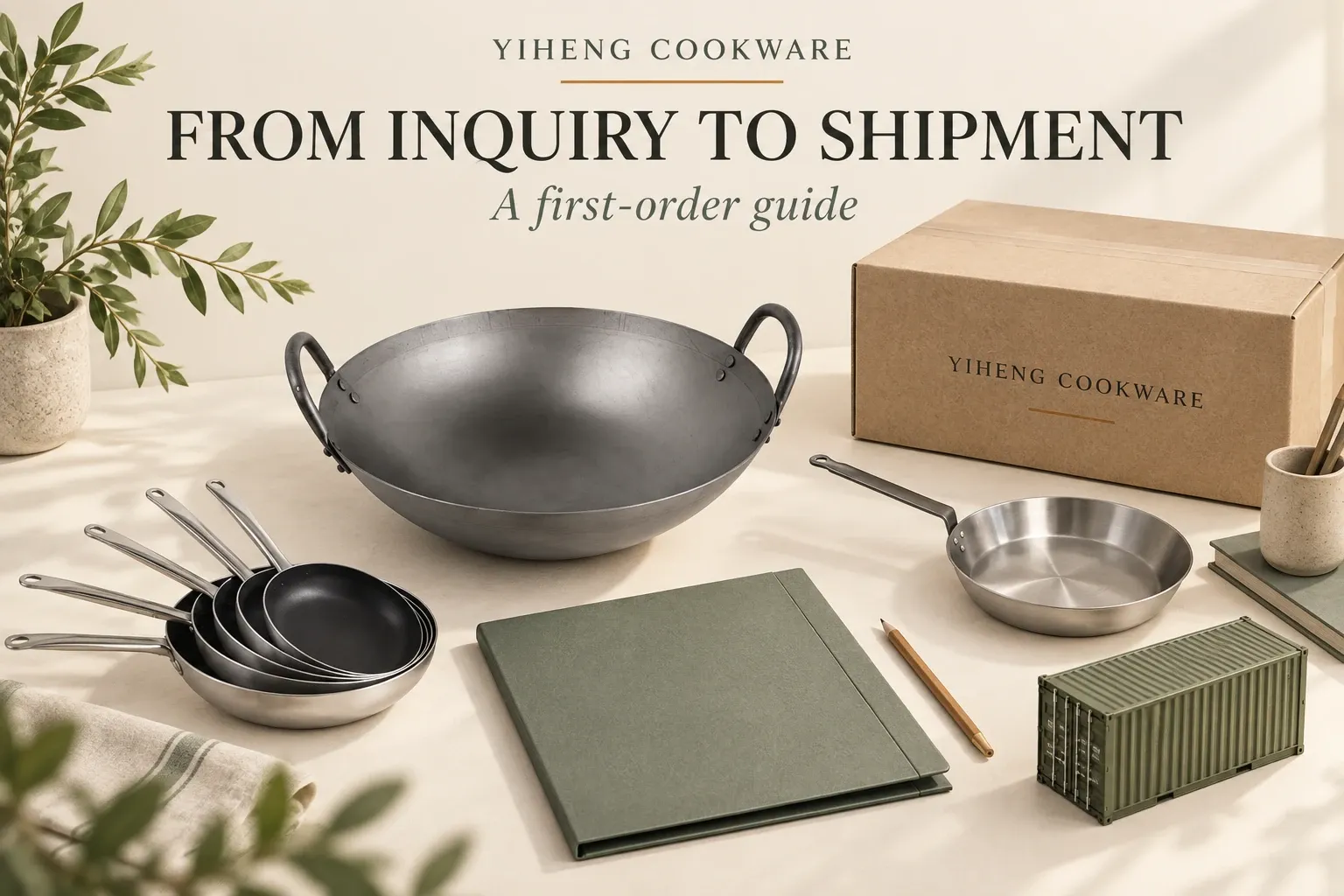
A first-order walkthrough of the commercial track — inquiry, sampling, proforma invoice, production, inspection, shipment, documents — where MOQ, lead time and payment all vary by model and order and are confirmed in the proforma invoice.
You have shortlisted a Chinese cookware factory — now comes the part most sourcing guides describe vaguely: what happens between "we are interested" and "the container is on the water". This article walks that commercial track. Whether a supplier is a real manufacturer is a separate discipline, covered in how to verify a cookware manufacturer before you commit; here, assume the audit is done.
The first-order journey, end to end
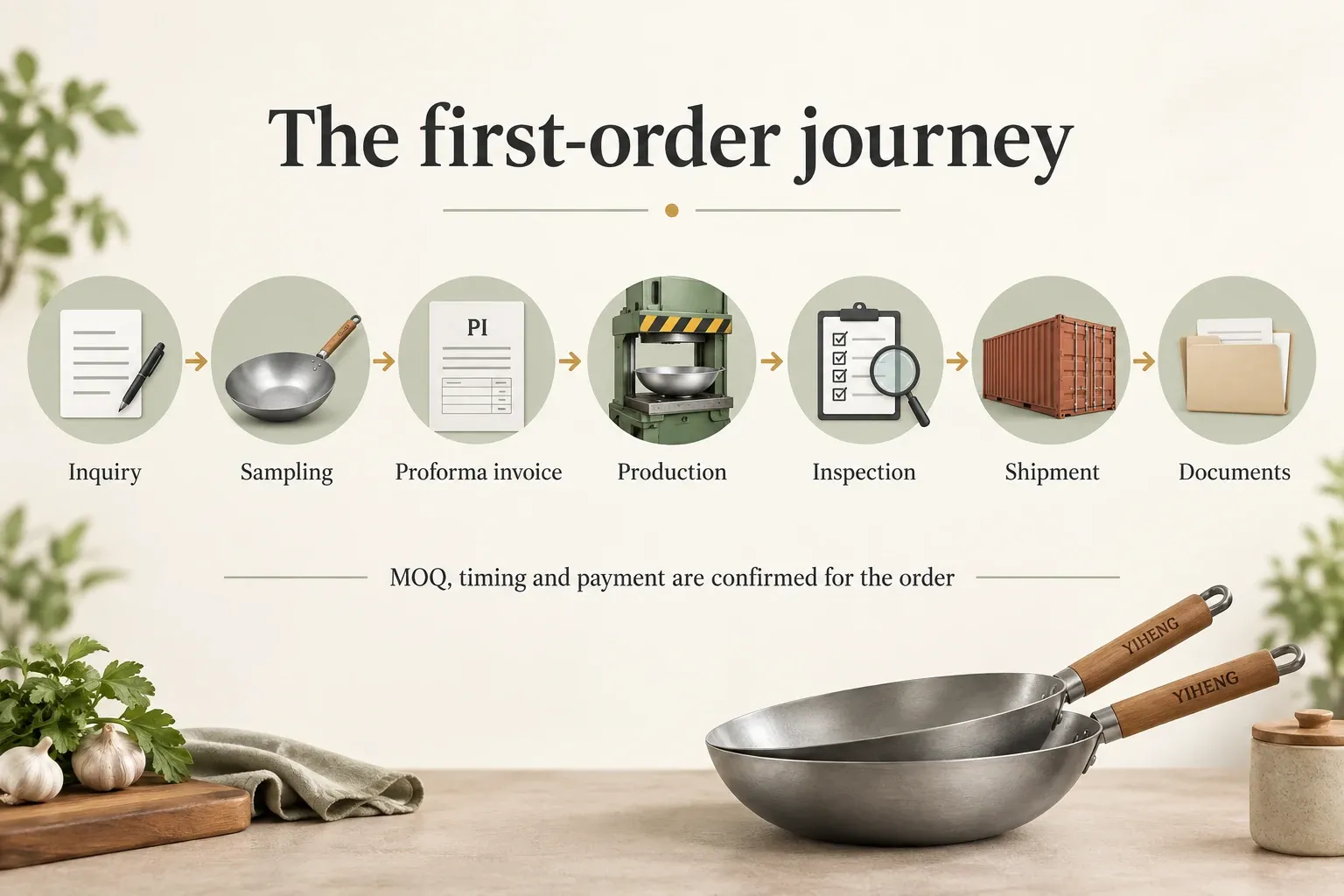
A first cookware order runs through seven stages, each ending with something concrete in your hands:
| Stage | Your move | The factory's move | What you hold |
|---|---|---|---|
| 1. Inquiry | Send models, market, size mix, quantities, packaging | Check feasibility, quote per configuration | Quotation with MOQ per model |
| 2. Sampling | Review and approve the spec | Make the sample to your spec | The sample — your golden sample |
| 3. Proforma invoice (PI) | Confirm and sign | Issue the PI: specs, MOQ, payment, schedule, terms, documents | The PI — the order's control document |
| 4. Production | Track against the PI schedule | Schedule lines, run production | Progress updates |
| 5. Inspection | Choose in-house or third-party | Inspect before shipment, per contract | Inspection results |
| 6. Shipment | Confirm booking and term | Book, load, dispatch | Booking confirmation |
| 7. Documents | Check the set against the PI | Prepare and send | Invoice, packing list, bill of lading |
Treat the PI as the single source of truth: sample first, so it describes a product you have physically approved, then put every commitment in it — spec, MOQ, payment schedule, shipping term, document set. Anything agreed in chat but missing from the PI is not agreed.
MOQ: why there is no single number
"Minimum order quantity" is not one number per factory; it is a consequence of where your configuration sits in production — so the honest answer to "what is your MOQ?" is another question: which model, in which version?
What moves MOQ: model, finish, handle type, packaging
A stock model in a standard finish and diameter runs on existing tooling, so its MOQ sits lowest. Move from that baseline and the MOQ moves with you: a different finish, a different handle type, a size needing its own setup, retail packaging with artwork and barcodes — packaging suppliers have their own minimums, and they pass through. The pre-seasoned carbon steel wok YH-CSW-302 quotes on its stock 32/34/36 cm wooden-handle configuration; change the diameter mix or add custom retail boxes and the quotation is rebuilt. The MOQ that counts is the one in the PI.
Trial orders and first-order structures
A smaller trial order is a normal first-time-buyer request. Whether it is possible, and on what structure — one model, a mixed-model container, a reduced first run against a larger program — depends on the model and its production route. An agreed trial structure goes into the PI like any other order. Treat a supplier who quotes a firm MOQ before seeing your configuration with caution.
Lead time: the four stages that stack
Sampling → production → inspection → booking
Total lead time is four stages in sequence, not one block: sampling, including your review and any revisions; production; pre-shipment inspection; and container booking, timed so the vessel is ready as production ends. Each stage varies by model, line scheduling and season — a stock wok and a seventeen-size stock pot line with bottom-thickness pairing still to confirm do not move at the same pace. The schedule that counts is written into the PI with milestones to track.
Where delays actually come from
First orders rarely slip because a machine stopped; they slip in the confirmation loop — sample revisions never closed out, packaging artwork finalized after production starts, a shipping mark decided at loading. Peak-season vessel space is the second classic cause. The countermeasure: freeze every decision the PI depends on before signing, and treat late changes as a new schedule to reconfirm.
Payment: common structures and how to think about risk
T/T deposit-plus-balance is the industry default pattern
As a general industry pattern across Chinese manufacturing — not a quotation of our terms — telegraphic transfer (T/T) in a deposit-plus-balance structure is the default: a deposit primes materials and puts your order on the schedule; the balance settles before goods and documents are released. The factory commits materials and capacity while you hold the balance until the order is inspected and ready. Exact percentages and trigger points vary by supplier and order; with YIHENG they are stated in the PI, and nowhere else.
Alternatives buyers ask about
Letters of credit route the deal through banks — suited to larger orders wanting bank-mediated conditions, at the cost of bank charges and strict documentary compliance. Escrow-style services exist for smaller first trades, with acceptance varying by supplier and destination. Ask early, and write whatever is agreed into the PI before money moves.
Shipping terms: EXW, FOB, CIF in plain language
As general trade practice — the precise version for your order is the one in the PI — the three common terms divide responsibility:
| Term | Risk passes to you when | Main freight arranged by | Insurance arranged by |
|---|---|---|---|
| EXW (Ex Works) | Goods leave the factory gate | You | You |
| FOB (Free on Board) | Goods are on board at the origin port | You | You |
| CIF (Cost, Insurance and Freight) | Goods are on board at the origin port | The seller, to your named port | The seller, minimum cover |
For a first-time importer, the difference is how much of the logistics chain you run yourself. FOB is a common middle ground in Chinese exports: the factory delivers loaded goods on board; you control main carriage through your forwarder. Sea is the mainstream mode for cookware, so plan mixed-model container consolidation early.
Documents you should expect with your shipment
The document set is the paper version of your order:
- Commercial invoice and packing list — matching the PI and the actual cartons.
- Bill of lading — the transport document for the sea shipment.
- Origin-type documents — certificate of origin and similar, as your destination requires.
- Test-report documents — certification support per market and model, subject to test reports.
The exact set varies by destination market and order — confirmed in the PI, so your customs broker knows what is coming before sailing.
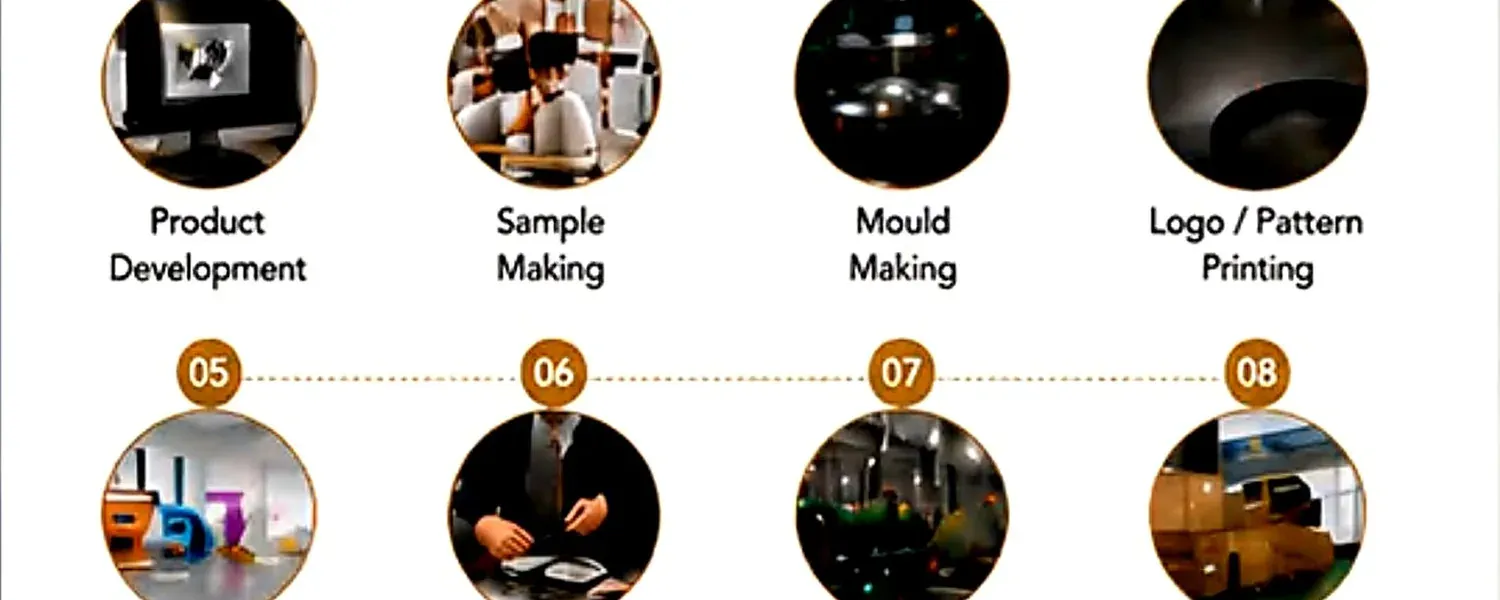
How YIHENG runs first orders
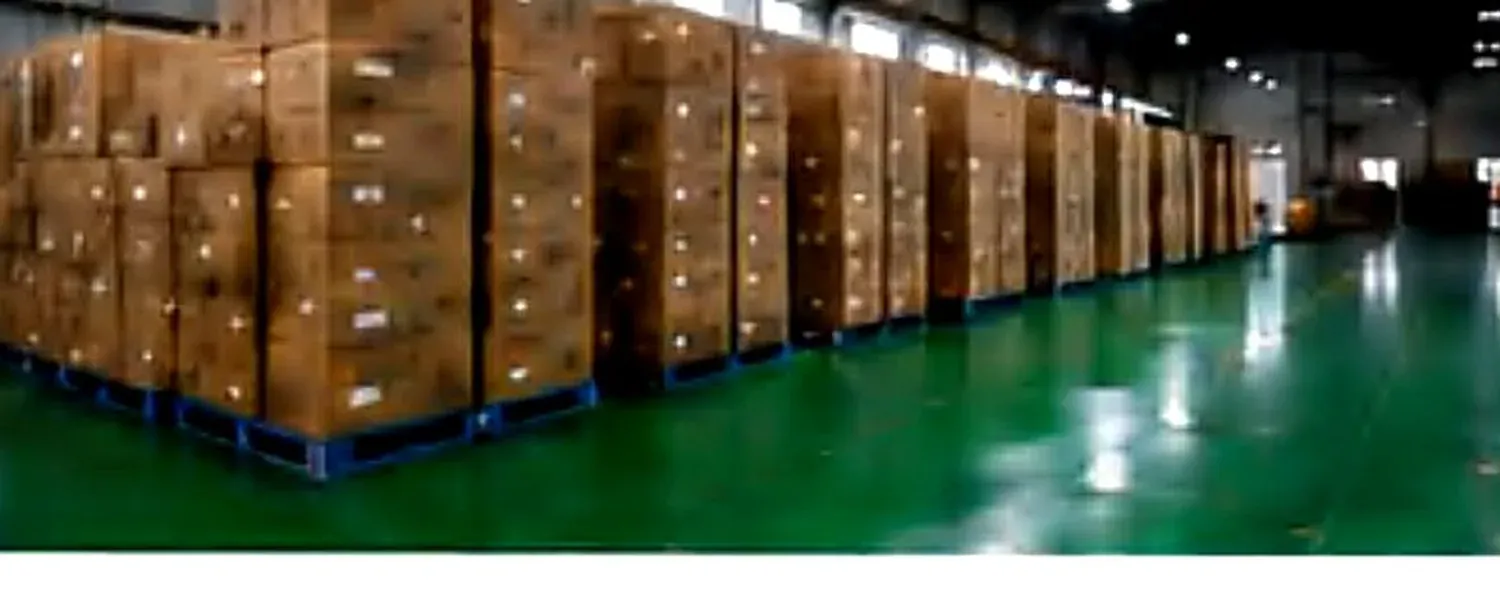
Our OEM program runs as an eight-step process from drawing confirmation to shipment, with production on both spin-forming and stamping lines, hand-polishing and inspection stations, and packed orders staged in our own finished-goods warehouse.
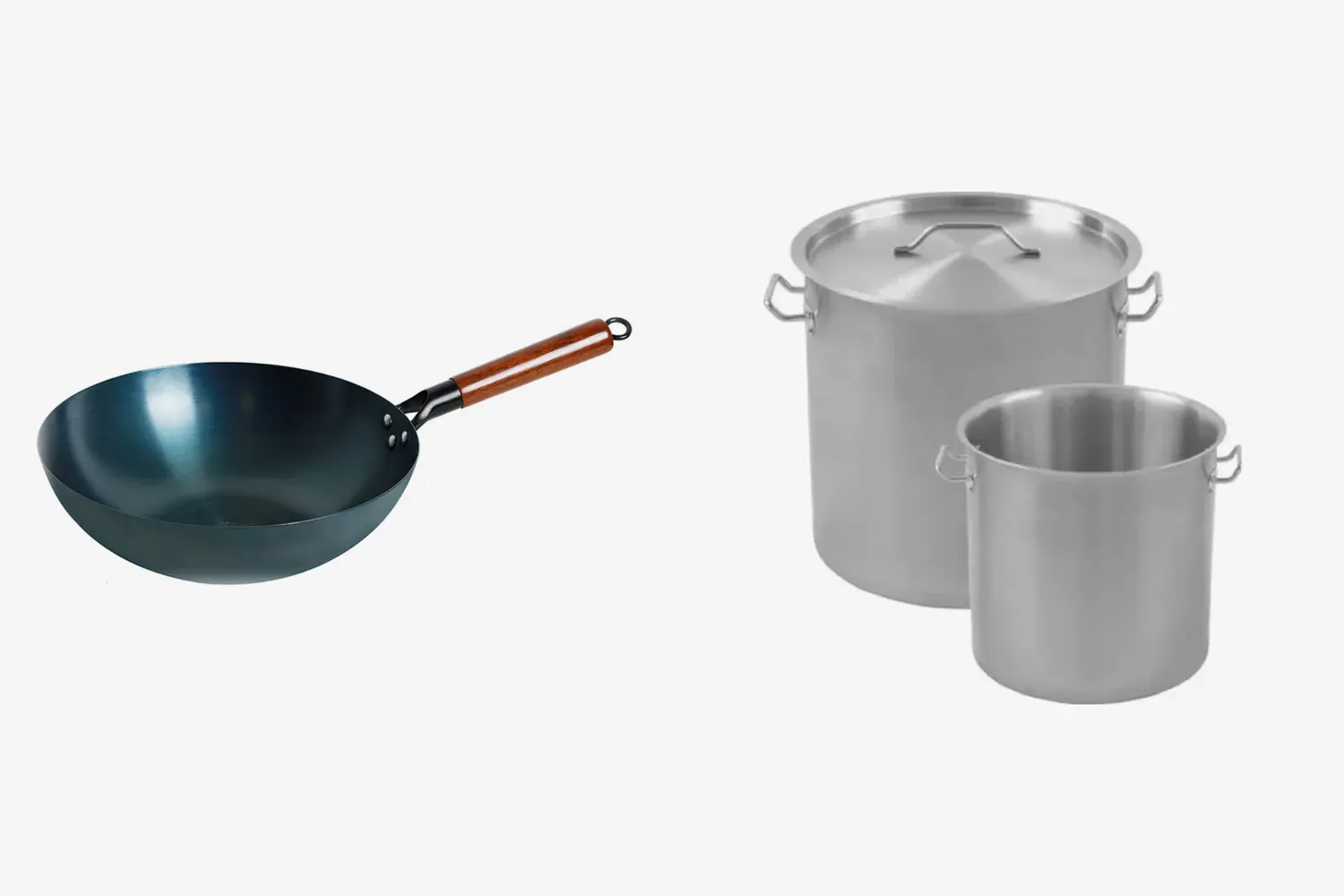
Two first-order shapes show the range. A single stock model — say the pre-seasoned carbon steel wok YH-CSW-302 — typically means sampling the chosen diameter, sealing the golden sample and locking the PI around it. The commercial tall stainless steel stock pot YH-SSP-101 — seventeen size configurations from six to 225 litres, compound-bottom pairing confirmed at quotation — usually means a fuller or mixed container, consolidated in our warehouse into one loading plan. Different shapes, same discipline: sample, PI, production, inspection, shipment, documents.
Frequently asked questions
What is the minimum order quantity at YIHENG?
It varies by model and order — confirmed in the proforma invoice. The drivers are configuration: stock model or variation, finish, handle type, and retail packaging with its own minimums. Send your model number, size mix and packaging idea; the quotation states the MOQ for that exact configuration, not a generic number.
How is payment handled on a first order?
The industry-common pattern is T/T deposit-plus-balance — a deposit to schedule the order, the balance before goods and documents are released — with exact percentages and trigger points stated per order in the PI. Alternatives like letters of credit can be discussed depending on order size and destination. Never transfer against terms that exist only in chat.
Which documents do I receive with my cookware shipment?
The standard set is the commercial invoice, packing list and bill of lading, plus origin-type documents as your destination requires and certification support per market and model, subject to test reports. The exact set is written into the PI, so your broker can prepare before the goods arrive.
Planning a first order? Ask for a sample PI layout and the OEM eight-step walkthrough
Email sales@yihengcookware.com with your target models and destination port. We will reply with a sample PI layout — how MOQ, lead time, payment and shipping terms appear line by line — plus the OEM eight-step walkthrough for your configuration.