Round-Bottom vs. Flat-Bottom Woks: Matching Cookware to Your Market's Stoves
Bottom shape is not a styling choice — it is a stove-compatibility decision, so the fastest way to plan a wok assortment is to map your target market's stoves first and split round- and flat
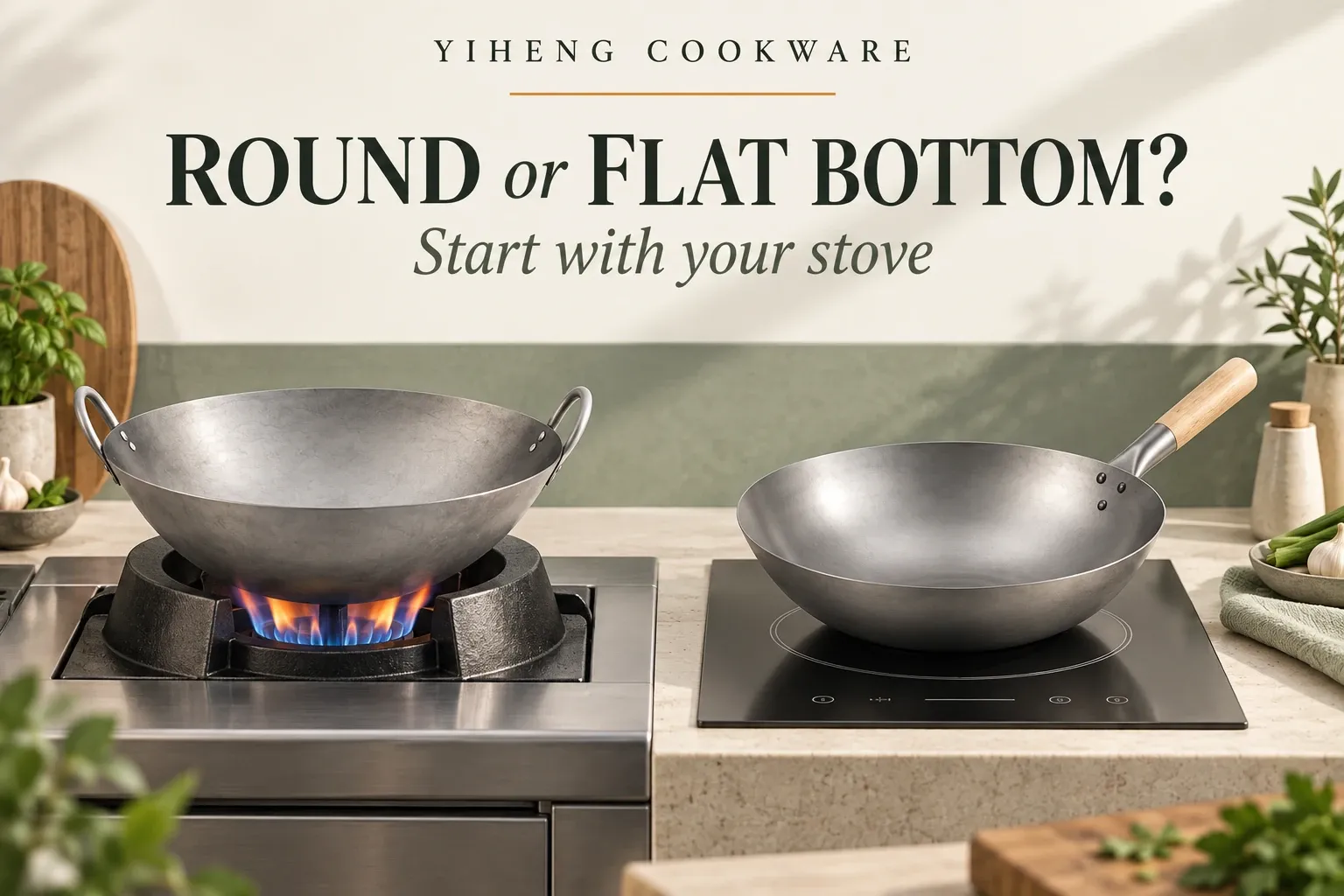
Bottom shape is not a styling choice — it is a stove-compatibility decision, so the fastest way to plan a wok assortment is to map your target market's stoves first and split round- and flat-bottom SKUs second.
The 60-Second Takeaway: Bottom Shape Follows the Stove, and the Stove Follows the Market
The question is rarely "which wok is better" but "which bottoms work on your customers' stoves":
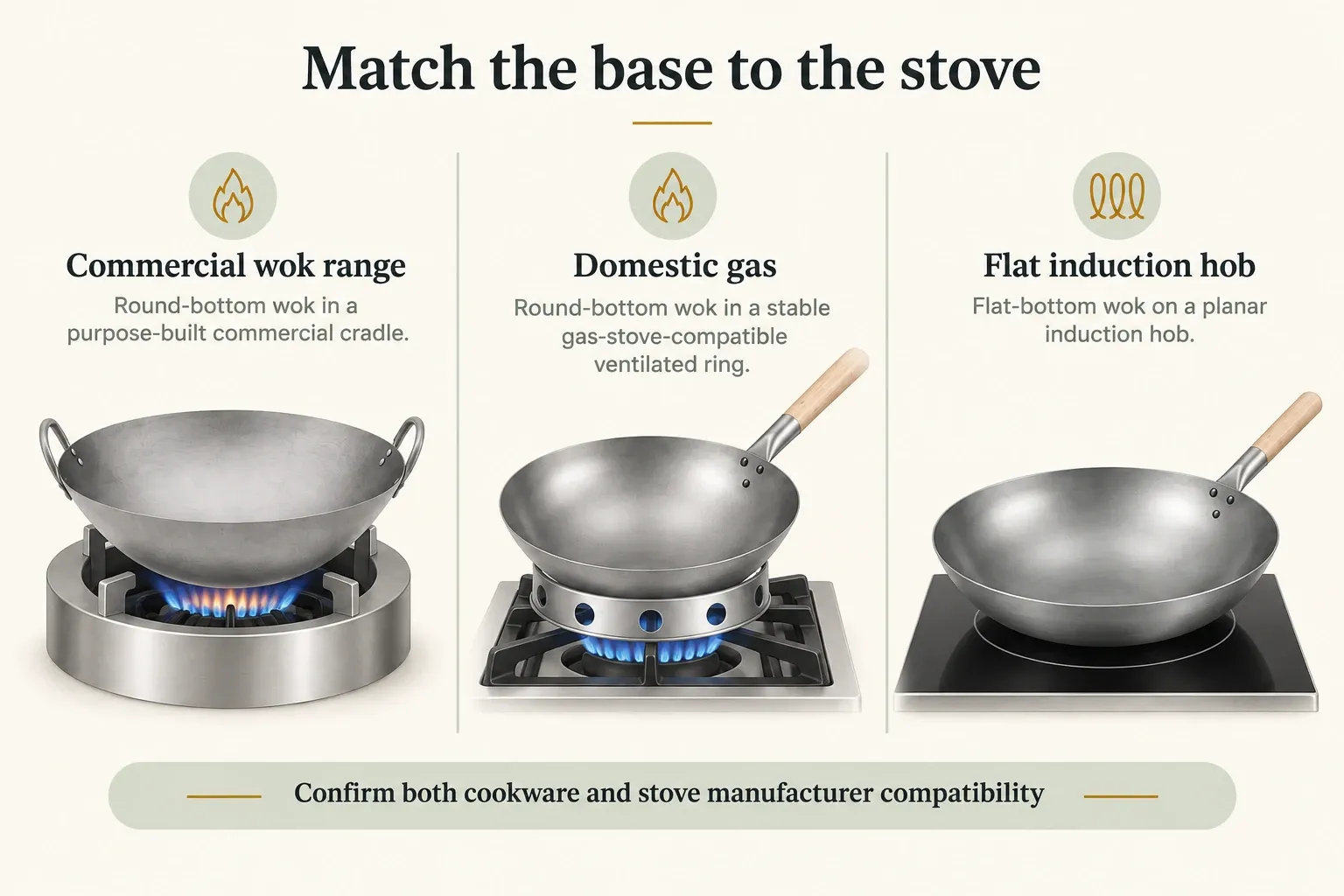
- Commercial wok ranges with open burners or chambers are the natural home of the round-bottom wok.
- Domestic gas hobs take either shape; a round-bottom wok typically needs a wok ring on a flat grate.
- Induction, ceramic and glass tops generally require a flat bottom, because the heating zone needs close, planar contact with the pan.
Why the Two Bottoms Cook Differently
Round bottom: concentrated heat and a natural return flow
In a round-bottom wok, heat concentrates toward the center of the bowl, and food and oil slide back toward that hottest point — the geometry behind traditional high-heat stir-fry. The shape is built to be cradled by an open flame or ring support, not to rest on a flat surface.
Flat bottom: full contact and fewer conditions
A flat-bottom wok trades part of that geometry for versatility: the base sits level, makes contact across the full heating zone, and needs no accessory to stand safely. The center-focus effect is softer, but on modern domestic stoves it is generally the more forgiving everyday shape.
Matching Bottom Shape to Stove Type
Commercial wok ranges and open chambers: round-bottom territory
Commercial wok ranges are typically built around an open chamber or ring-shaped cradle that accepts a round bowl; the flame concentrates at the bowl's center while the chef keeps the batch in motion. Foodservice-weighted demand — restaurant supply, central kitchens, hawker formats — therefore generally maps to round-bottom SKUs, ordered with racks or rings as supporting accessories.
Domestic gas stoves: either shape, with one caveat
A home gas hob usually presents a flat grate. A flat-bottom wok sits on it directly; an unsupported round-bottom wok can rock or tip, which a wok ring typically solves by cradling the bowl above the grate. The shelf conversation: round-bottom sells the traditional tossing experience but should be sold with a ring; flat-bottom is the lower-friction choice.
Induction, ceramic and glass tops: flat bottom as the requirement
Induction zones need close, flat contact with the pan base; ceramic and glass radiant tops heat across a planar zone. A round-bottom wok generally cannot make that contact — hence the flat bottom wok for induction as the standard shelf expectation. Where stove makers offer recessed or domed zones for round woks, defer to the stove manufacturer's guidance. In induction-heavy retail markets, flat-bottom SKUs are typically the entry ticket to the category.
From Stove Mix to SKU Mix: Planning the Assortment by Market
Three planning questions usually settle the split:
- Channel mix. How much demand is foodservice versus home retail? Foodservice-weighted markets typically pull round-bottom volume plus rings; home-retail markets follow the household fuel mix.
- Household fuel mix. Gas-dominant home kitchens keep round-bottom-plus-ring viable at retail; induction- and electric-glass-dominant markets make flat-bottom the default family wok.
- Label and educate. In mixed markets, plan both shapes and make the bottom shape unmissable on packaging, so customers self-select by the stove they own.
This is planning logic, not a statistic about any one country — but it mirrors how the local stove park was designed. Once the split is settled, the size ladder is next; see our carbon steel wok size guide for laying out diameters within each shape.
Shelf Language: Double Handle vs. Single Handle
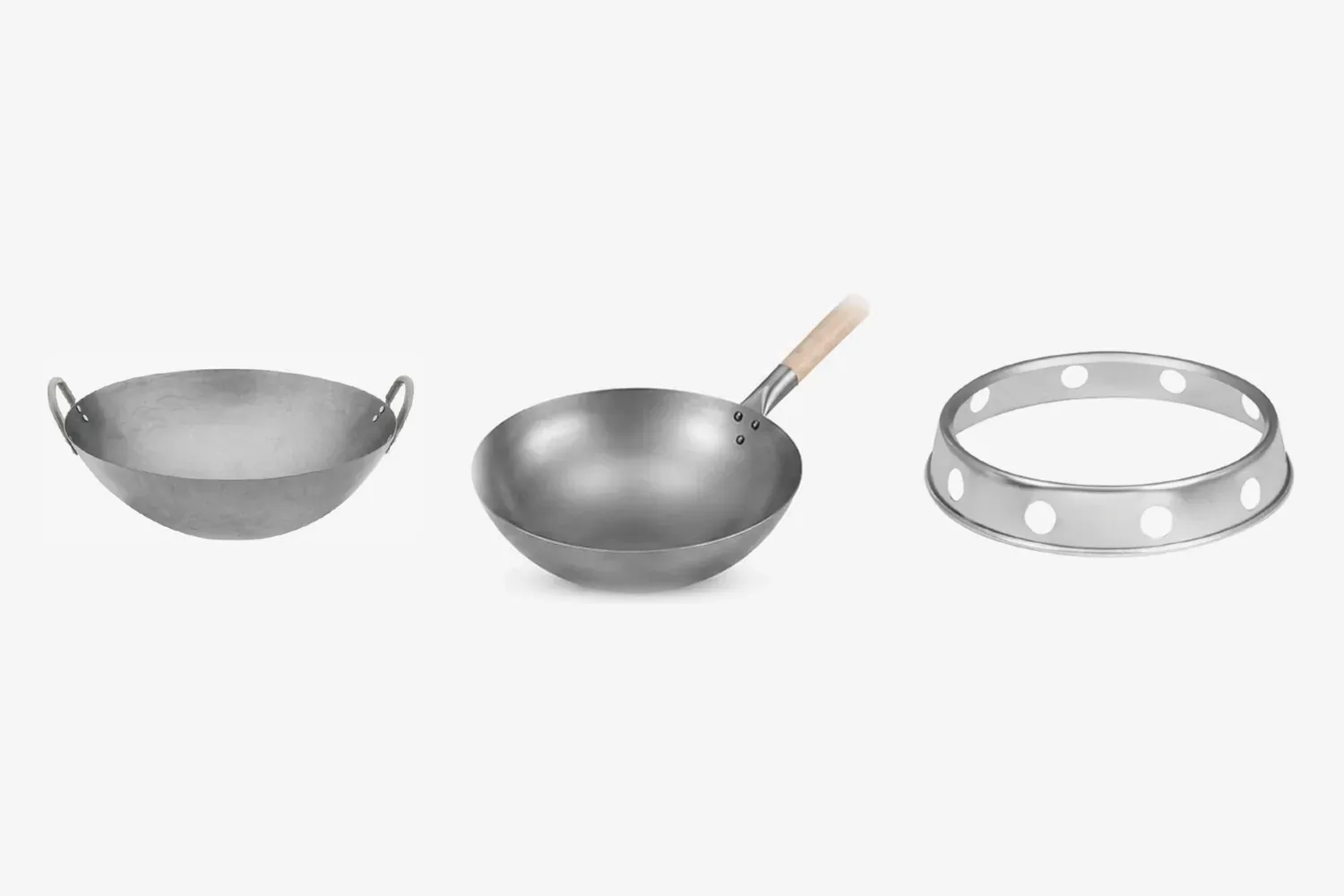
Bottom shape is a functional decision; handle configuration is a shelf-language decision, planned separately. Double-handle woks such as the handmade YH-CSW-101 (12–26 in) and the machine-made YH-CSW-201 (10–16 in) typically read as traditional or commercial-kitchen products. A single-handle wok such as the machine-made YH-CSW-202 (10–16 in) typically reads as a home or Western-shelf product, closer to the frying-pan silhouette shoppers know.
One note for every buyer: bottom shape is confirmed per model and per order, not from handle style. Our round- and flat-bottom options run across the CSW line, and our spinning and stamping lines support different body forms — the exact bottom shape, size and finish of each model are locked in the order specification.
The Wok Ring as a Margin-Friendly Accessory Line
A wok ring is a small item with an outsized role in a round-bottom program: it typically cradles a round-bottom wok on a flat grate or rack so the bowl sits stably while it cooks, protecting the cooking experience and the customer's sense of safety.
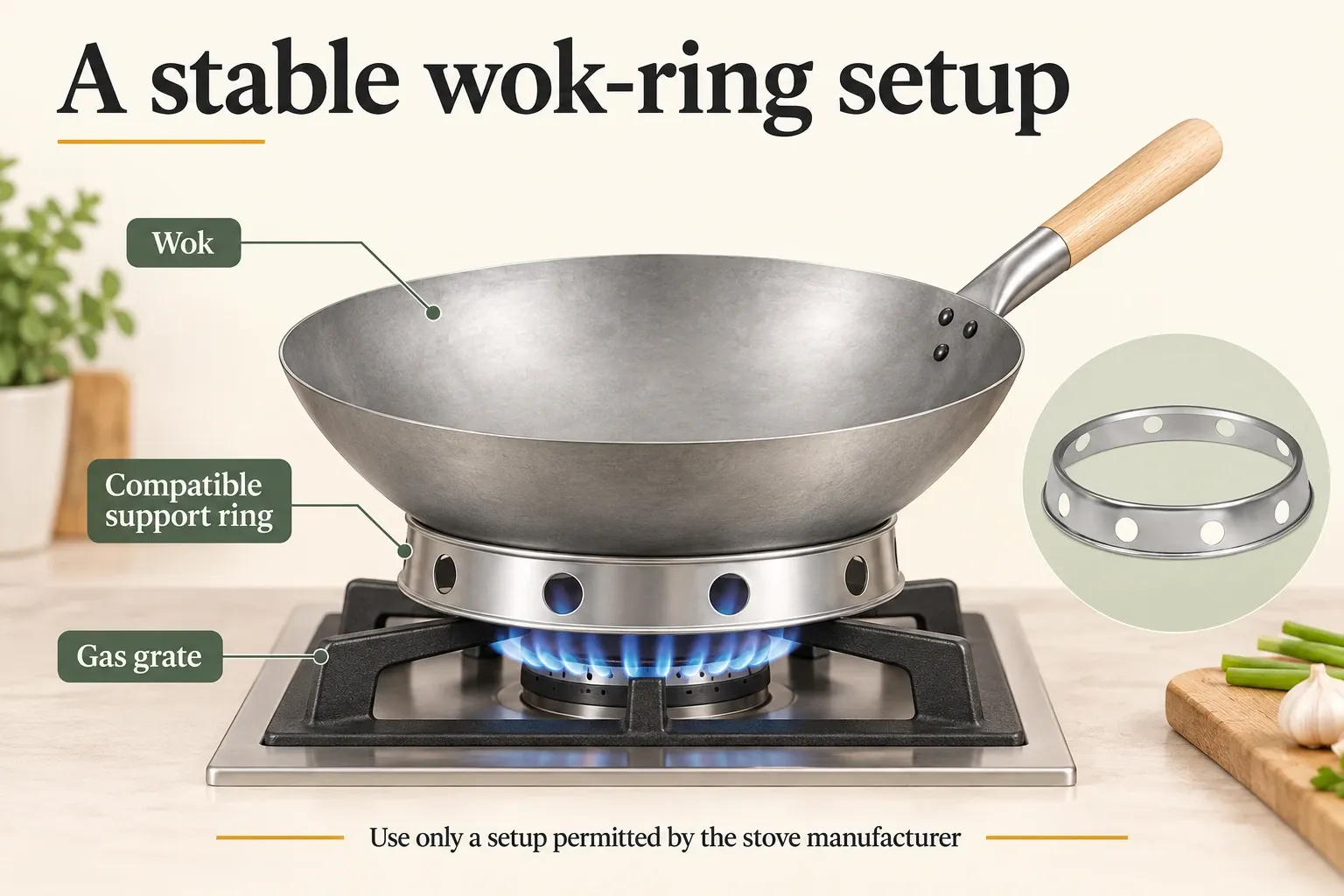
The YH-ACC-109 stainless steel wok ring comes in 24, 26, 28 and 30 cm sizes, in 201 or 430 stainless steel with a polished or sanded finish. Rings work three ways at channel level: bundled with round-bottom woks so customers can cook safely on day one; merchandised as a high-attach add-on beside any round-bottom display; specified by foodservice dealers on open-burner installations. Low in unit value but visible in daily use, a ring also suits private-label programs — and samples are available before you commit a configuration.
Compatibility and Compliance Notes
In market copy, describe compatibility as the typical pairing and defer to the stove manufacturer's instructions. On documentation we stay conservative: certification support per market and model, subject to test reports, including FDA, LFGB, CE and SGS-related support where applicable to the model and destination market. We do not claim blanket approvals across the range.
Quick-Reference: Round vs. Flat at a Glance
| Dimension | Round-bottom wok | Flat-bottom wok |
|---|---|---|
| Stove compatibility | Native on open-burner wok ranges; home gas grates typically need a wok ring | Generally required for induction, ceramic and glass tops; sits directly on flat gas grates |
| Toss-frying | Strong: heat concentrates at the bowl's center and food returns to it | Softer: food spreads across a flat zone; bowl-toss geometry weakens |
| Capacity utilization | Deep bowl holds volume over the flame; little usable flat contact on flat stoves | Full base contact on flat stoves; shallower tossing profile at the same diameter |
| Retail pitch | "Restaurant-style tossing — add the ring for your gas stove" | "Works on your induction or glass stove out of the box" |
Use it as a sales-floor training sheet or marketplace variant copy.
Frequently Asked Questions
Can I use a round-bottom wok on an induction cooktop?
Generally no. An induction zone needs close, planar contact with the pan base, and a round bowl cannot provide it, so most round-bottom woks will not heat properly on a standard induction hob; a flat-bottom wok for induction is the usual requirement. Recessed or domed induction zones for round woks are the exception — follow the stove maker's guidance.
Does a round-bottom wok need a wok ring on a home gas stove?
Typically yes. Home gas grates are flat, and an unsupported round bowl can rock or tip; a ring cradles the bowl so it sits stably over the flame. The YH-ACC-109 comes in 24–30 cm sizes — match the ring to the wok diameter and check the grate layouts common in your market.
Should a first order carry both bottom shapes?
If your market genuinely splits between open-flame and flat or glass cooking surfaces, a two-shape assortment prevents half your shelf being unusable for part of your customers; if one stove type clearly dominates, lead with that shape and add the other on reorder. Bottom shape is confirmed in the order specification rather than assumed — send us your market's stove mix and we will propose the shape and size split.
Tell Us Your Stove Mix — Get a Bottom-Shape Assortment Plan
Tell us your target market, your foodservice-versus-retail split, and the dominant stove types; we will come back with a proposed round/flat split across the CSW line, matching handle configurations, and ring sizes to bundle.
Tell us your target market's stove mix — get a bottom-shape assortment plan — include your destination market, channel mix and expected order scale.
Want to test the bundle first? Request a YH-ACC-109 wok ring sample together with your wok specification, and we will arrange samples before you commit a configuration.