Carbon Steel Wok Size Guide for Restaurant and Retail Buyers
Compare wok sizes in inches and centimeters, then check depth, handles, thickness, finish and burner fit for a restaurant or retail cookware order.
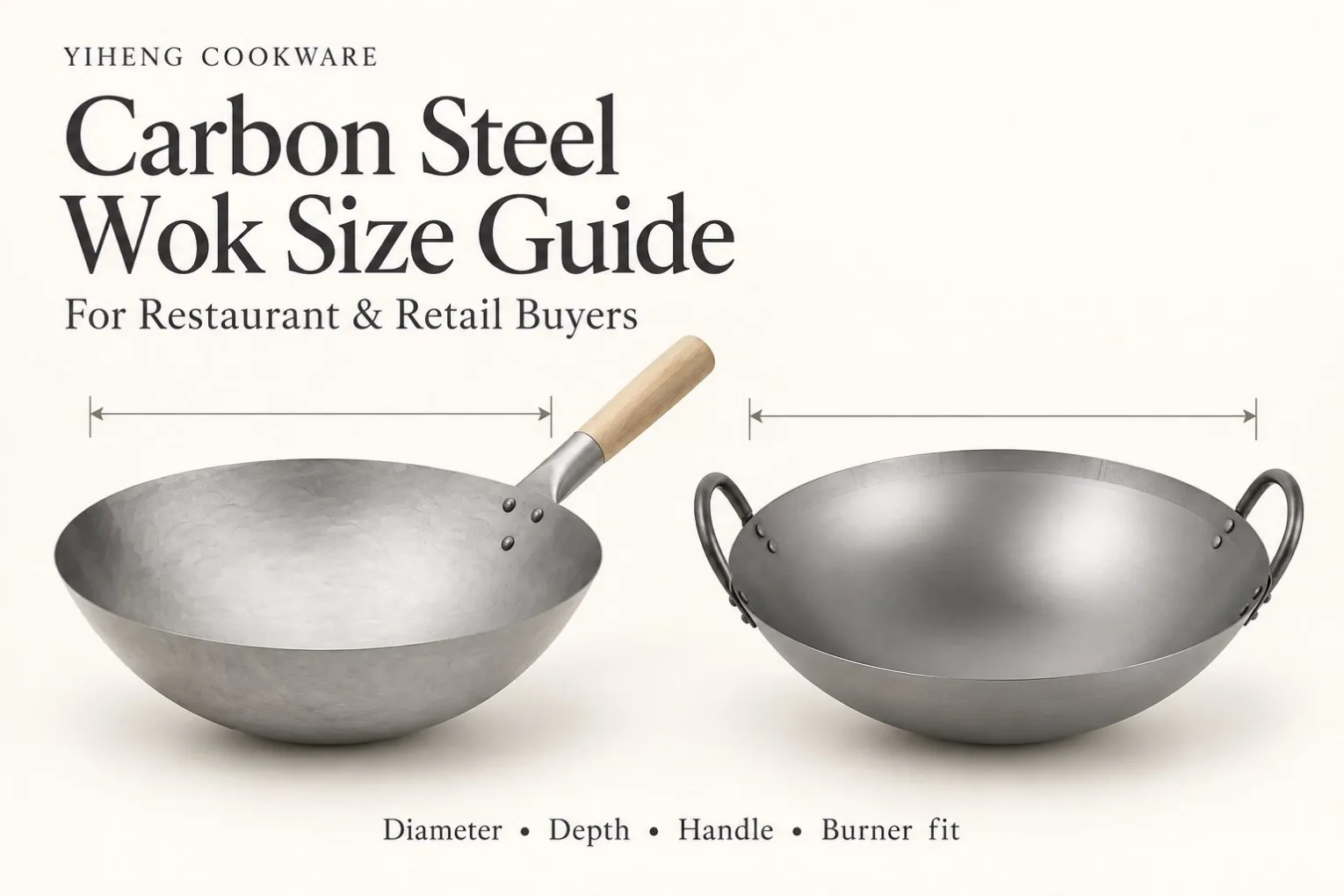
Start with diameter, then check depth, loaded weight, handle format and burner fit. This guide helps restaurant buyers and retail category managers turn a size chart into a workable order.
Wok size quick-reference chart
The conversions below use 1 inch = 2.54 cm, rounded to one decimal place. Buying scenarios are starting points for evaluation, not serving-capacity guarantees or measured market demand.
| Nominal diameter | Metric conversion | Scenario to evaluate |
|---|---|---|
| 12 in | 30.5 cm | Compact household range or a smaller cooking load |
| 13 in | 33.0 cm | Household cooking or small-batch preparation |
| 14 in | 35.6 cm | A household or compact foodservice option to sample |
| 15 in | 38.1 cm | A larger home setup or suitably equipped small kitchen |
| 16 in | 40.6 cm | Restaurant use with a compatible burner and working load |
| 18 in | 45.7 cm | Larger foodservice applications with suitable equipment |
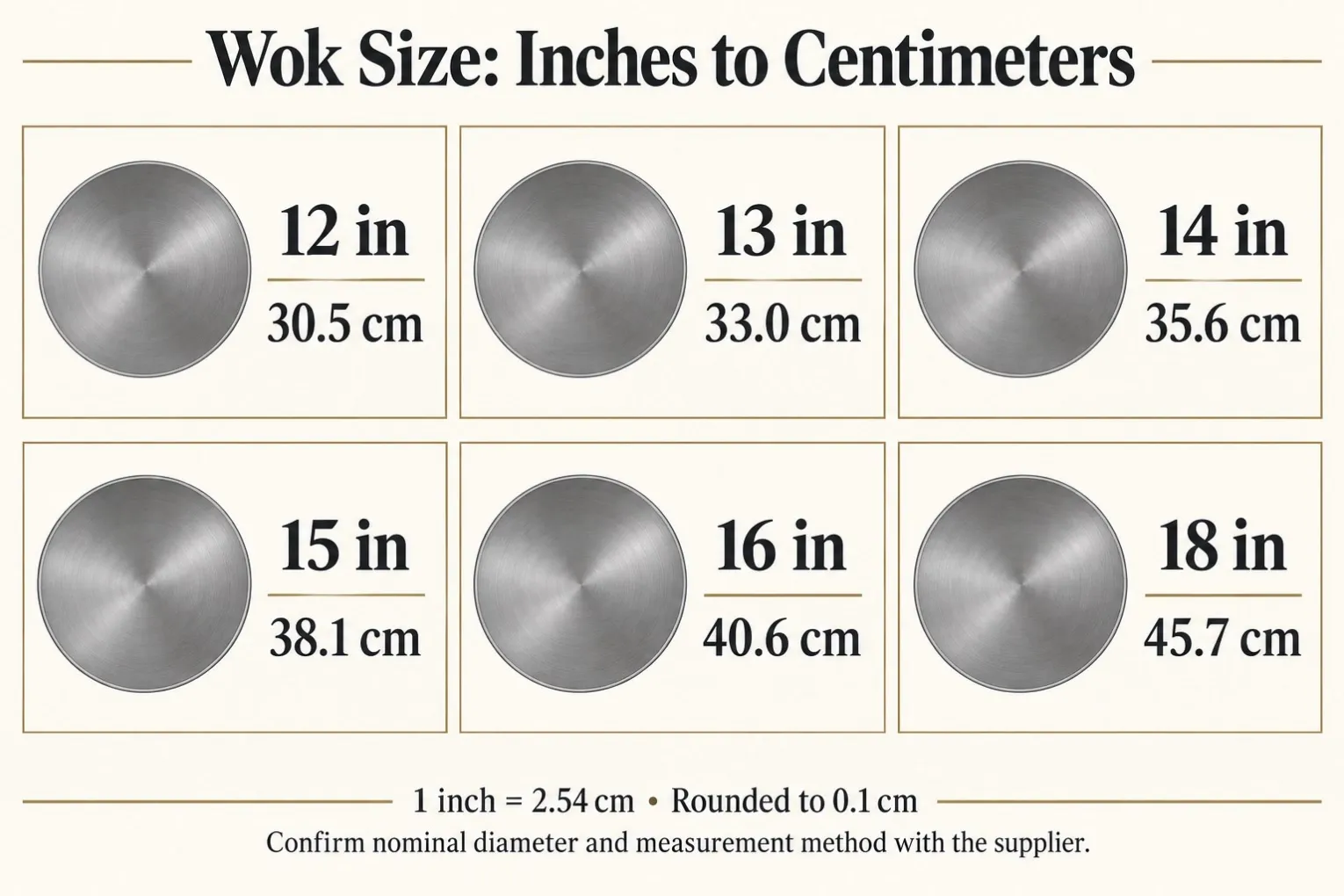
Confirm how the supplier measures diameter: across the outside rim, inside opening or another specified point. Also confirm whether a quoted size is nominal. A 30 cm model is not exactly 12 inches, and a 36 cm model is not exactly 14 inches.
Diameter alone cannot tell you how much food a wok can stir-fry well. Depth, bottom shape, burner output and the amount of food loaded all matter. Leave room to move food and test the intended batch rather than filling to the rim.
Matching wok size to foodservice scenarios
Choose for the working batch
A kitchen preparing individual orders has different needs from one cooking larger batches. Start with the recipe, portion weight and intended batch size. Then test a sample on the actual stove.
During a trial, check whether food can be turned comfortably, whether moisture clears as required and whether the cook can handle the loaded wok through a normal service sequence. A larger diameter does not automatically create higher output; it also needs a suitable heat source and workspace.
Decide handle format with the size
A long handle can suit controlled tossing and one-handed positioning. Two loop handles can suit lifting and carrying, especially as the vessel and its contents become heavier. The better choice depends on the cook's technique and workstation.
For each sample, assess grip, reach, balance, attachment security and loaded weight. Metal handles can become hot; use the protection specified for the product. Avoid calling a handle arrangement “safe” based on a photograph alone.
Two reference models illustrate the different formats:
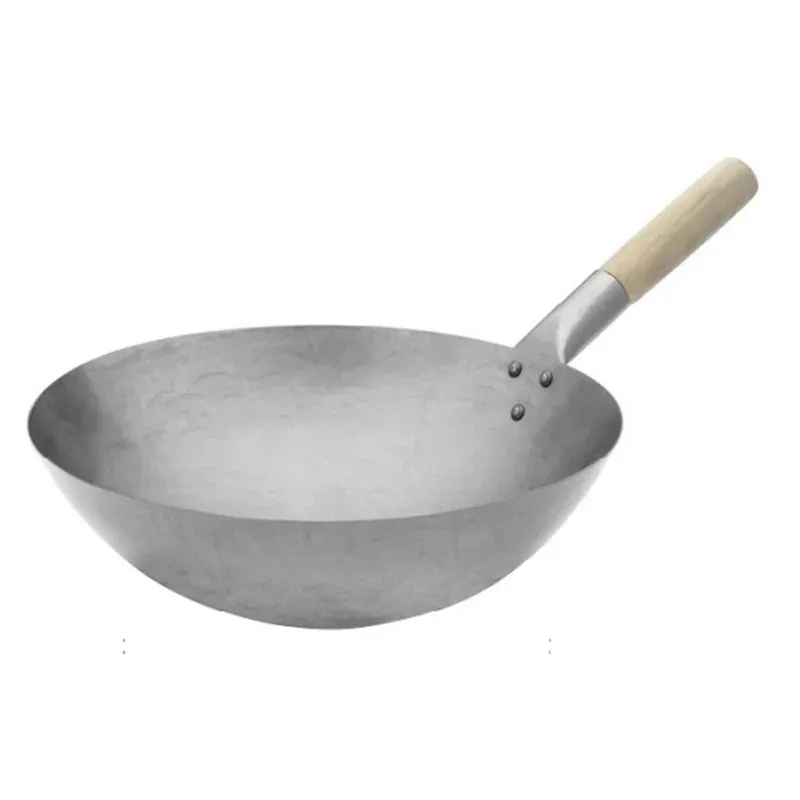
The YH-CSW-102 lists 12–19 inch sizes and 1.0, 1.2, 1.5 and 1.8 mm thickness options. Confirm the available pairing for the selected size.
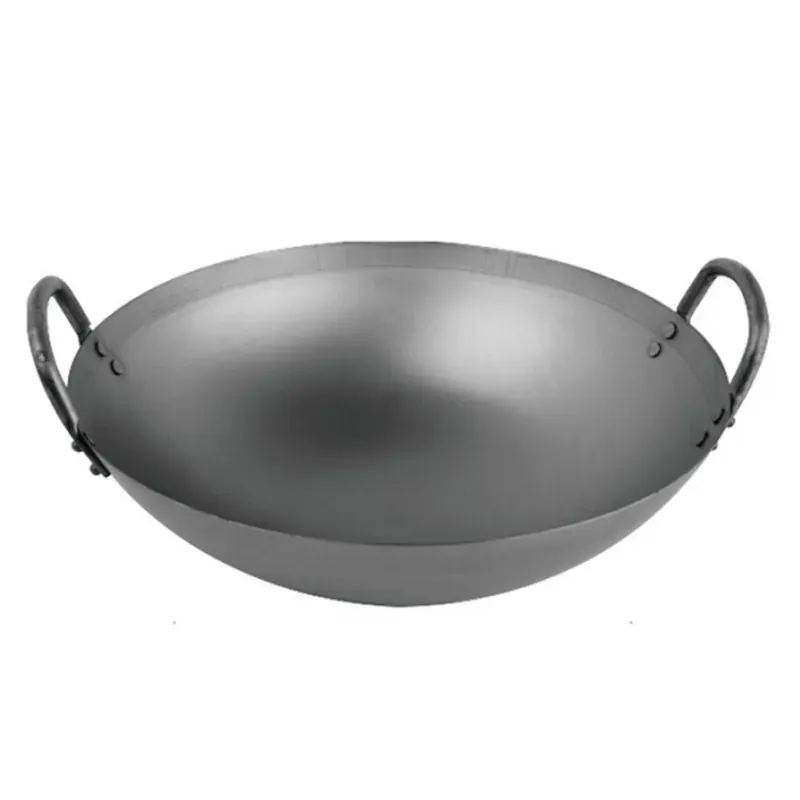
The YH-CSW-201 lists 10–16 inch sizes and 1.0 or 1.2 mm options. Larger double-handle requirements can be discussed using YH-CSW-101, listed at 12–26 inches with a 1.0–1.8 mm thickness series.
Match the wok to the burner
Confirm the stove model or provide its relevant dimensions when asking for a sample.
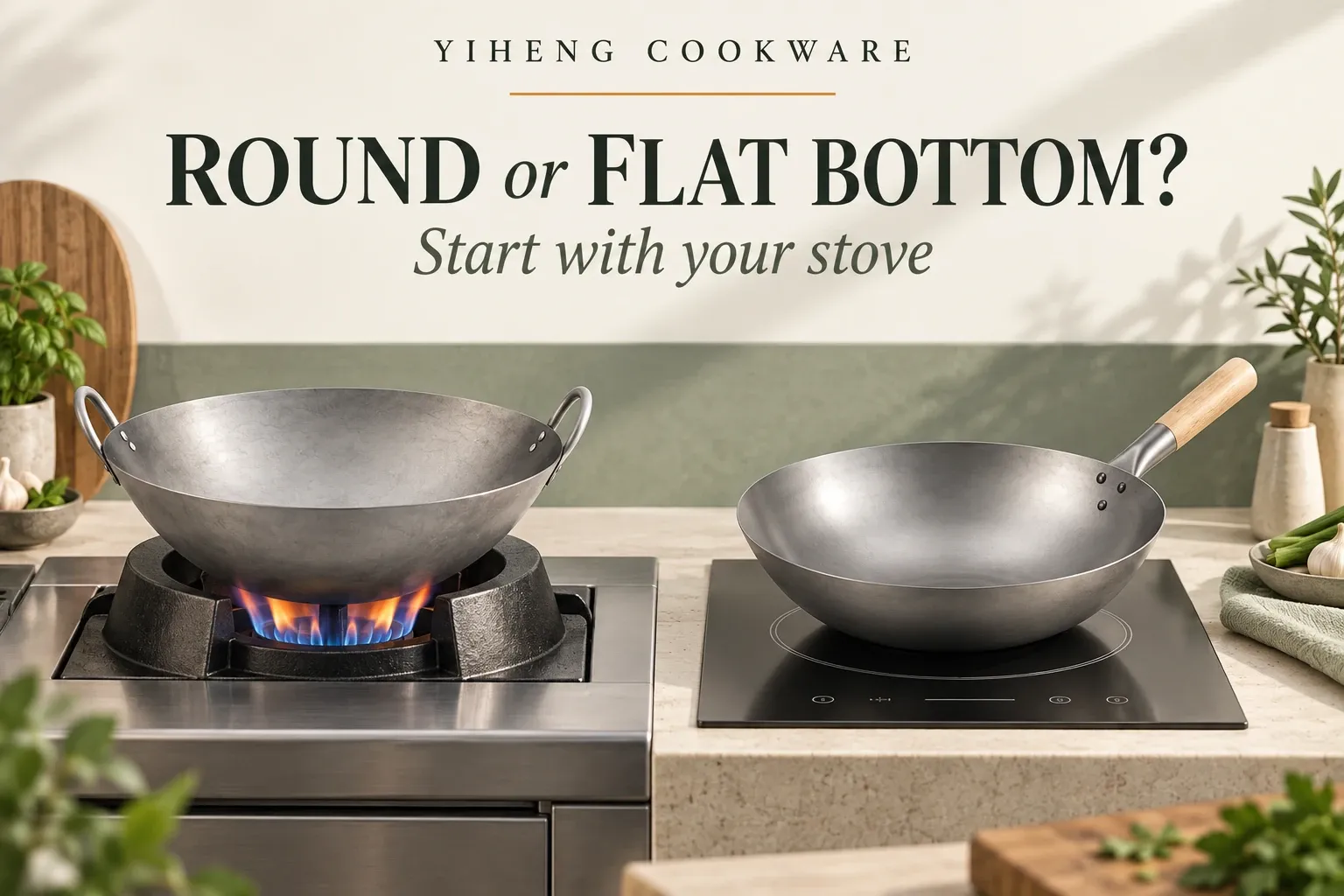
- A round-bottom wok needs a support system designed for its profile and the appliance.
- A flat-bottom wok needs a suitable contact area, base geometry and appliance compatibility.
- Do not assume adding a wok ring makes a round-bottom wok suitable for every electric or induction cooktop. Follow the appliance manufacturer's instructions.
- Check clearance around the handles and adjacent cookware as well as support beneath the bowl.
For induction, material compatibility is only one part of the assessment. The appliance must also work with the selected base shape and contact area. Confirm compatibility for the exact configuration instead of treating every carbon steel model as interchangeable.
Planning a retail wok assortment
Select a focused starting range
Use your channel's sales history or sample feedback to choose the initial diameters. A compact trial assortment can be easier to evaluate than spreading an order across many untested sizes.
Give each SKU a clear role: an accessible everyday option, a larger format or a differentiated construction. Those are planning roles, not guaranteed volume or margin outcomes. Set the order quantity using actual demand, storage capacity and replenishment timing.
Keep process and finish separate
Handmade, machine-made, natural-finish, pre-seasoned and enamel are not five sizes of the same product. They describe different aspects of its specification.
Natural-finish handmade and machine-made woks may both look silver-grey while showing different surface textures. A pre-seasoned model has a different surface treatment. Enamel adds a coating and its own care requirements.
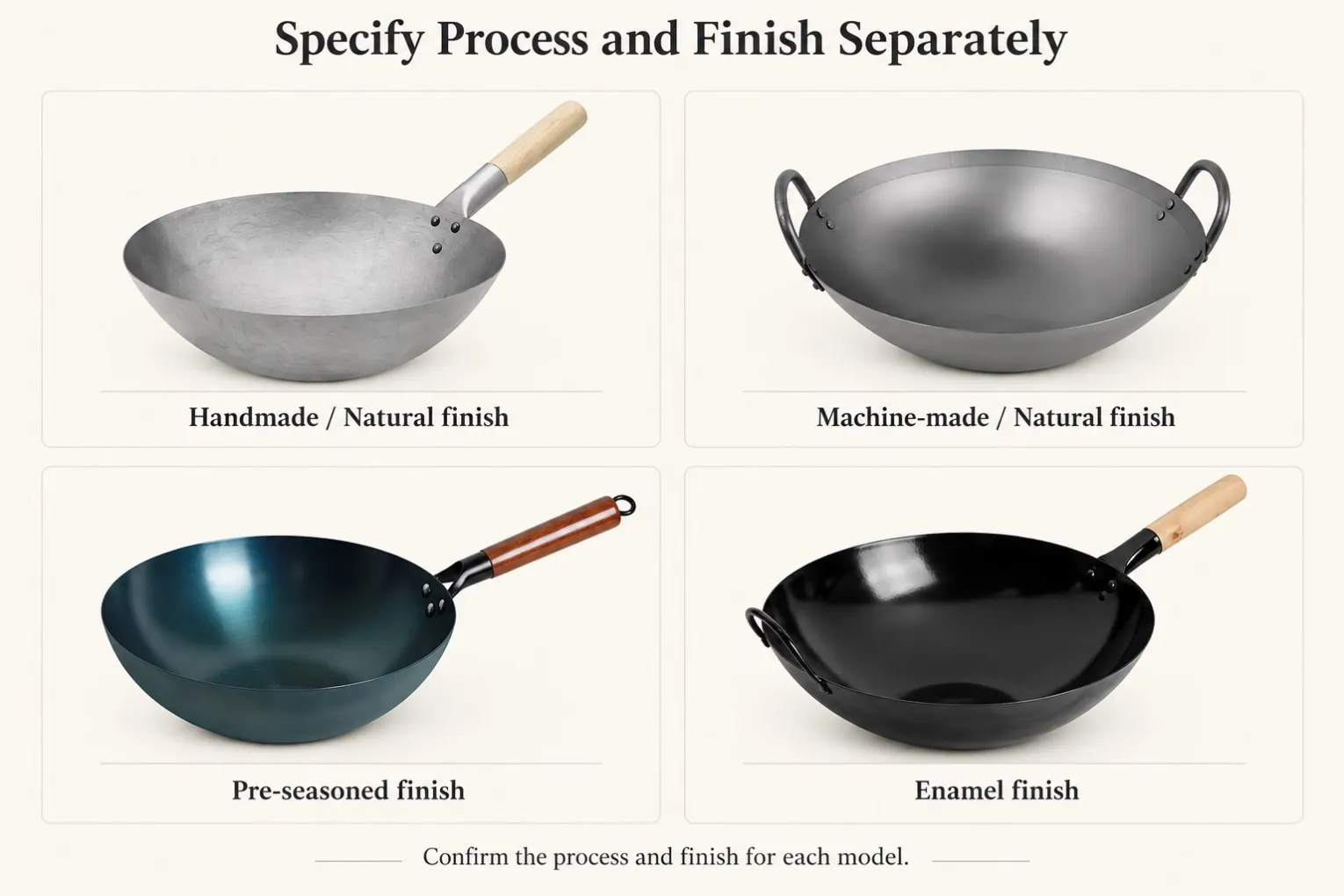
At the same diameter, a finish variant may give shoppers a meaningful alternative. Compare its cost, care instructions and expected demand before adding it. Do not assume a darker surface means a particular forming method or a higher quality grade.
For more detail, see our handmade vs. machine-made wok comparison.
Add accessories when they fit the care routine
The YH-ACC-110 bamboo wok brush, listed at 28 and 30 cm, can be considered alongside a wok program. Confirm its suitability for the selected finish and align the packaging instructions with that care routine.
How size and thickness interact
Larger dimensions, wall geometry, handle attachments and heating conditions can change a wok's stiffness and handling. Thickness matters, but there is no universal gauge-per-inch rule that covers every design.
Compare the selected size and thickness together. Include empty weight, base stability and performance under the intended heating cycle in the sample assessment. A heavier sheet can also increase handling effort.
See our carbon steel wok thickness guide before finalizing the specification.
YIHENG size options for a coordinated order
The supplied range provides these starting points for quotation:
| Model | Format | Listed diameter range | Listed thickness options |
|---|---|---|---|
| YH-CSW-102 | Handmade, wooden handle, natural finish | 12–19 in | 1.0 / 1.2 / 1.5 / 1.8 mm |
| YH-CSW-201 | Machine-made, double handle, natural finish | 10–16 in | 1.0 / 1.2 mm |
| YH-CSW-101 | Handmade, double handle, natural finish | 12–26 in | 1.0 / 1.2 / 1.5 / 1.8 mm |
Ranges describe model families; they are not confirmation that every diameter is available in every gauge. The exact forming route, base profile, dimensional tolerances and finish should appear in the agreed specification.
For an adjacent frying-pan range, the supplied catalogue also lists the 30 cm YH-CFP-030 and 36 cm YH-CFP-036, both at 1.6 mm with a listed 26.5 cm iron handle. Keep their metric product names when ordering; approximate inch equivalents should not replace the specified diameter.
MOQ and mixed-size container planning
Ask for MOQ by model, size and finish. Confirm whether a proposed mix affects packaging, lead time or the quantity needed for each configuration.
Provide estimated quantities per SKU and the destination market. The team can then check sampling terms, production availability and whether the items can be consolidated into the requested shipment.
Size-mix decision checklist
Before requesting a quotation, record:
- Sales channel or cooking task.
- Diameter and measurement convention.
- Bowl depth, base profile and expected working load.
- Handle format and acceptable product weight.
- Stove model or burner details.
- Forming method, thickness and surface finish.
- Quantity per configuration, packaging and accessories.
- Destination market, testing needs and desired delivery window.
Frequently asked questions
Does handle type change which wok size I should choose?
It changes how the selected size is handled. Evaluate the combination of diameter, loaded weight, grip and cooking technique rather than choosing by diameter alone.
How many sizes should a retail assortment carry?
Use demand evidence and available shelf space. A small trial range can help establish which sizes deserve replenishment before expanding into more diameters or finishes.
What thickness should a larger wok use?
Confirm a size–thickness combination offered for that model and test it under the intended conditions. Larger does not translate into one fixed thickness without considering the rest of the design.
Get your size mix priced
Send your target diameters, handle formats, finishes, quantities and destination market. Include burner information for a foodservice order so the team can check the proposed configuration.