Carbon Steel Wok Thickness: A Specification Guide for B2B Buyers
Use model-specific thickness options, a specification checklist and an example enquiry to prepare your carbon steel wok sourcing brief.
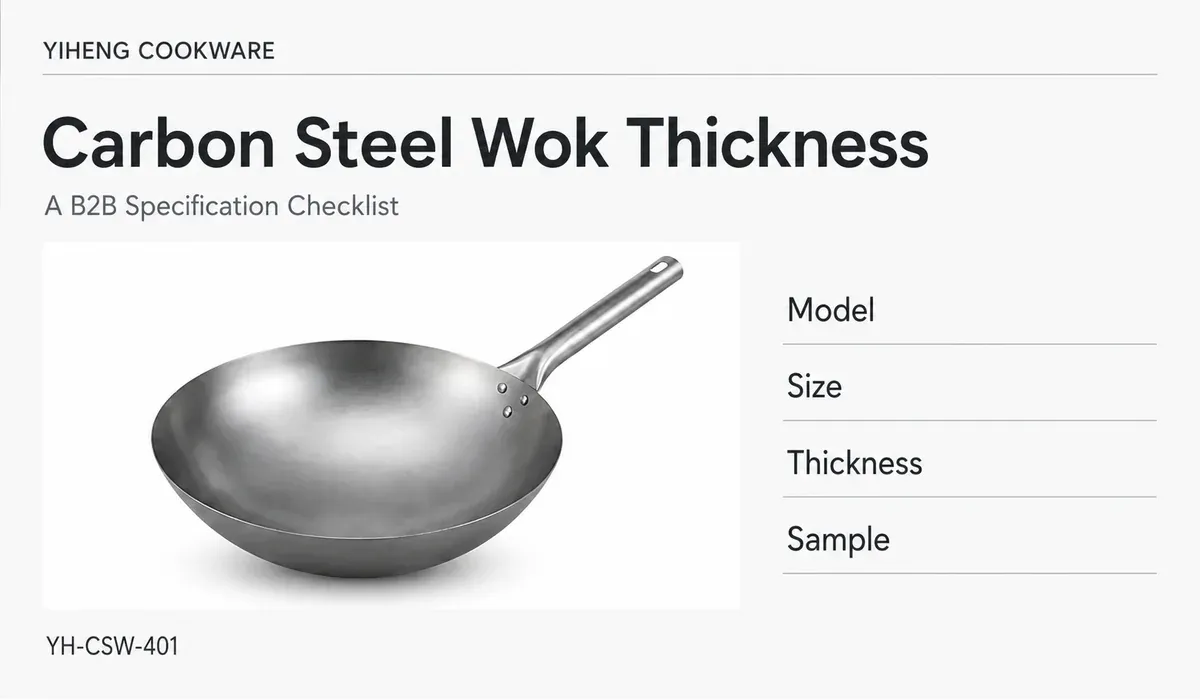
To specify carbon steel wok thickness, identify the model and size, request a thickness listed for that model, and agree how the finished product will be measured and accepted. Then evaluate the proposed sample for its intended use. A description such as “retail wok” or “restaurant wok” is not a complete purchasing specification.
For importers, distributors and cookware brands, the useful outcome is a clear specification that can carry through from enquiry to quotation, sample review and order. This guide explains what to record and what still needs confirmation.
Which thicknesses are listed for these YIHENG models?
The following examples come from YIHENG product specifications. They show why a thickness request needs a model number, not just the description “carbon steel wok.”
| Model | Listed thickness options | Product configuration |
|---|---|---|
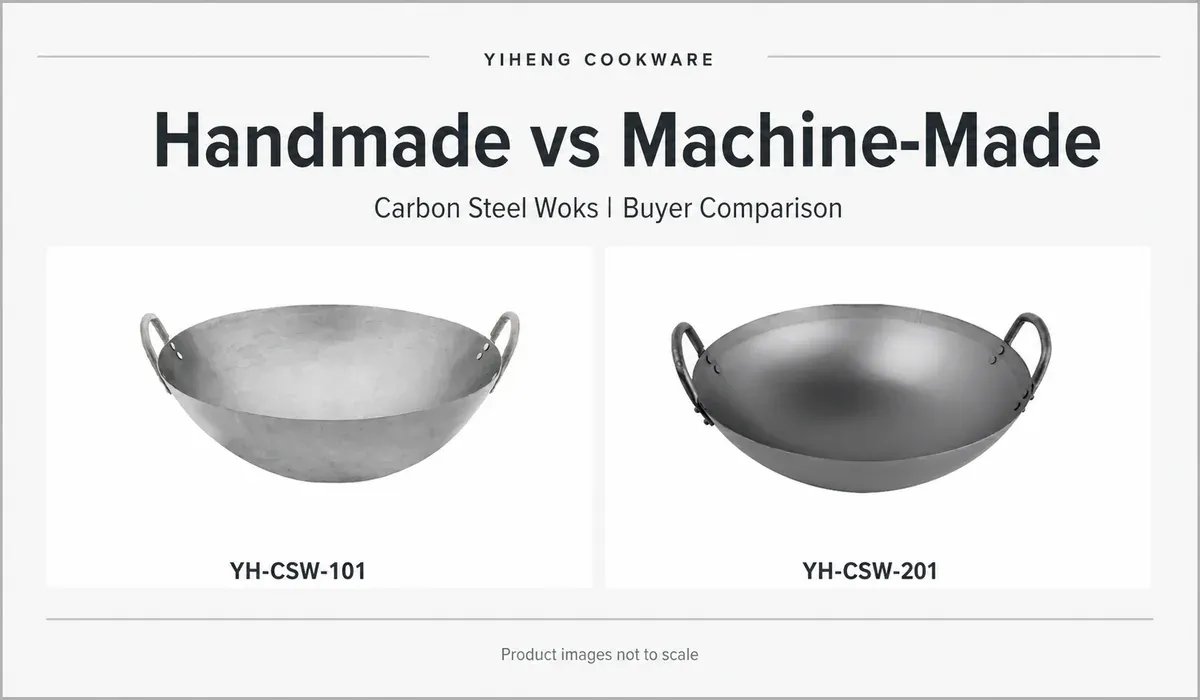
| YH-CSW-101 | 1.0, 1.2, 1.5 and 1.8 mm | Handmade carbon steel wok with double loop handles |
| YH-CSW-201 | 1.0 and 1.2 mm | Machine-made carbon steel wok with double loop handles |
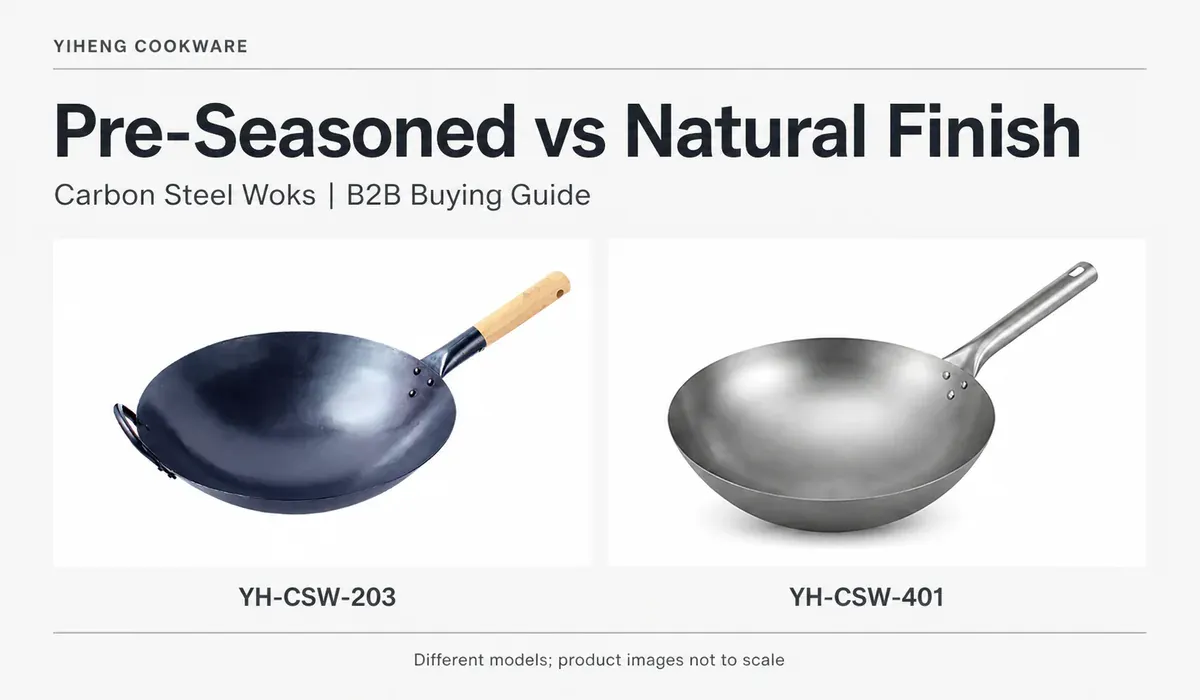
| YH-CSW-401 | 1.0 and 1.2 mm | Machine-made carbon steel wok with a steel handle |
For a 1.5 or 1.8 mm enquiry, YH-CSW-101 is a model to discuss. For a 1.0 or 1.2 mm enquiry, the examples also include YH-CSW-201 and YH-CSW-401.
These are separately listed options, not confirmation that every size can be supplied in every thickness. Ask for the exact combination. The figures are specification references, not comparative cooking-test results.
Turn a thickness figure into a purchasing specification
“1.2 mm carbon steel wok” leaves several questions open. Use the following checklist to make quotations and sample reviews refer to the same item.
| Record in the specification | Question to resolve |
|---|---|
| Model and diameter | Which model and size are being quoted, and how is the diameter measured? |
| Thickness definition | Does the stated figure refer to the starting material or the finished wok body? |
| Measurement locations and method | Where and how will thickness be checked on the finished item? |
| Acceptance tolerance | What variation is acceptable, and how will it be recorded? |
| Complete configuration | Which handle, finish and other agreed details identify this version? |
| Sample reference | Which sample or specification revision will the order reference? |
Do not silently treat the catalogue number as a guaranteed reading at every measurement point. Ask for clarification first. This checklist proposes questions for supplier agreement; it does not describe an existing YIHENG inspection procedure or specify a numerical tolerance.
Keep the approved version identifiable
Record the agreed details in one specification sheet. If the size, handle or finish changes during discussion, identify the revised configuration and check whether the previous quotation and sample still apply. Keep the accepted sample reference with the order documentation.
Set the sample review around the sales channel
Retail and household cookware ranges
Ask for the finished sample's measured unit weight, dimensions and handling characteristics to be reviewed alongside the proposed packaging. Check what product information and care instructions your retail listing will need. A thickness figure alone does not provide those details or justify claims such as “lightweight” or “easy to handle.”
Restaurant and foodservice supply
Describe the intended kitchen equipment and use when requesting the configuration. Ask the intended operator to review the sample's size, base fit and handle arrangement. Confirm any equipment-compatibility or performance claim separately; neither the thickness number nor the word “commercial” establishes it.
These are different review priorities, not a rule assigning one thickness to household buyers and another to foodservice buyers.
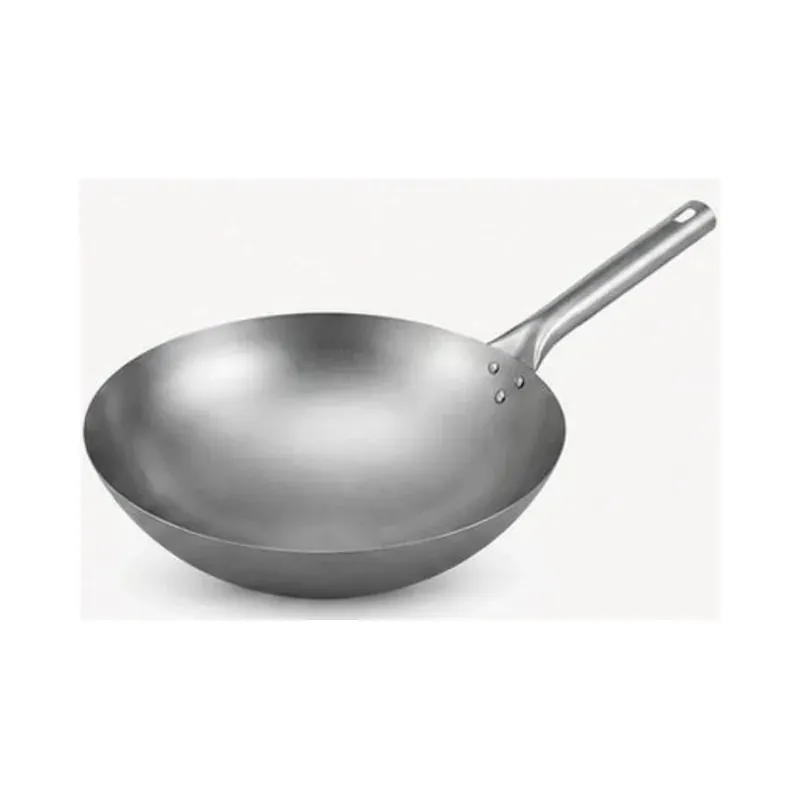
YH-CSW-401 product reference photograph.
Example: request a specific configuration for confirmation
The following is an illustrative enquiry, not an existing customer order or a confirmed product offer. YH-CSW-401 lists 16 inches among its sizes and 1.2 mm among its thicknesses; the combination still needs confirmation.
We are reviewing YH-CSW-401 for our cookware range. Please confirm whether a 16-inch version with a listed thickness of 1.2 mm is available. Please clarify whether this is a starting-material or finished-body specification, the measurement locations and method, and the proposed acceptance tolerance. We also need the finished unit weight, handle and finish details, packing information, and sample terms before finalizing our purchasing specification.
Add your destination market, sales channel, required quantity and any packaging requirements. Request a configuration-specific quotation and lead time; neither is established by this example.
Frequently asked questions
Is 1.2 mm the right thickness for a restaurant wok?
It is a listed option for the three models above, not a blanket restaurant-use recommendation. Provide the intended size, equipment and operating requirements, then review the confirmed configuration and sample. The supplied specifications do not establish a universal best thickness.
Can I order any listed size in 1.8 mm?
Do not assume so. Among these three examples, only YH-CSW-101 lists 1.8 mm. Confirm the requested size-and-thickness combination, commercial terms and sample requirements before proceeding.
Discuss your thickness specification
Send YIHENG COOKWARE the model, diameter and thickness you are considering, together with your market, quantity and sample requirements. You can also request the catalogue if you are still identifying a suitable model.
Request a catalogue or discuss your specification.
Product references in this guide are from specifications supplied by YIHENG COOKWARE, the brand of Foshan Yihengming Homeware Co., Ltd. The guide is a purchasing checklist, not a laboratory performance comparison.