How to Verify a Cookware Manufacturer in China: Factory Audit & OEM Checklist
Use seven steps to verify a cookware supplier's identity, production, test reports, OEM deliverables, sample consistency and shipment arrangements.
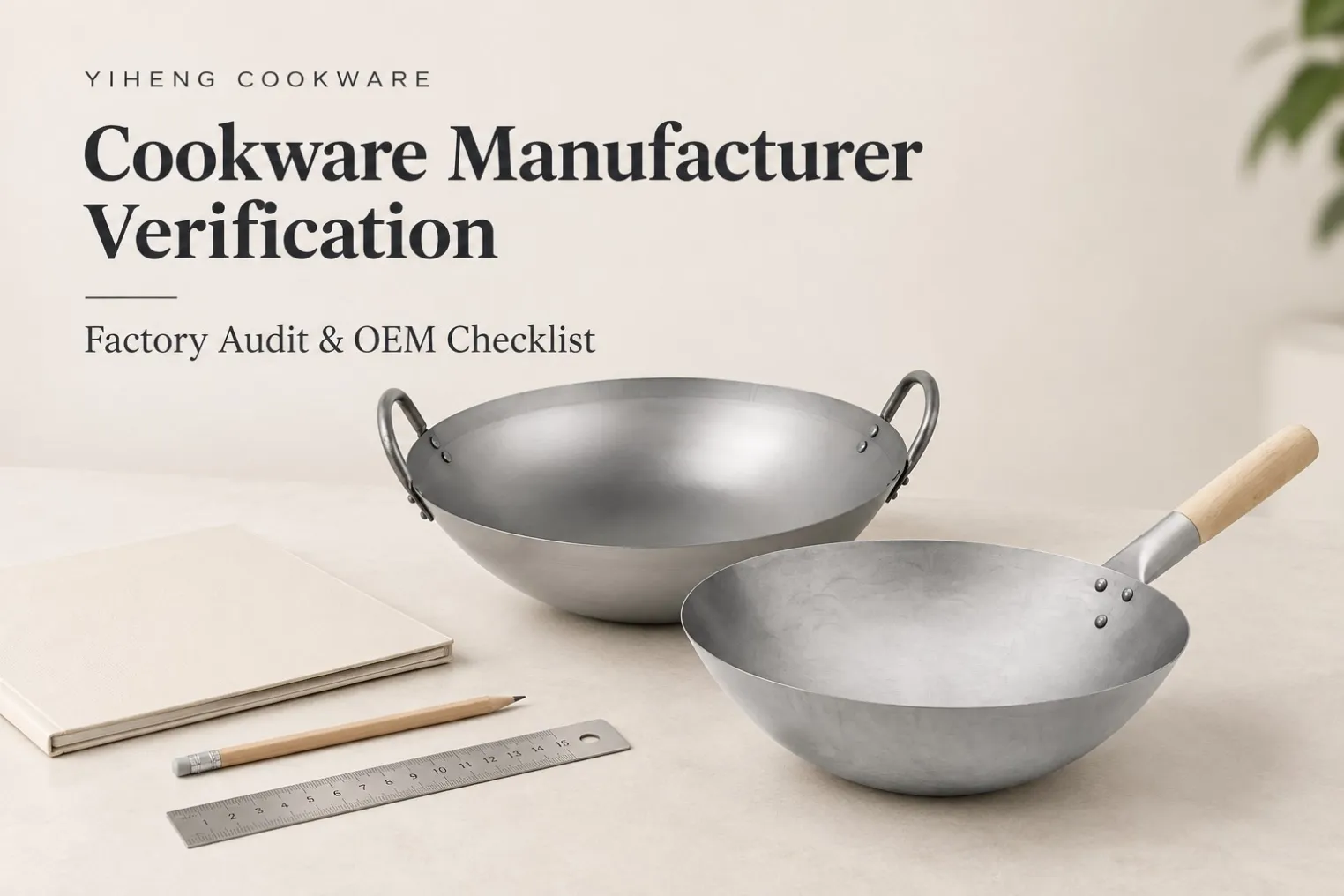
Before approving tooling or a production order, verify who makes the cookware, how it is inspected and which documents support the finished product. Use these seven steps with any supplier, including YIHENG.
A cookware sample can look convincing while leaving important questions unanswered. Who performs the surface treatment? Does the test report cover the selected finish? Which measurements will be checked before shipment?
An effective audit connects the supplier's identity, production capability, approved sample and shipment records. It reduces uncertainty; no single photograph, video call or certificate proves all four.
Why supplier verification matters
A buyer needs to understand both the commercial arrangement and the product controls. A trading company can be a capable sourcing partner, and a manufacturer can outsource some operations. The important point is knowing where the work takes place and who is responsible for quality and delivery.
Use the audit to identify gaps before committing to tooling, deposits or a production schedule. Match the depth of verification to the order's complexity and your requirements.
Step 1: Confirm the contracting entity and production relationship
Request the supplier's legal business name, business license, registered address and production-site details. Check that the quotation and proposed contract identify the entity you intend to engage.
Then establish the relationship between that entity and the factory:
- Which company operates the production site?
- Which processes are carried out there?
- Which steps are outsourced, and to whom?
- Who purchases materials and controls changes?
- Who handles defects, rework and buyer communication?
A manufacturing business scope is a useful starting check, but it does not prove that the particular order will be made in-house. Likewise, a quick answer or consistent model code is useful context, not conclusive evidence.
Use a live walkthrough and supporting records to connect the paperwork to the operation. Agree the scope and timing of the visit rather than treating immediate availability as proof of authenticity.
Step 2: Verify the production route for your model
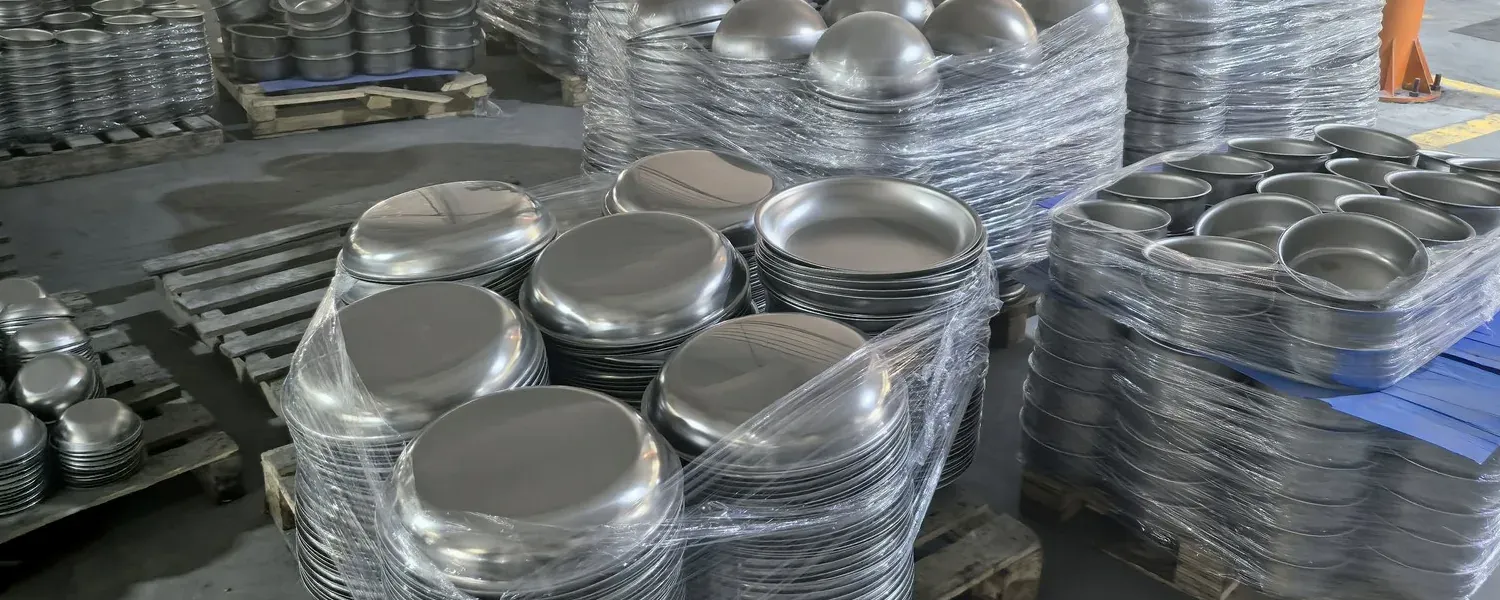
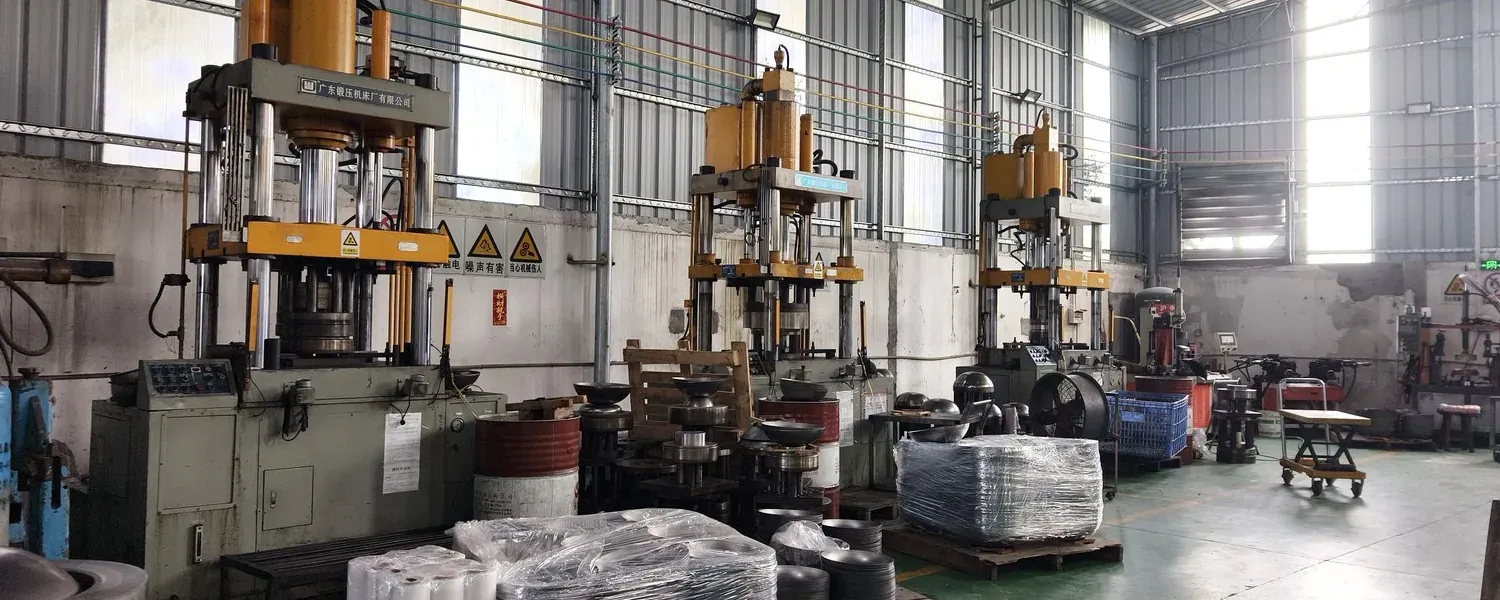
Forming: distinguish machine drawing, spinning and hand-working
The production route should be specific to the model. Machine drawing or stamping forms sheet material using tooling and a press. Spinning forms a rotating blank over a tool. Hand-working or hammering involves a different operation or finishing step.
“Handmade” is not enough detail on its own. Ask the supplier to explain which operations are manual, which machines are involved and where the visible surface texture comes from. Do not infer a hand-hammering process from a spinning-machine photograph.
YIHENG offers handmade and machine-made carbon steel products. For your target model, ask to see the relevant forming operation and the size range it supports. The handmade vs. machine-made wok guide provides context for that discussion.
Surface treatment: specify it separately
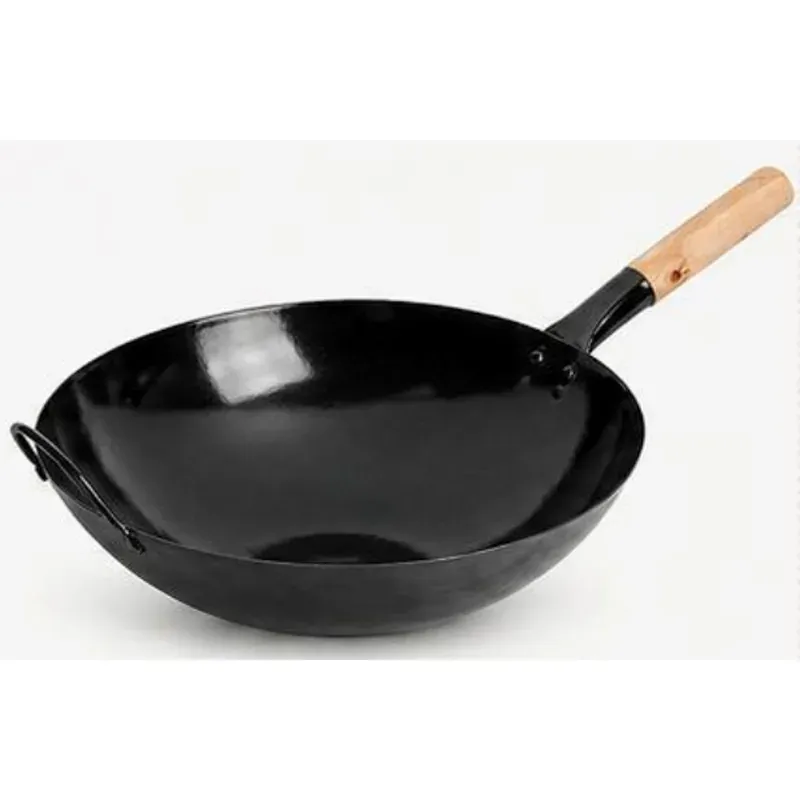
Natural-finish carbon steel can have its original silver-grey appearance, whether it is handmade or machine-made. Pre-seasoning, blackening and enamel are separate treatment descriptions; they should not be used interchangeably.
Ask what is applied, where it is applied and how the finish is controlled. A transport rust-protection oil is not, by itself, proof of a completed seasoning process. Confirm preparation and care instructions for the actual product.
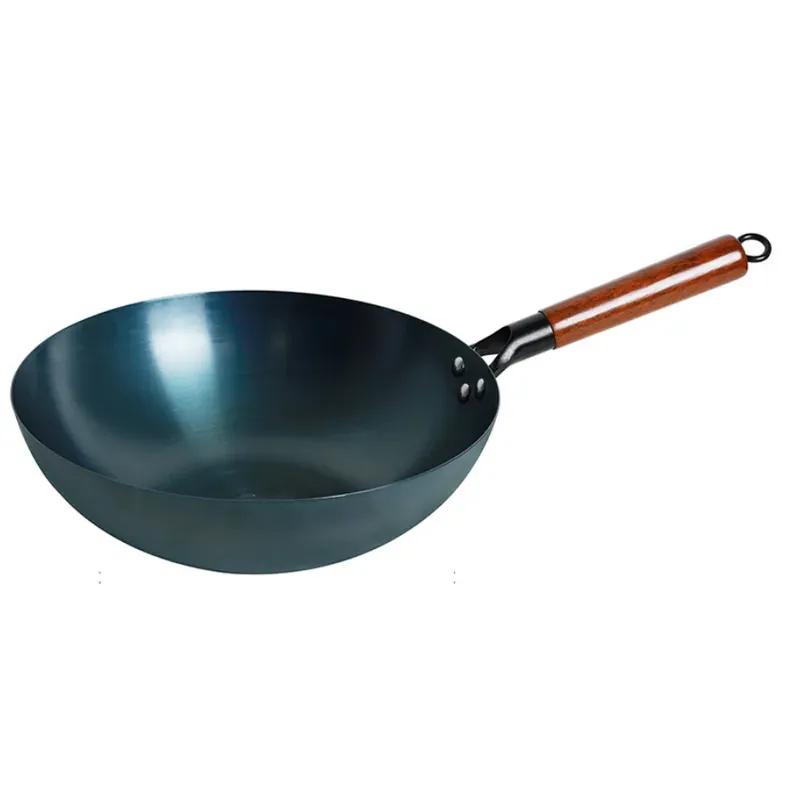
For example, YH-CSW-501 is listed as an enamel carbon steel wok with wooden handle, 12–16 inch sizes and 1.0 or 1.2 mm thickness options. Enamel specifications and testing should match the coating on the approved sample.
Finishing and inspection
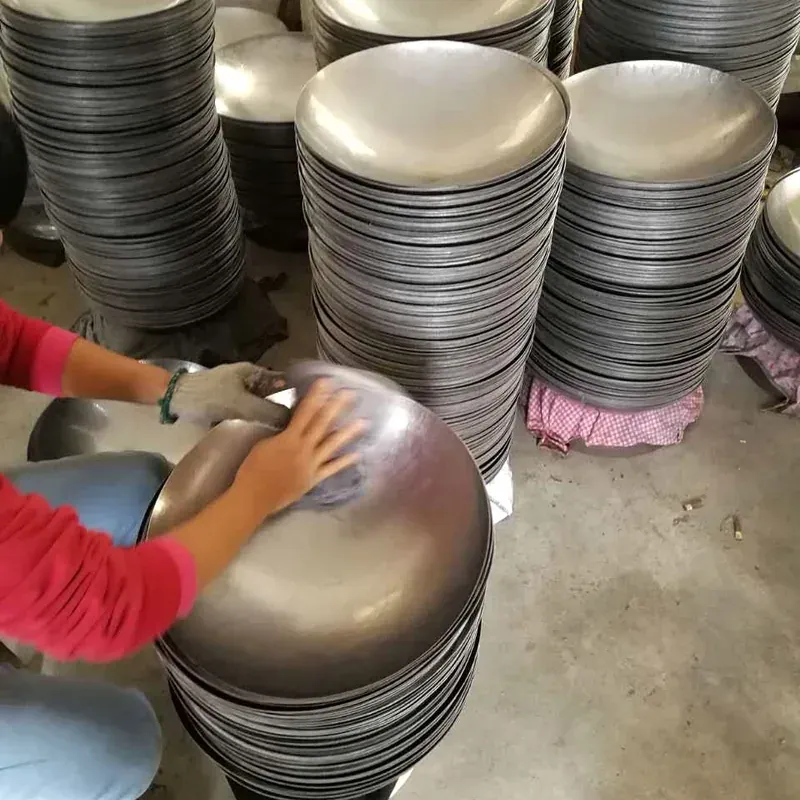
A finishing station and an inspection system serve different purposes. Ask which characteristics are checked, by what method and at what frequency.
Useful topics include dimensions, thickness, base geometry, surface condition, handle attachments and packaging. Agree measurable acceptance criteria rather than relying on “good quality” or “every piece checked.”
Step 3: Verify FDA / LFGB requirements and SGS documentation
YIHENG can support testing against applicable FDA-related and LFGB-related food-contact requirements, together with SGS testing and relevant certification services for the selected product program. Confirm the required scope, documents and completion status for each model and finish.
FDA is a US regulatory authority, LFGB is German legislation, and SGS is a testing, inspection and certification provider. A laboratory report and a product certification are not interchangeable. SGS also offers a specific food-contact product certification scheme; verify the actual scheme and scope if a certification claim is made.
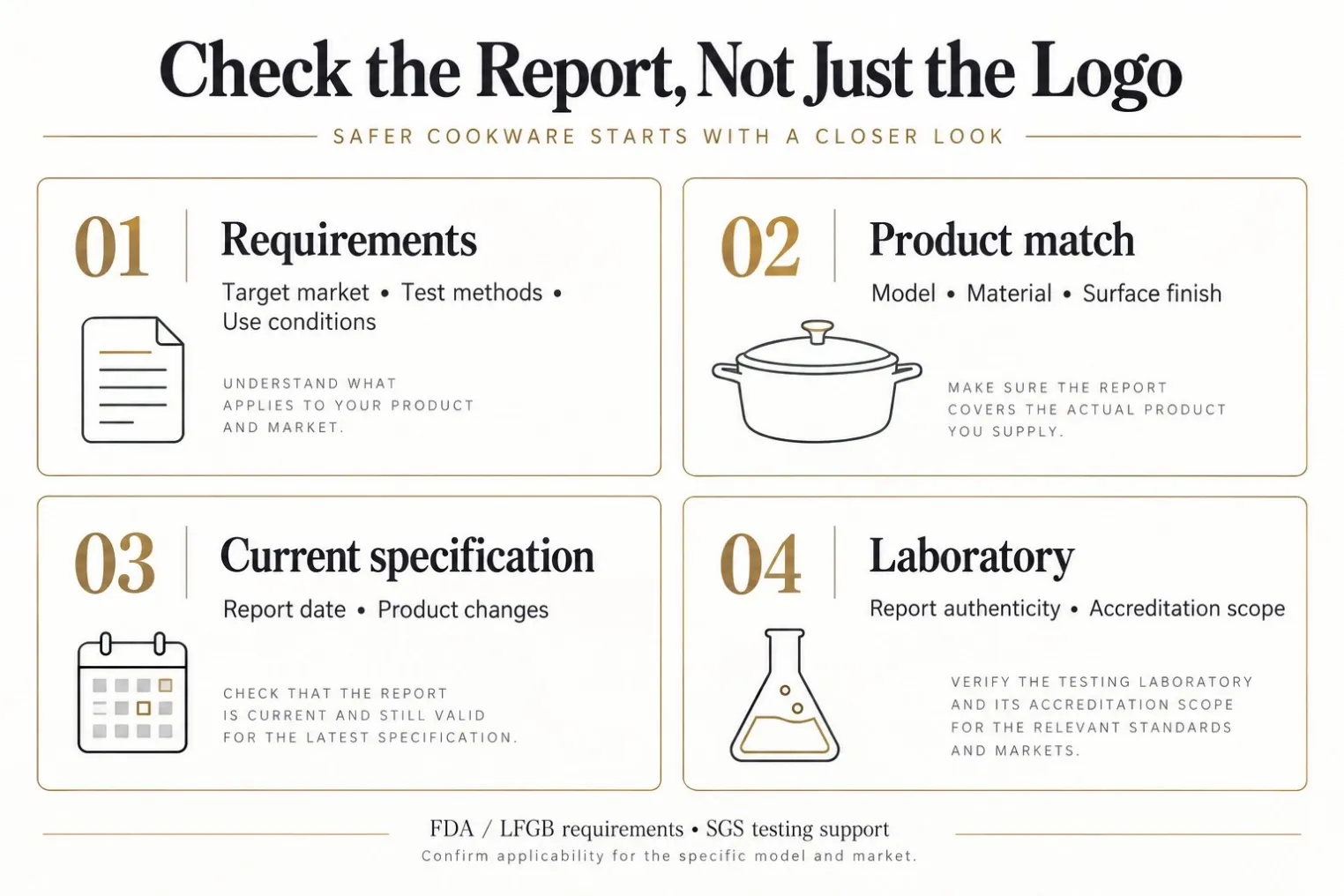
Review four areas:
- Requirements and test conditions. The destination market, material, finish and intended use should match the assessment. FDA's food-contact overview explains why intended use matters.
- Product match. Check model identification, sample photographs, materials, finish and applicant details. If a report covers a product family, ask for the basis of that coverage.
- Current specification. Check the date and whether the product, process or relevant requirements have changed. Do not assume all test reports have the same expiry period.
- Laboratory and authenticity. Verify the report through the issuing body where possible, and check that the laboratory's relevant accreditation scope covers the required methods.
For EU orders, determine the applicable food-contact requirements for the selected material and market. CE marking should be considered only where legislation for the particular product requires it; it is not a blanket cookware food-contact approval. See European Commission CE guidance.
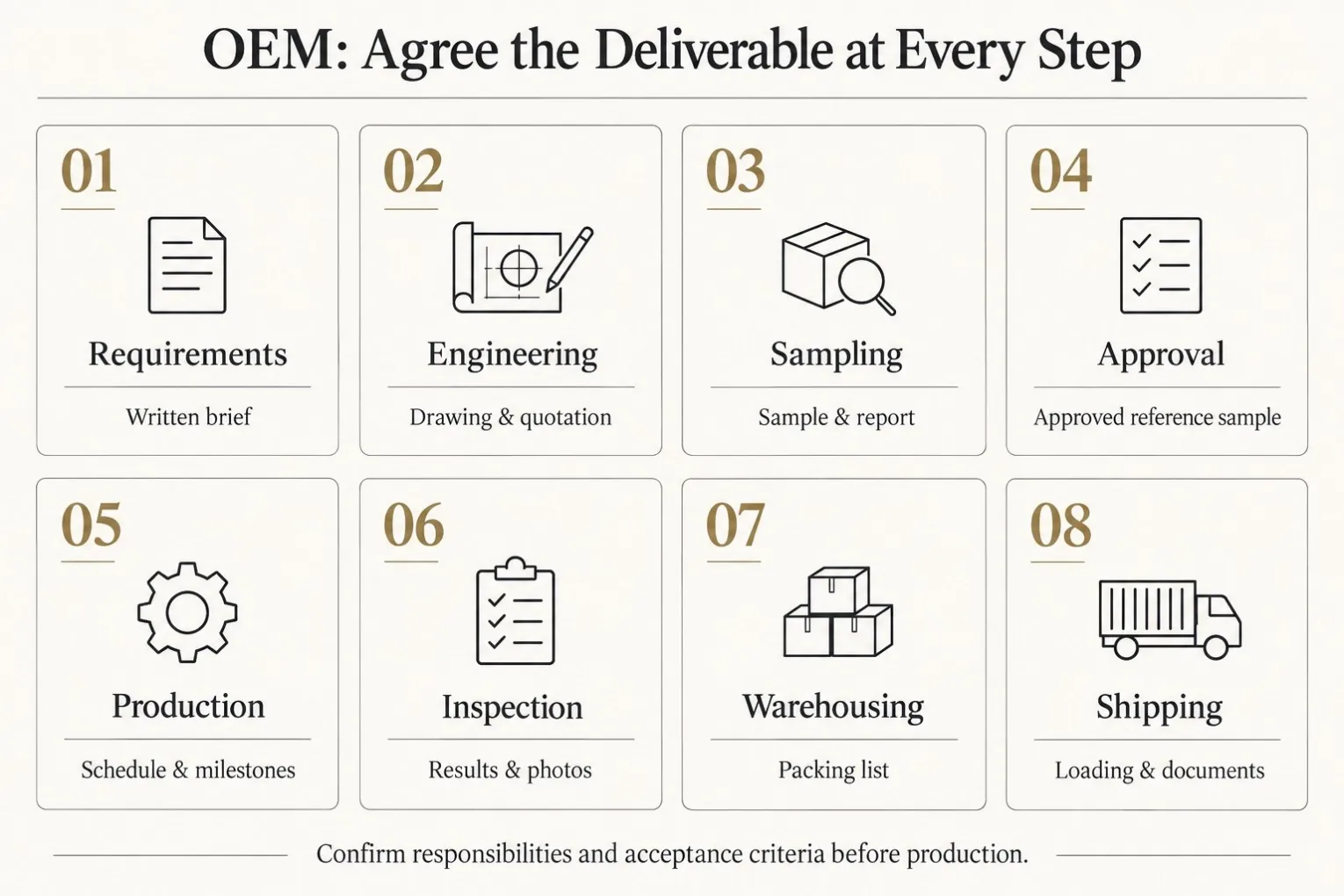
Step 4: Agree the OEM process and deliverables
Use the following framework to discuss an OEM order with YIHENG or another supplier. Confirm responsibilities and documents for the actual project; a workflow diagram is not proof that a particular order has completed these stages.
| Step | What to agree | Expected deliverable |
|---|---|---|
| 1. Requirements | Market, product, quantities and intended use | Written requirements brief |
| 2. Engineering | Dimensions, tolerances, handles, finish and packaging | Drawing or specification, quotation and MOQ |
| 3. Sampling | Sample configuration and evaluation method | Sample and sample findings |
| 4. Approval | Accepted specification and commercial terms | Identified reference sample and written approval |
| 5. Production | Schedule, material controls and change handling | Milestones and agreed progress records |
| 6. Inspection | Methods, sampling, acceptance and defect handling | Inspection results and photographs |
| 7. Warehousing | Order identification, quantities and packing | Packing list and order-specific records |
| 8. Shipping | Loading, shipment terms and document responsibilities | Loading records and agreed shipping documents |
Accessories should have their own specifications within the program. Examples include the YH-ACC-110 bamboo wok brush, listed at 28 or 30 cm, and YH-ACC-106 copper wire skimmer, listed at 6–14 inches. Do not assume an accessory is covered by the cookware's material report.
Step 5: Check sample-to-production consistency
Identify the approved reference sample with its model, size, finish and revision. Both parties should know which sample and written specification control the order.
Ask how the supplier checks initial production against that reference, handles deviations and records any approved changes. Agree who can approve substitutions and when the buyer must be notified.
For a YH-CSW-302 order, for example, record the selected diameter from the listed 32, 34 and 36 cm range, the agreed thickness, wooden handle, surface treatment and packaging. A sample from another size or finish should not silently become the acceptance reference.
Confirm whether independent inspection can be arranged, when goods will be accessible and how failures will be addressed before shipment.
Step 6: Verify storage and delivery arrangements
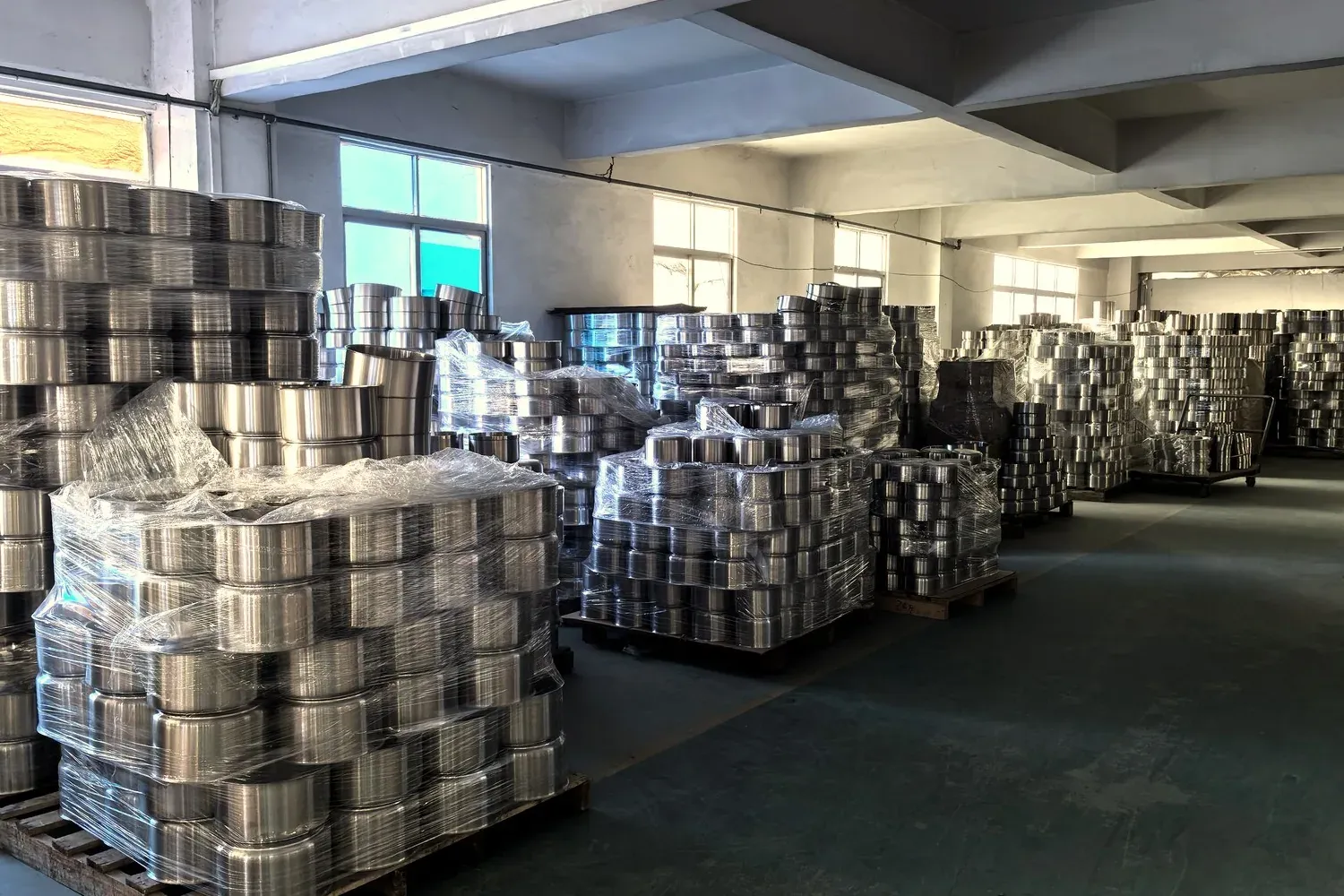
Ask where goods will be held and how they will be identified, protected and counted. An owned warehouse and a managed third-party warehouse can both support an order; responsibility and controls matter more than ownership alone.
For a mixed shipment, check readiness dates by SKU, packing status, carton marks and the loading plan. Request order-specific records. General factory photographs do not demonstrate that your goods are ready.
A proposed shipment date should be tied to the agreed production, inspection and logistics milestones.
Step 7: Record the commercial details
Before approving the order, document:
- MOQ and quantities for each model, size and finish.
- Payment milestones and shipment terms.
- Packaging, artwork, shipping marks and barcodes.
- Specifications, tolerances and acceptance criteria.
- Testing scope, costs and document responsibilities.
- Treatment of defects, rework and specification changes.
- Tooling ownership and confidentiality arrangements where relevant.
Align the quotation, specification and contract so the agreed product and responsibilities remain clear.
Frequently asked questions
Can I audit a cookware factory by video?
A live walkthrough is useful for initial verification. Ask the host to show relevant equipment, work in progress and records while answering questions. For a more complex or higher-value order, combine this with other verification suited to the project.
How do I tell a manufacturer from a trading company?
Check the legal entity, production-site relationship and process responsibility together. A video or business license alone is insufficient. The objective is to understand the supply arrangement and who controls the order.
How long does OEM cookware take?
Request a project-specific schedule after the specification is reviewed. Sampling, tooling, finish development, testing, packaging, order quantity and production availability can all affect the timeline. Separate sample lead time, production lead time and transport time.
Discuss a factory verification visit
Send your target models, destination market, quantities and the operations or documents you want to review. YIHENG can discuss an appropriate live walkthrough and the information needed for your sourcing assessment.