Private Label Cookware: Logo, Packaging and Customization Options from a Chinese Factory
A factory-side walkthrough of what private label cookware actually covers — logo application, packaging, surface finishes and accessory set-building — and the exact inputs a manufacturer nee
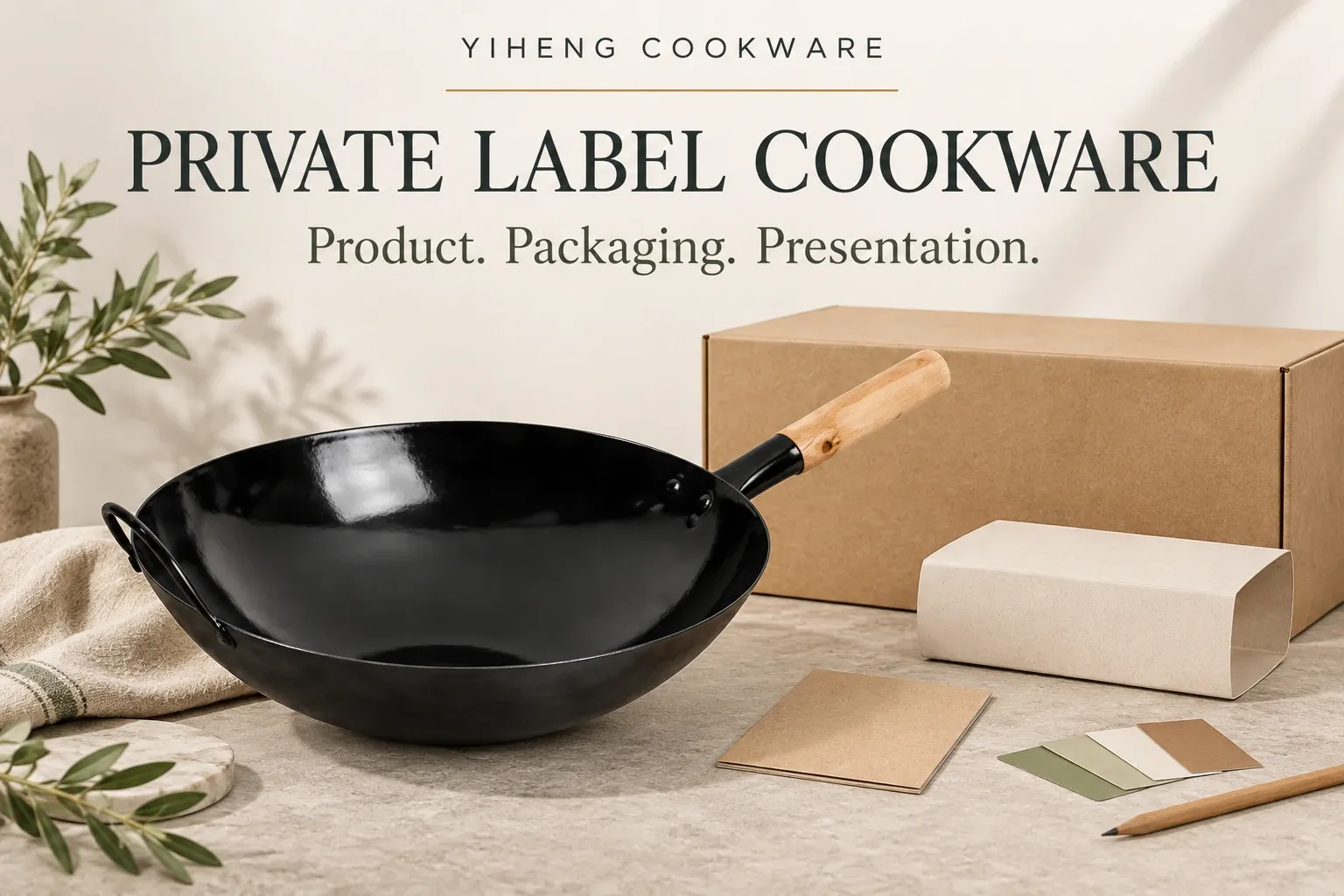
A factory-side walkthrough of what private label cookware actually covers — logo application, packaging, surface finishes and accessory set-building — and the exact inputs a manufacturer needs from you to start.
Search for private label cookware and you will mostly find supplier directories and brand-side marketing. The factory-side answer — what exactly can be customized, when each decision is locked in, and what you must submit before sampling — is harder to find. This article covers those three questions. Pricing, MOQ and lead times stay out of it; they belong to our separate commercial-terms guide.
What "Private Label" Actually Covers at a Cookware Factory
Private label is not one service but three layers of decisions made on a product platform the factory already knows how to build:
- Product identity — your logo applied to the item itself.
- Commercial presentation — retail boxes, labels, manuals and shipping-mark information carrying your brand instead of the factory's.
- Product configuration — surface finish, handle style, and the accessories grouped with the piece into a retail set.
Because we run both spinning and stamping production lines, a project can be matched to either forming route — decided when you pick the base product, before any branding choices.
Private Label vs. White Label vs. Full OEM
| Approach | What you bring | What the factory provides | Typical use case |
|---|---|---|---|
| White label | A purchase order only | Stock products in generic packaging | Testing a category fast, no brand build-up |
| Private label | Logo files, packaging artwork, market brief | Existing platforms carrying your brand identity | An own-brand line without tooling from scratch |
| Full OEM | Complete drawings and specifications | Production engineered entirely to your design | Brands with proprietary product requirements |
This article sits mainly in the middle row.
Customization Option 1: Logo Application on the Product
Common logo approaches are marking on the body or base, on or near the handle, and on attached tags or base rings. Industry methods include screen printing, laser marking and embossed or stamped logos — which one works depends on the model's material and surface, so options are confirmed on the pre-production sample rather than picked from a menu.
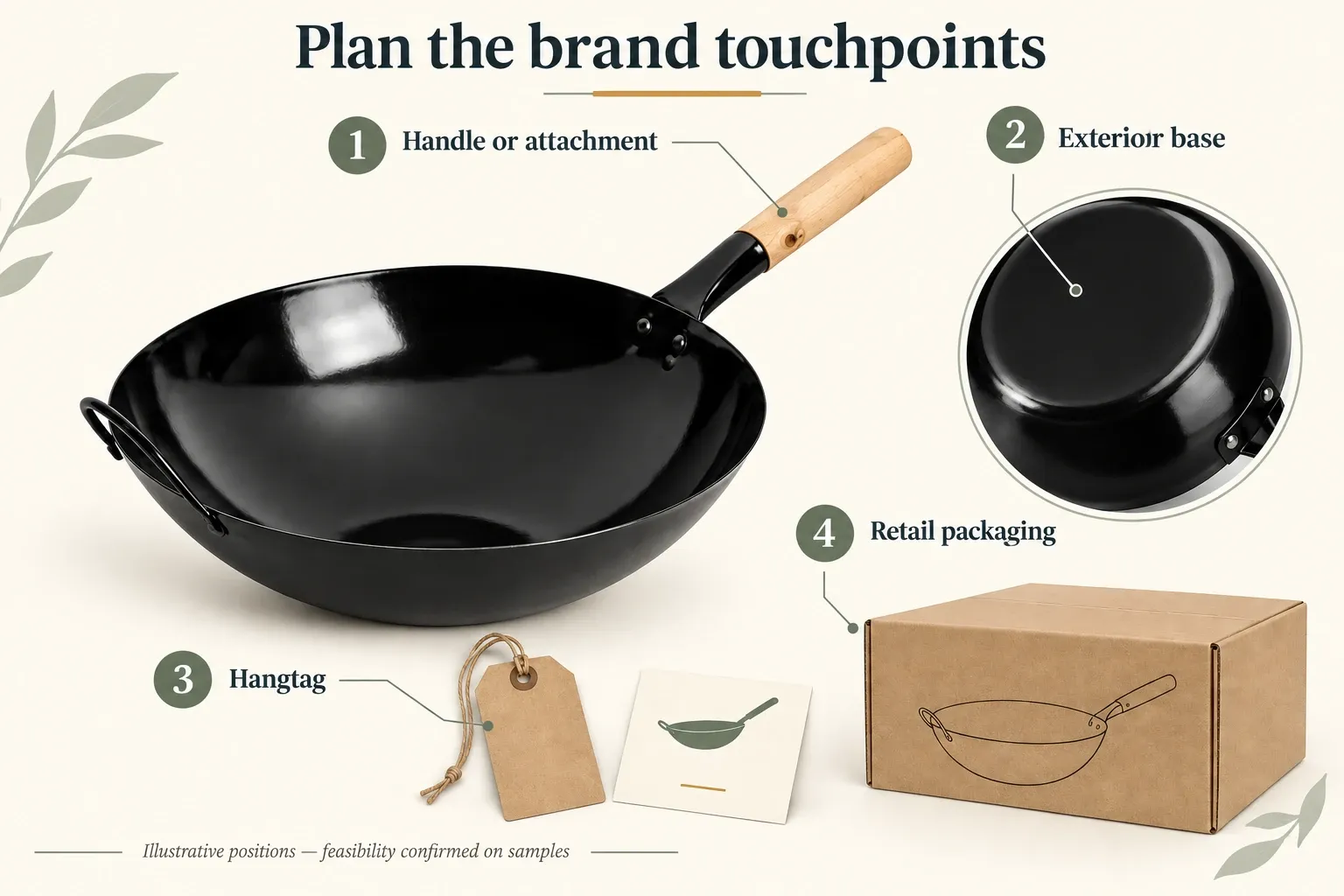
What to submit: a vector logo file (AI, EPS or PDF), a color reference such as a Pantone code, and your preferred placement.
Customization Option 2: Packaging Design
Packaging is where private label differs most visibly from white label, and it has four customizable layers:
- Retail color box — artwork, language and layout, sized to the specific model's dimensions.
- Export master carton — your shipping-mark information, so cartons identify your consignment, not ours.
- Manual and labels — content, language versions, barcode placement and market-required text.
- Set packaging — one box or bundle when a cookware piece ships together with accessories.
If you have print-ready artwork, send the dieline files. If not, send the model number and retail requirements and we confirm the model's carton dimensions first, so your designer works against real box sizes.
Customization Option 3: Surface and Finish Choices
Surface is the customization decision that shapes your shelf story the most. The finish families available for private label selection across our lines include enamel color coats, coated non-stick style surfaces, blackened finishes and pre-seasoned finishes. Two catalog examples:
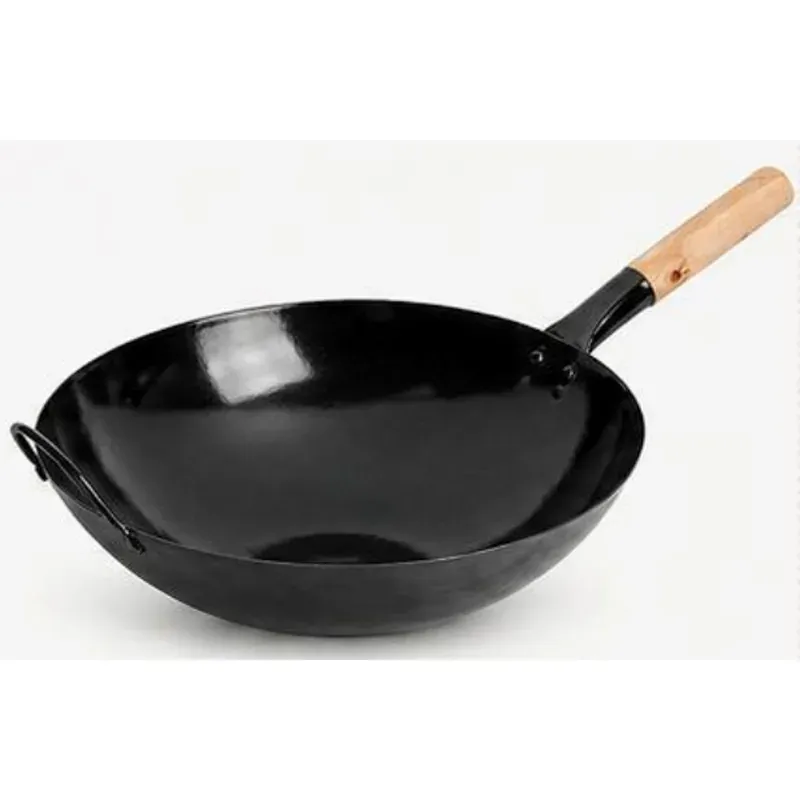
- The YH-CSW-501 enamel carbon steel wok with wooden handle — enamel surface treatment over a carbon steel body, in 12 to 16 inch sizes and 1.0 mm or 1.2 mm thickness, a color-forward retail proposition on a carbon steel platform.
- The YH-AFP-107 coated American-style aluminum frying pan — six sizes from 180 to 450 mm, 3.0 mm plate on the smaller sizes and 4.0 mm on the largest, with a long metal handle; the coating specification is confirmed against your target market when you request a quote.
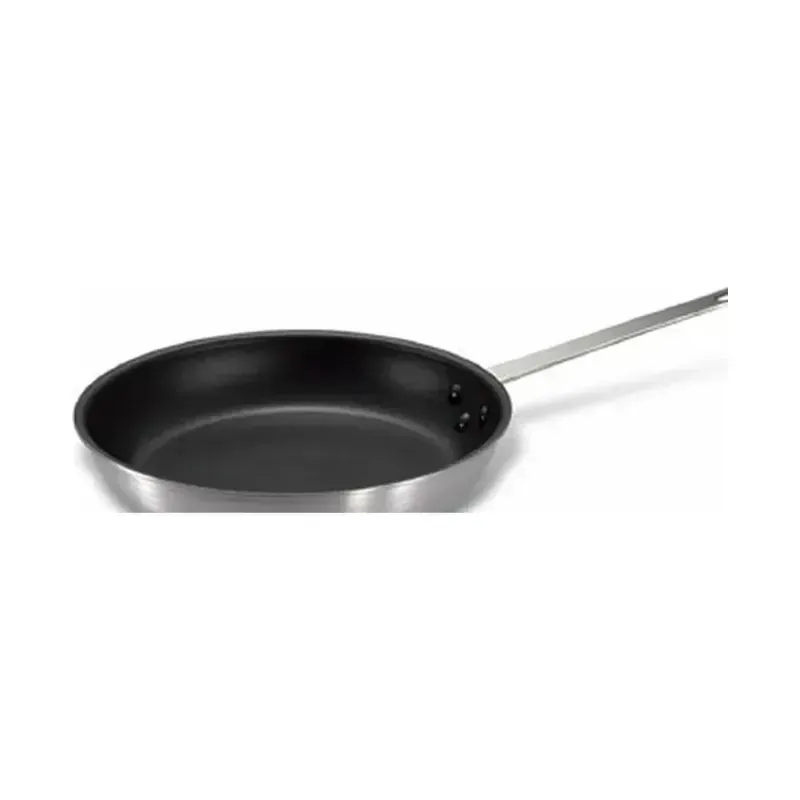
How each finish is applied, and which markets each suits, belongs to our dedicated finishes guide; here, finish selection is simply a confirmed input at the drawing and sample stage.
Customization Option 4: Handles, Accessories and Set Building
Handle form — wooden, metal, single or dual — varies by model and is selected with the surface. Accessories are where set-building happens: a wok plus a matching utensil becomes a starter kit, and a consistent accessory line makes a range feel like one brand. Our YH-ACC-110 bamboo wok brush (28 cm and 30 cm lengths) is a natural companion for wok-focused ranges.
When planning a set, decide three things before artwork is finalized: which models form the core, which accessories attach to them, and whether the set ships in one retail box or as individually packaged items — each choice changes the packaging layout.
Where Each Item Sits in the 8-Step OEM Process
Our OEM program runs as an eight-step process from drawing confirmation to shipment. For planning purposes, what matters is where each customization decision is confirmed:
| Customization item | What you provide | Where it is confirmed |
|---|---|---|
| Logo application | Vector artwork, color reference, placement | Drawing confirmation stage; verified on the pre-production sample |
| Surface and finish | Target market and finish reference | Selected with the model; locked on the sample |
| Packaging design | Dieline artwork or retail requirements | Confirmed against real carton dimensions before mass production |
| Accessories and set composition | Set list and packing preference | Drawing stage; affects sampling and packaging |
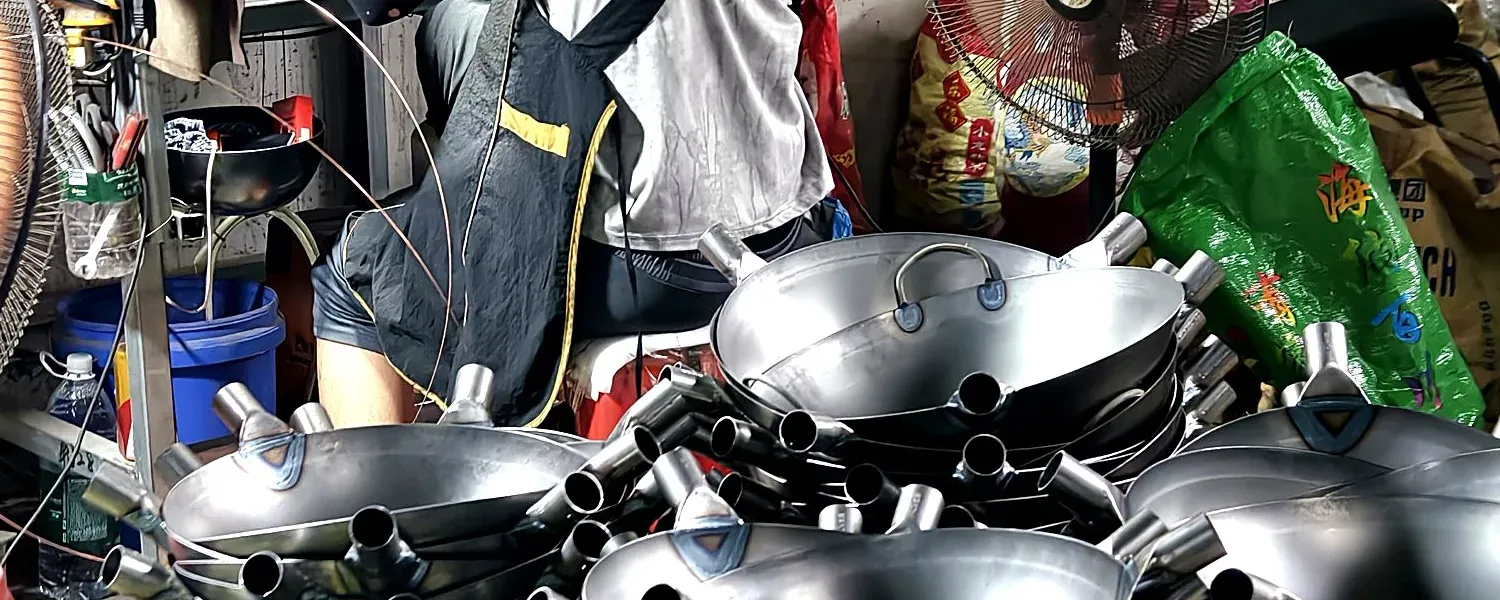
Two factory-side points matter here. Customized surfaces and weld points pass our hand-polishing quality inspection station, where finish and join quality are checked by hand. And finished goods sit in our own warehouse, so custom-packed orders can be consolidated batch by batch and held ready for dispatch.
If you are still checking whether a manufacturer's customization claims hold up at all, our OEM supplier verification checklist covers that due diligence separately.
Certification Support for Private Label Orders
Private label does not change a product's compliance basis — the model and its materials do. For private label orders, certification support is provided per market and model, subject to test reports for the specific model, covering frameworks such as FDA, LFGB, CE and SGS. State the destination market at the inquiry stage; the applicable certification path is then confirmed with test reports, not assumed.
What to Send Us to Start a Private Label Project
A complete first message shortens the path to a sample:
- Logo files — vector format (AI, EPS or PDF) plus a raster preview and color references.
- Target market — country or region; it drives finish and certification support.
- Product category and model interest — enamel carbon steel woks, coated aluminum pans, commercial stainless pots, with model numbers if shortlisted.
- Packaging format — retail color box, export carton requirements, languages, accessory in-box or separate.
- Certification markets — which markets the products must be supported for.
- Set composition — the models and accessories you want grouped, if building a range.
You do not need final packaging artwork or a price negotiation to start — our first reply confirms the customizable scope for your models and the sampling next steps.
Frequently asked questions
What is the difference between private label and white label cookware?
White label means reselling stock products in generic packaging, with no brand presence on the item. Private label means the factory's existing platforms carry your identity — logo, packaging, chosen finish — so the equity you build accrues to your brand.
Can I put my own logo on an existing model?
Yes. Options depend on the model's material and surface, so the workable application method and position are confirmed on a pre-production sample. Submit vector artwork with a color reference and preferred placement to start.
Do I need finished packaging artwork before contacting a factory?
No. Confirm the model, finish and logo approach first, then have carton dimensions confirmed so your designer works against real box sizes. A target market and packaging preference are enough for the first exchange.
Start Your Private Label Cookware Project
If you are comparing factories for a private label line, send the checklist above and we will confirm what is customizable on your shortlisted models. Email sales@yihengcookware.com with the subject line "Private label inquiry – [your brand] – [product category]", attach your logo files, target market and preferred packaging format, and we will reply with the customization scope and the sampling process for your project.
Continue Your Research
More Cookware Buying Guides
Compare more model-based buying guides before preparing your cookware inquiry.
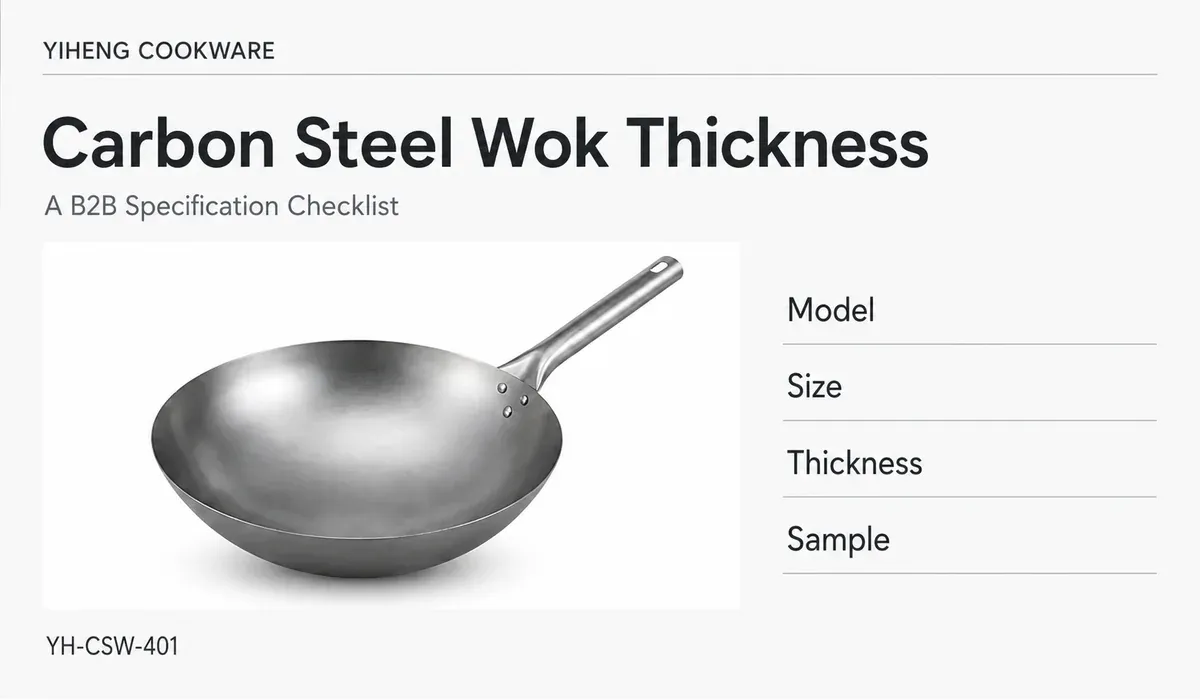
Carbon Steel Wok Thickness: B2B Buying Guide
Use model-specific thickness options, a specification checklist and an example enquiry to prepare your carbon steel wok sourcing brief.
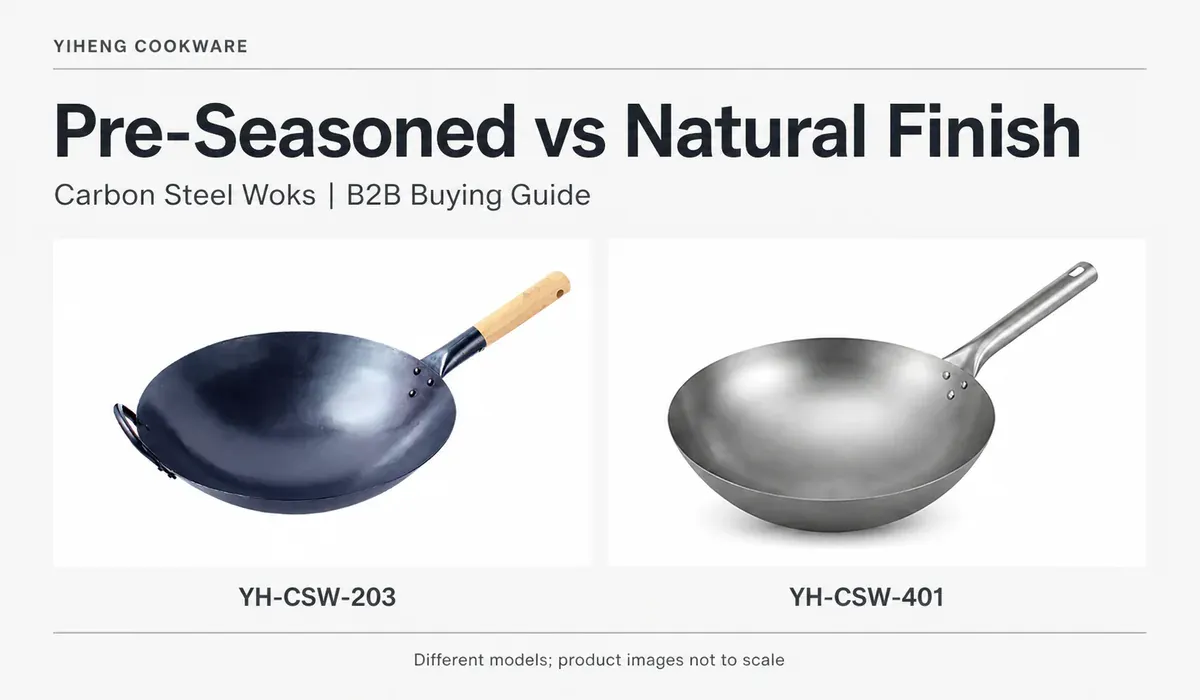
Pre-Seasoned vs Natural-Finish Carbon Steel Woks
Compare listed wok finishes and the information buyers need before approving product descriptions, care leaflets and a sourcing brief.