Carbon Steel Fry Pans by Size: 14–36 cm for Retail Shelves and Restaurant Lines
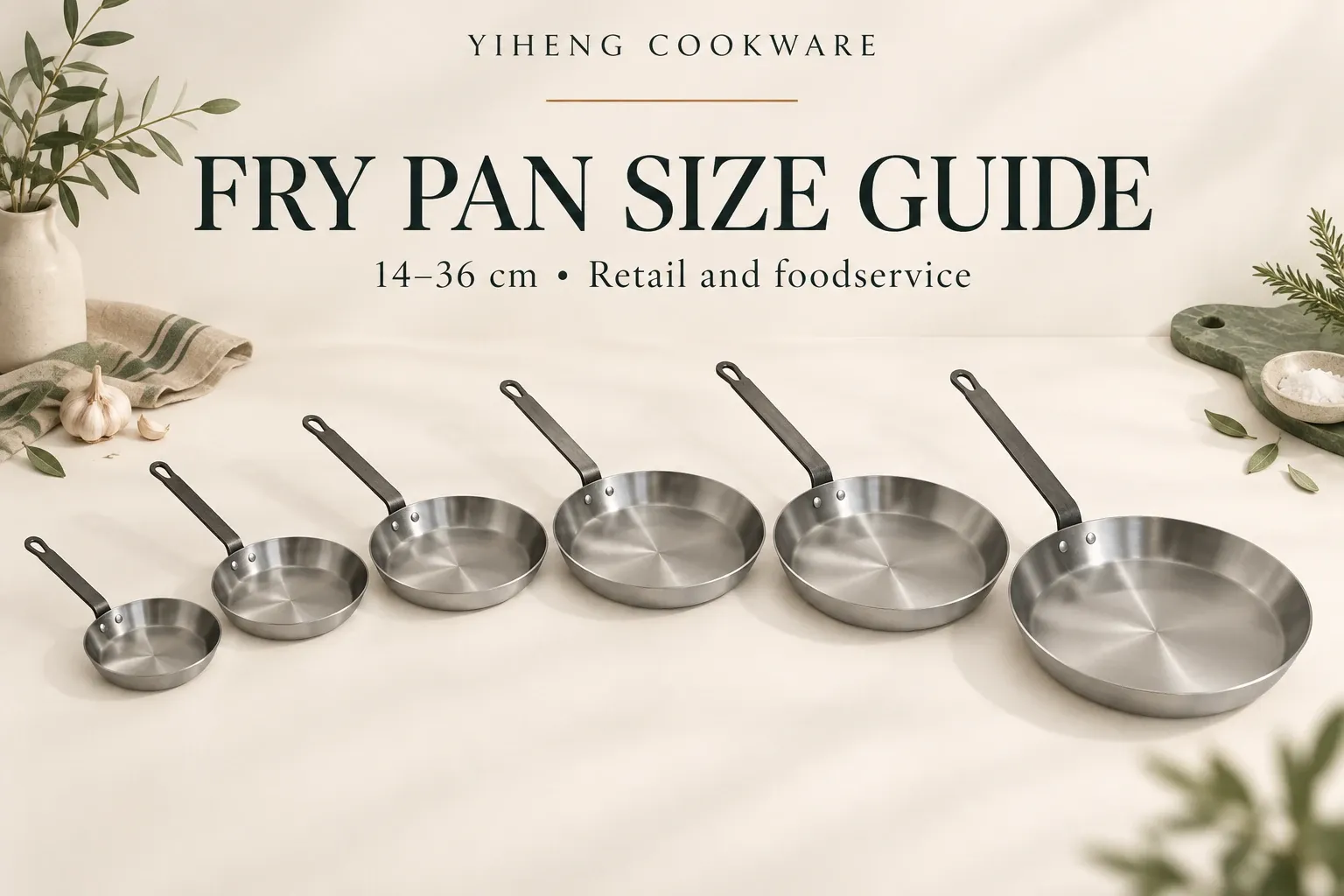
A centimeter-by-centimeter guide to the YIHENG CFP carbon steel fry pan line — eight models from 14 to 36 cm — with default size assortments for retail shelves and restaurant cook lines.
A centimeter-by-centimeter guide to the YIHENG CFP carbon steel fry pan line — eight models from 14 to 36 cm — with default size assortments for retail shelves and restaurant cook lines.
Size planning is where most fry pan programs go wrong: retail buyers order three sizes that overlap on the shelf, and kitchens buy one 36 cm pan when the line needed two more 26 cm workhorses. This guide maps the YIHENG CFP ladder in centimeters and turns it into two default assortments — retail and foodservice. It covers fry pans only; for wok diameters and bundles, see our carbon steel wok size guide.
Fry pan sizes in centimeters: the full YIHENG CFP ladder
The CFP line runs eight models from 14 cm to 36 cm in rim diameter, including a shallow 24 cm and two deep variants. Every model shares the same build sheet: carbon steel body, single iron handle, and a sand-polished surface with rust-proof oil for storage and transport. Specifications below come directly from each product page.
| Model | Diameter | Depth | Handle | Thickness |
|---|---|---|---|---|
| YH-CFP-014 | 14 cm | 4 cm | Single iron, 13 cm | 1.6 mm |
| YH-CFP-020 | 20 cm | 4.5 cm | Single iron, 22 cm | 1.6 mm |
| YH-CFP-020Z (deep) | 20 cm | 4 cm | Single iron, 22 cm | 1.6 mm |
| YH-CFP-024 (shallow) | 24 cm | 3 cm | Single iron, 27 cm | 1.6 mm |
| YH-CFP-026 | 26 cm | 5 cm | Single iron, 22 cm | 1.6 mm |
| YH-CFP-026Z (deep) | 26 cm | 4.5 cm | Single iron, 22 cm | 1.6 mm |
| YH-CFP-030 | 30 cm | 5 cm | Single iron, 26.5 cm | 1.6 mm |
| YH-CFP-036 | 36 cm | 5 cm | Single iron, 26.5 cm | 1.6 mm |
Two patterns matter across the ladder. First, wall depth ranges from 3 cm on the shallow 24 cm to 5 cm on the large pans, which changes what each size can cook, not just how much it holds. Second, every body in the line is 1.6 mm carbon steel — thickness is a constant, so diameter and depth are the variables you are choosing between. For the reasoning behind 1.6 mm as a gauge, see our guide on choosing carbon steel wok thickness.
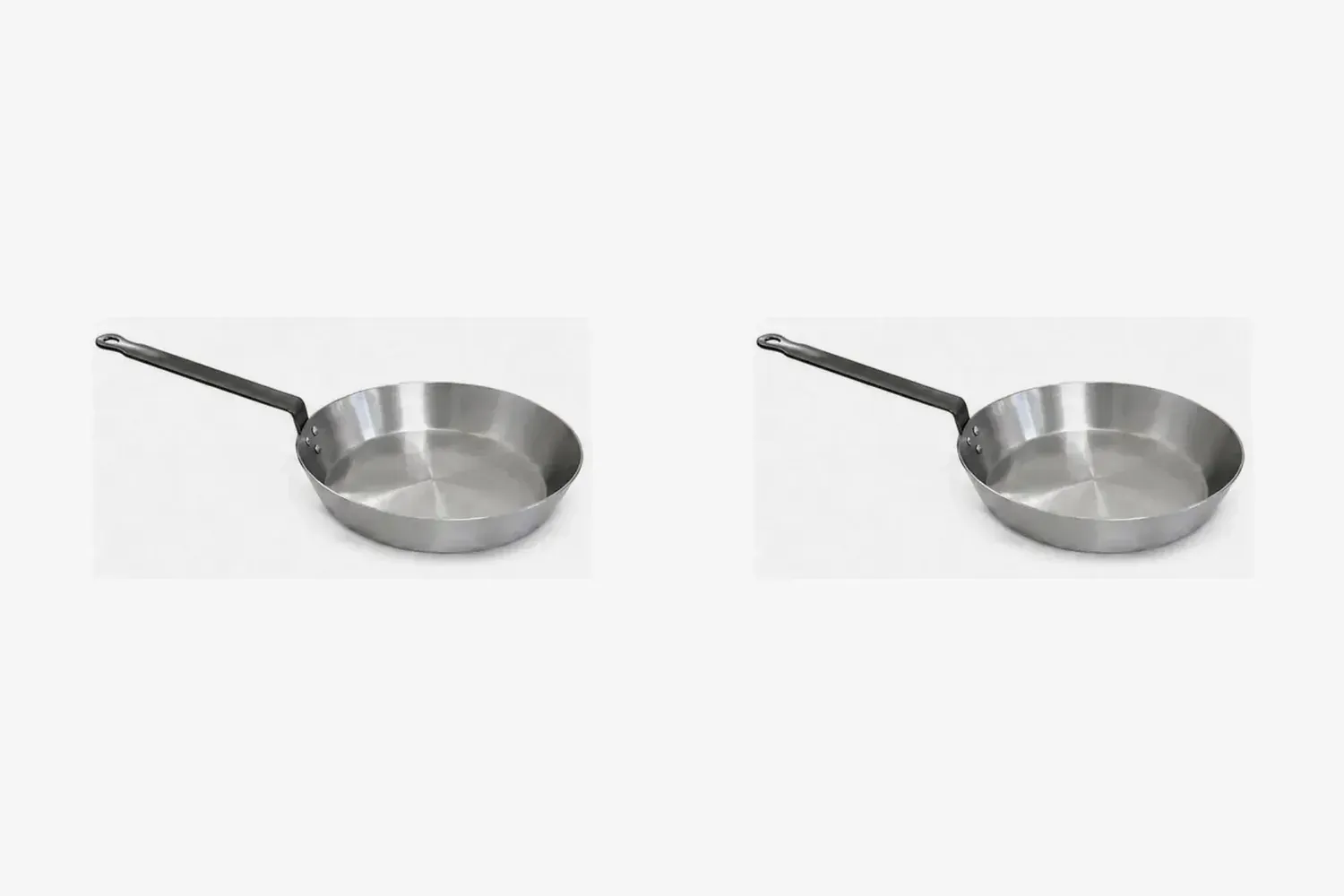
Size by use case
14–20 cm: single portions, sides and crêpe-style work
The YH-CFP-014 is a true single-portion pan: one egg, one fillet, a buttered side, or small-batch sauces, with a compact 13 cm handle for tight galley shelves. The YH-CFP-020 steps up to single-protein portions and side orders while staying light enough for one-hand flips. In retail, this pair sells as the starter sizes; in kitchens, it is the breakfast and à-la-carte station kit, with the 20 cm also handling crêpe-style work.
24–28 cm: the everyday workhorse zone
This is the zone both channels live on. The YH-CFP-024 shallow, at 3 cm deep, is built for fast flat work: omelettes, frittatas, quick-searing cuts, and crêpes at width. The YH-CFP-026 is the all-purpose family portion — two to three servings of protein plus vegetables — and on a restaurant line it is the default sauté pan. The YH-CFP-026Z deep variant covers the same diameter with a taller-sided profile for saucier dishes. If a retail program stocks only one size, it is almost always from this zone.
30–36 cm: batch service and high-volume lines
The YH-CFP-030 and YH-CFP-036 are batch tools: searing six-plus portions of protein, family-style vegetable service, and paella-style one-pan dishes. Both carry the longer 26.5 cm handle for leverage, and both ship six pans per carton rather than twelve — worth noting for mixed containers. Retailers should treat these as the top of the ladder, chosen by cooking enthusiasts and foodservice buyers rather than first-time users.
Deep vs shallow: when the 20 cm deep and 26 cm deep variants earn their slot
The Z-suffix models exist because diameter alone does not define a pan's job. Listed depths run from 3 cm to 5 cm across the line, and the YH-CFP-020Z and YH-CFP-026Z are the variants YIHENG positions for taller-sided, saucier cooking: simmering, shallow braising, and frying small batches. The shallow YH-CFP-024 sits at the opposite pole — maximum surface, minimum wall — for crêpes, eggs, and quick sears. Carry the standard model plus one variant per zone, and confirm final depths against samples before locking your purchase order.
Building a retail size ladder
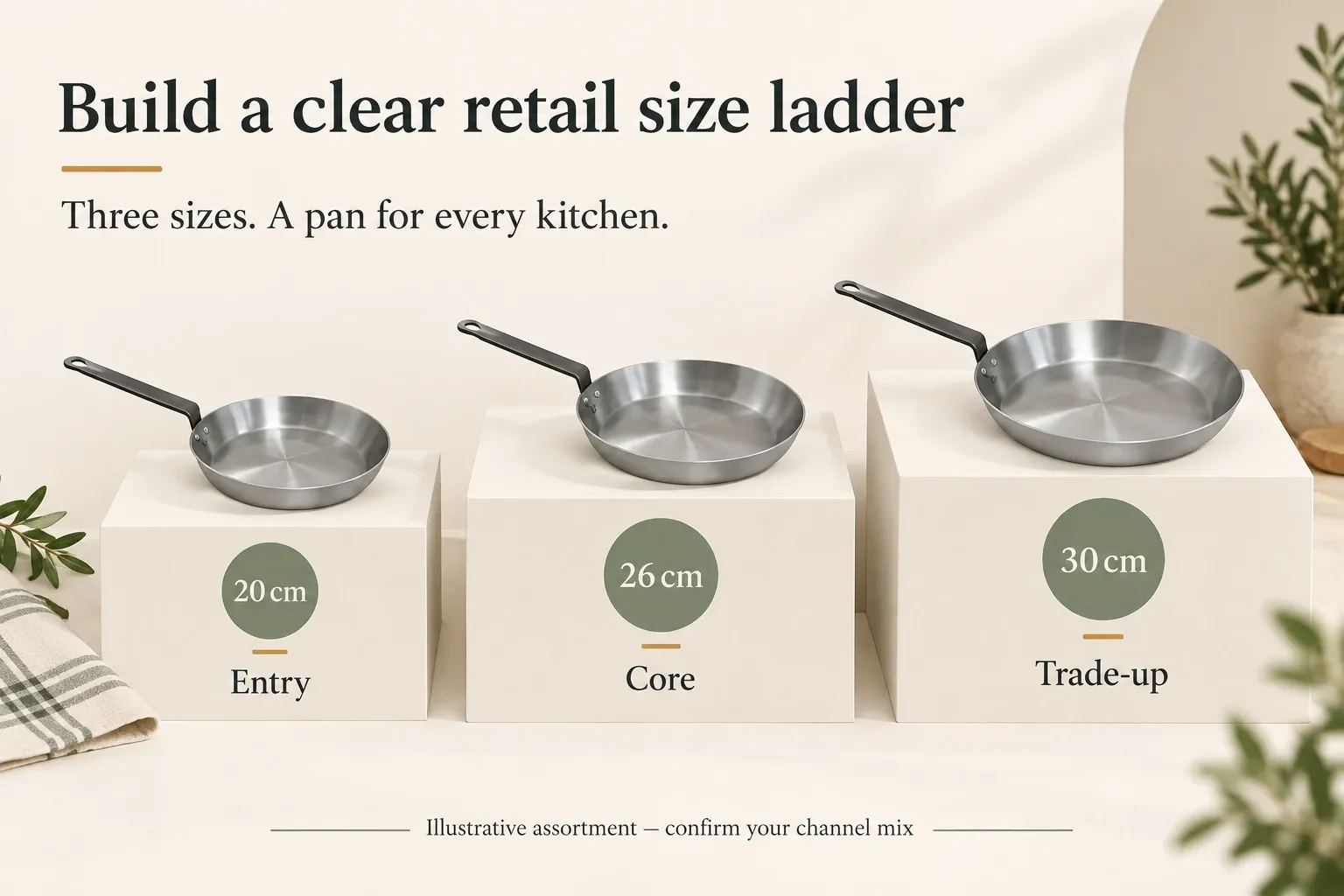
Retail programs sell best as a ladder of three to four sizes with distinct roles — not a wall of near-identical diameters. A proven default from the CFP line:
- Entry / traffic driver: the 20 cm YH-CFP-020 — low commitment, easy trial.
- Volume core: the 26 cm YH-CFP-026 — the size most households reach for daily; expect it to carry most units.
- Margin / trade-up: the YH-CFP-026Z deep or the 30 cm YH-CFP-030 — differentiated profiles that justify a step up.
- Optional fourth rung: the 14 cm YH-CFP-014 as an impulse add-on, or the YH-CFP-024 shallow for a crêpe-and-breakfast audience.
The logic mirrors the wok retail bundles in the wok size guide, but the sizes and roles are fry-pan specific: the workhorse zone moves volume, and the deep variants give the shelf a point of difference.
Stocking a restaurant line
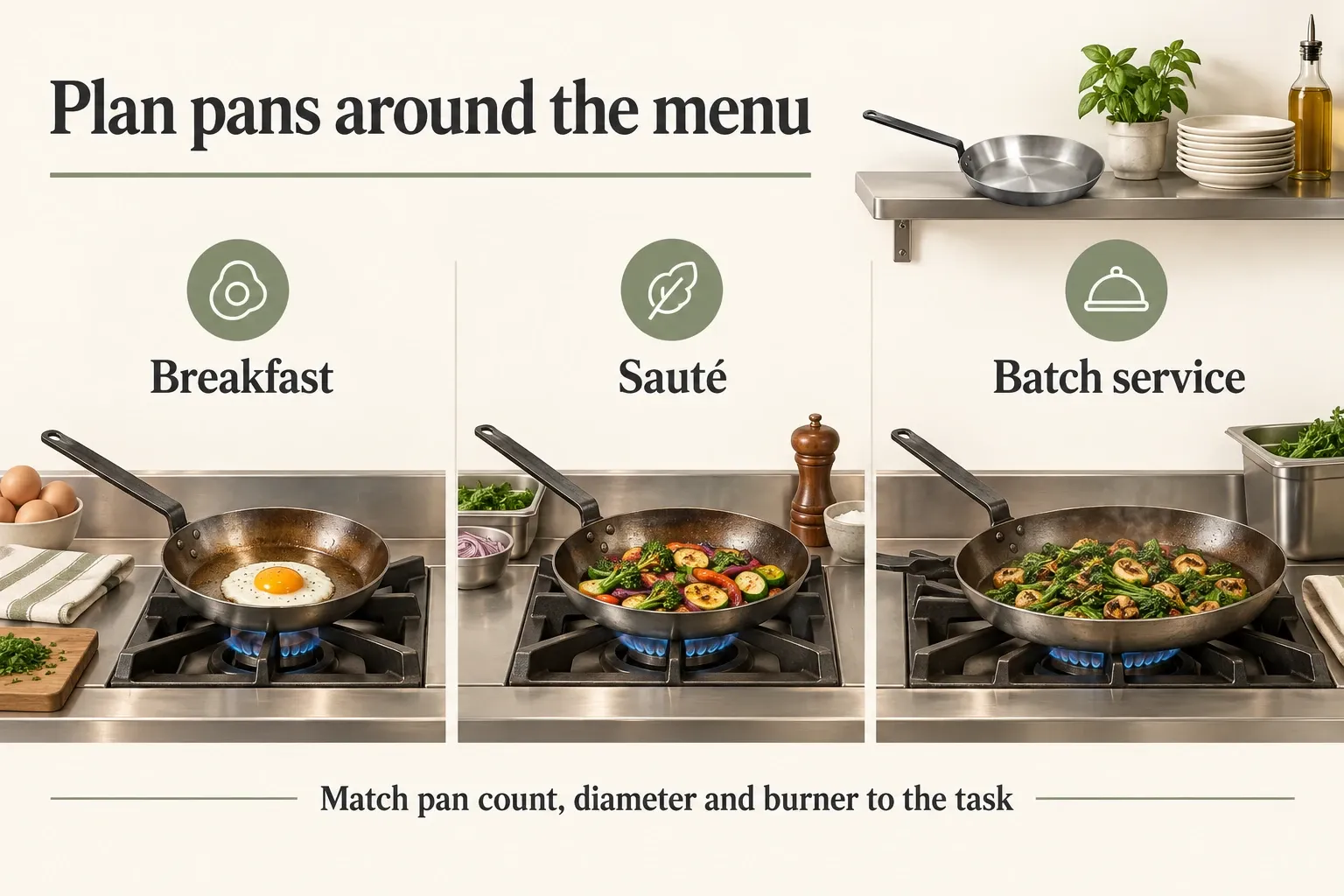
Kitchen planning works in reverse: start from the menu, then weight the line. A typical setup runs more pans in the workhorse zone — multiple 26 cm pans per sauté station, in constant rotation — plus one or two shallow 24 cm pans where the menu includes crêpes, eggs, or fast sears, and 30–36 cm pans only where output is batch or family-style. A crêpe-led café and a volume bistro weight the same ladder differently, so map pan count to menu lines, not a fixed ratio.

Carbon steel fry pans vs woks on the same shelf
Fry pans and woks are complementary, not competing, and shelves that stock both usually sell both. Fry pans have a flat base and flared sides for Western and hotel cooking — searing, omelettes, pan sauces — while woks bring the deep-sided form for high-heat stir-fry. On the shelf, fry pans are the everyday Western pan and woks the specialty upgrade; in kitchens they occupy different stations. Both share carbon steel's strengths — fast response, high-heat tolerance, a surface that seasons with use — and both need the same first-use care, covered in our pre-seasoned versus natural finish comparison. Wok sizing itself lives in the wok size guide.
YIHENG CFP line and OEM options
The eight-model CFP ladder gives importers a complete 14–36 cm program from one factory in Foshan, China. Beyond stock specifications, OEM and ODM options — logo, packaging, and specification adjustments — are available, and handle or size modifications are feasible on some models. Feasibility differs per model and is confirmed through sampling and the purchase invoice. On compliance, YIHENG provides certification support per market and model, subject to test reports.
Frequently asked questions
Which fry pan sizes should I stock first?
Start with a three-size ladder: 20 cm as the entry point, 26 cm as the volume core, and 30 cm or the 26 cm deep as the trade-up. Add the 14 cm as an impulse item or the shallow 24 cm for breakfast-led channels. This default suits most houseware assortments; foodservice buyers should weight toward the workhorse zone instead.
What is the difference between the standard and deep CFP models?
The deep variants — YH-CFP-020Z and YH-CFP-026Z — are positioned for taller-sided, saucier cooking such as simmering and shallow braising; the standard models and the shallow 24 cm serve flat, fast cooking. Exact depths are in the table above; verify against a pre-production sample before finalizing your order.
Can I mix sizes and models in one shipment?
Yes. The line is produced in one factory and routinely ships as mixed containers. Carton quantities differ by model — the 14 cm, 20 cm, and 20 cm deep pack twelve per carton, the 24 cm and larger sizes six — so confirm the packing list for your size mix when you request a quote.
Ask for a CFP size assortment quote for your shelf or line
Tell us your scenario — retail shelf or restaurant line — and target size range, and we will reply with a suggested CFP assortment, carton breakdown, and OEM options. Ask for a CFP size assortment quote for your shelf or line — email sales@yihengcookware.com.