Aluminum Specialty Pans: Fish Pans, Crêpe Pans and Deep European Styles for Commercial Kitchens
Fish pans, crêpe pans and deep European styles are the lowest-competition shelf in commercial cookware — a focused aluminum specialty program built on YH-AFP-103, YH-AFP-104, YH-AFP-105 and
Fish pans, crêpe pans and deep European styles are the lowest-competition shelf in commercial cookware — a focused aluminum specialty program built on YH-AFP-103, YH-AFP-104, YH-AFP-105 and YH-AFP-106 that differentiates a range standard frying pans cannot.
Why specialty shapes earn their slot in an aluminum program
## Why specialty shapes earn their slot in an aluminum program
Walk any cookware trade fair and count the plain aluminum frying pans: the diameter ladder is the category's most crowded shelf, which is why generalist fry pans compete on price alone. Specialty shapes work differently — a fish pan, a crêpe pan or a deep European pan is bought for a specific dish, not as a generic pan. The buyer is solving a menu problem, and a catalog that solves it escapes the per-kilo price comparison.
Two consequences follow. First, competition thins out — far fewer factories and brands maintain a real fish pan or crêpe pan line, so a distributor who lists them becomes the local answer, not one more quote. Second, margin room widens: the customer pays for a use case and a presentation style, not just aluminum.
This guide stays on shapes and positioning. For how the two metals compare on weight, heat response and upkeep, see our earlier comparison of aluminum vs carbon steel frying pans for foodservice — the material logic carries over unchanged.
The three lines at a glance
## The three lines at a glance
All four models are long-handled aluminum pans from one product family, so finish, handle style and packaging match across the set.
| Line | Model | Sizes as listed | Body thickness | Natural station |
|---|---|---|---|---|
| Fish pan | YH-AFP-103 | 360×250×H50 and 400×290×H50 mm | 5.0 mm | Whole-fish service, seafood à la carte |
| Crêpe pan | YH-AFP-106 | 220×H16, 260×H20, 300×H16 mm | 3.0 mm | Crêpe stations, breakfast and dessert programs |
| European-style frying pan | YH-AFP-104 | 120×H20 up to 400×H60 mm, ten listed sizes | 3.0 / 4.0 / 5.0 mm series | Full-range European line, every diameter covered |
| European deep frying pan | YH-AFP-105 | 240×H70, 260×H70, 280×H75, 320×H80 mm | 4.0 mm | One-pan mains, shallow braising, simmering |
Fish pans: the oval that sells whole-fish service (YH-AFP-103)
## Fish pans: the oval that sells whole-fish service (YH-AFP-103)
Geometry, and why the numbers matter
### Geometry, and why the numbers matter
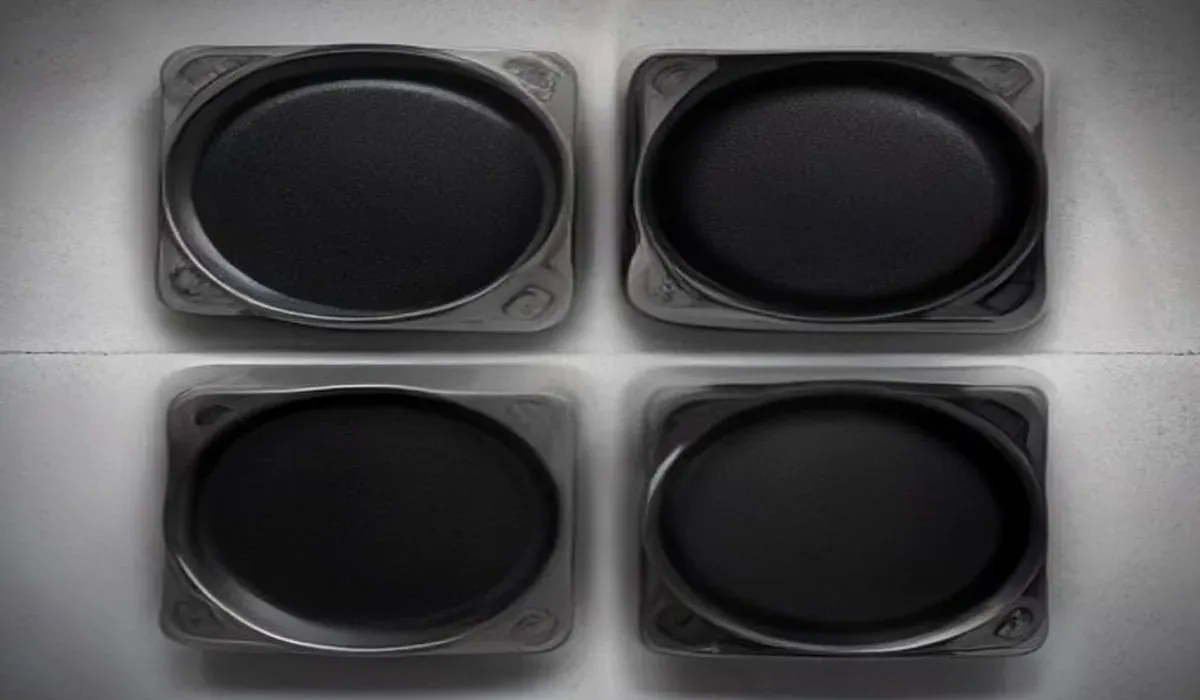
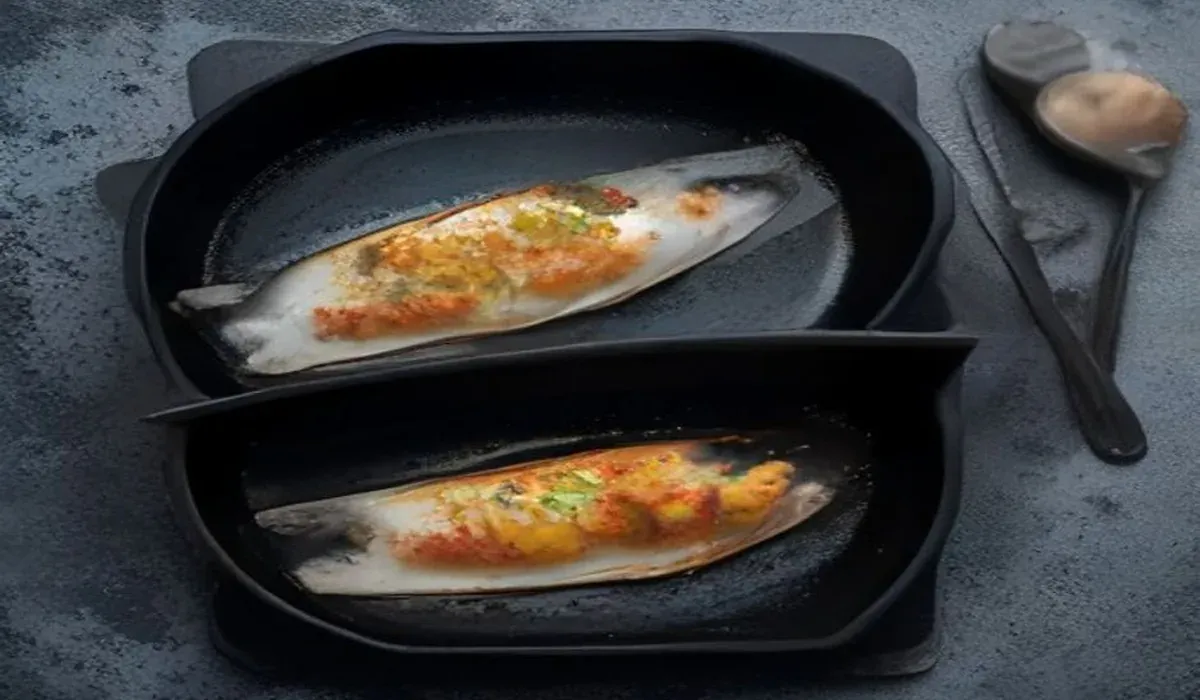
A fish pan is the clearest example of a shape that exists only because of a dish. The commercial aluminum fish pan YH-AFP-103 is oval — 360×250×H50 mm and 400×290×H50 mm — because an oval matches the silhouette of a whole fish with no wasted surface and no tight corners to tear the skin. The 50 mm wall is high enough to baste and sauce without spillage through the pass, and the 5.0 mm plate gives the base stiffness a thin pan lacks under broiler heat and the weight of a whole fish.
Who buys it, and how to position it
### Who buys it, and how to position it
Seafood restaurants, Mediterranean and Iberian menus, hotel banqueting and grill houses are the natural accounts. In most of them the pan goes from heat to table — the oval pan *is* the serving piece — which makes it a menu enabler, not back-of-house equipment. Position it to distributors as a line that creates demand: once a chef builds a dish around the pan, reorders follow the menu, not the price list.
Crêpe pans: low walls, fast turns (YH-AFP-106)
## Crêpe pans: low walls, fast turns (YH-AFP-106)
What the specifications say
### What the specifications say
The aluminum crepe pan YH-AFP-106 runs 220×H16, 260×H20 and 300×H16 mm with a 3.0 mm body and a long metal handle. The telling number is the wall height: 16–20 mm is barely a lip — just enough clearance for a spatula to slide under a thin crêpe and a turn of the wrist to flip it. The 3.0 mm plate heats fast and spreads heat evenly across a wide, flat field — the right profile for thin batter, where a slow base burns the first crêpe and a hot spot ruins the third.
Where the channel fits
### Where the channel fits
Crêperies and street-food kiosks work the 220 mm size for single-portion output; café chains and hotel breakfast stations lean on 260 mm; the 300 mm covers larger formats and shared plates. Beyond foodservice, the same pan sells into cooking schools and retail demonstration programs — and as a retail SKU, "crêpe morning" packaging sells the dish, not the pan. For a brand, YH-AFP-106 is the lowest-friction entry into the specialty shelf: compact, light to ship, immediately understood.
Deep European styles: one pan, a full menu (YH-AFP-104 / YH-AFP-105)
## Deep European styles: one pan, a full menu (YH-AFP-104 / YH-AFP-105)
YH-AFP-104: the diameter ladder
### YH-AFP-104: the diameter ladder
The European-style aluminum frying pan YH-AFP-104 is the breadth play: ten listed diameters from 120×H20 up to 400×H60 mm, in 3.0, 4.0 and 5.0 mm thickness series (the exact size-to-thickness pairing is confirmed at order stage). For a wholesaler, this is the backbone line — one tooling family that fills every rung of a European-style wall display. For a retail brand, it offers a complete size story without mixing suppliers.
YH-AFP-105: the deep-wall partner
### YH-AFP-105: the deep-wall partner
The European deep aluminum frying pan YH-AFP-105 adds the dimension the standard pan lacks: walls of H70–H80 mm across 240, 260, 280 and 320 mm diameters, on a 4.0 mm body. That geometry handles shallow braises, simmering sauces, one-pan pasta and curry-style dishes — the work of a sauté pan and much of the work of a saucepan in a single SKU. Aluminum's weight advantage is most persuasive here: a cast-iron pan with H80 walls becomes a two-handed lift, while the same depth in aluminum stays manageable through a full service. Pair AFP-104 and AFP-105 and one shelf covers fry, sear, braise and simmer.
Positioning the three lines by channel
## Positioning the three lines by channel
- Importers and wholesalers: lead with the YH-AFP-104 ladder as the volume line, then add YH-AFP-103 and YH-AFP-106 as the differentiators that no competing quote will include. The specialty pieces open doors; the ladder fills the container.
- Retail cookware brands: treat fish and crêpe pans as story SKUs. Two specialty shapes with application-driven packaging justify premium shelf space and pull shoppers toward the standard pans beside them.
- Foodservice project buyers: match the line to the menu, not the catalog. Seafood program → YH-AFP-103. Breakfast and dessert program → YH-AFP-106. All-round European kitchen → YH-AFP-104 plus YH-AFP-105.
- Cross-sell the family: all four models share long metal handles and one material system, so sample sets are simple and the brand look stays consistent across the specialty shelf.
Ordering and compliance notes
## Ordering and compliance notes
All four models support OEM and ODM customization — logo, packaging and specification adjustments — through our eight-step process, with spin-forming and stamping lines, hand-polishing QC stations and an in-house finished-goods warehouse at our Foshan, Guangdong facility. Food-contact documentation is handled as certification support per market and model, subject to test reports.
Frequently asked questions
## Frequently asked questions
Which fish pan size should a seafood-focused distributor stock first?
### Which fish pan size should a seafood-focused distributor stock first?
The 400×290×H50 mm size of YH-AFP-103 covers the sharing and banquet presentations that drive most whole-fish menus, while the 360×250×H50 mm suits single-serve and smaller portions. Stocking both keeps the line complete; if the order starts with one, match it to your customers' plate sizes.
Is a 3.0 mm aluminum body thick enough for a commercial crêpe pan?
### Is a 3.0 mm aluminum body thick enough for a commercial crêpe pan?
For crêpe work, yes — fast, even heating across a flat field matters more to thin batter than mass, which is exactly the 3.0 mm logic of YH-AFP-106. The 5.0 mm class is reserved for pans meeting broiler heat and whole-protein weight, such as the fish pan.
Can the European deep pan replace a saucepan on the line?
### Can the European deep pan replace a saucepan on the line?
Partially — and that is its selling point. With H70–H80 walls, YH-AFP-105 absorbs the shallow braises, reductions and one-pan mains a standard fry pan cannot hold, so a small kitchen needs fewer pan types. Deep stock and sauce work still belongs to dedicated pots.
Request a specialty aluminum pan assortment proposal
## Request a specialty aluminum pan assortment proposal
Tell us which channel you serve — wholesale, retail brand or foodservice project — and we will map the three specialty lines into one assortment with matched finishes and packaging. Contact our sales team for a specialty aluminum pan quotation.