Cookware Certifications Explained: FDA, LFGB, CE and SGS for Importers
FDA, LFGB, CE and SGS name four different things — a regulatory framework, a food-contact law, a conformity marking, and a testing company — and telling them apart decides whether the paperw
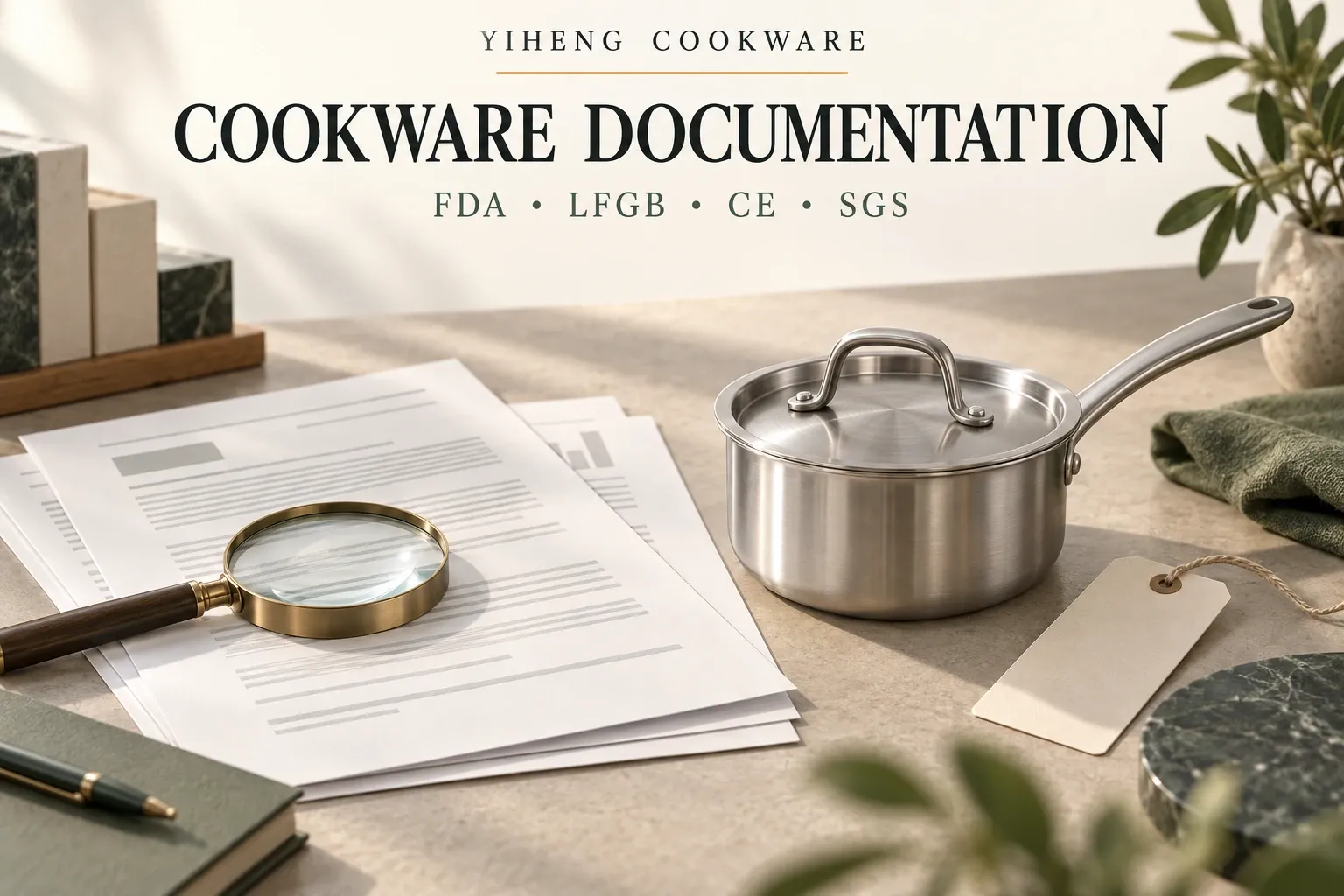
FDA, LFGB, CE and SGS name four different things — a regulatory framework, a food-contact law, a conformity marking, and a testing company — and telling them apart decides whether the paperwork in your quotation actually protects the shipment.
Quotations often list FDA, LFGB, CE and SGS as four stamps of equal rank — they are not. If you are new to importing cookware and need food-contact paperwork for customs or channel onboarding, here is what each name actually is and how to verify the documents.
Why food-contact paperwork decides whether your shipment clears
Cookware touches food, so every developed market subjects it to food-contact requirements, evidenced by test reports matching the product to the market. When report and goods diverge — a different model or finish — shipments can be held at the border or delisted after launch.
Importer, not factory, carries the market-side compliance duty
Responsibility for the destination market's requirements sits with the importer of record; the factory supports you by testing to the standard that market expects and issuing documents naming the actual model. Fix the target market first, then request reports per model — do not hope a logo wall covers you.
FDA: what it covers for cookware bound for the US
For cookware bound for the United States, "FDA" in practice means the US regulatory framework for food-contact materials administered by the Food and Drug Administration: cooking surfaces must use materials that meet those requirements.
It is a regulatory framework, not a logo the factory "holds"
There is no "FDA certificate" a factory hangs on a wall. The working evidence is a test report showing the contact materials meet FDA food-contact requirements, plus a declaration of compliance for the specific product. Treat "FDA-approved factory" as shorthand for "FDA-style reports are available" — then ask for one naming your model.
LFGB: the German food-contact benchmark and why buyers ask for it
LFGB is the German Food and Feed Code, Germany's food-contact law. In sourcing talk, "LFGB testing" means food-contact tests run against that benchmark, which sits within the EU expectation that food-contact materials transfer nothing to food — the framework being Regulation (EC) No 1935/2004. Buyers ask for it because the benchmark is widely treated as demanding.
What LFGB testing typically includes
A typical program includes migration testing — what, if anything, transfers from the material into food simulants — plus sensory checks on odour and taste. Exact items depend on material, finish, and method, so a stainless steel body's report is not interchangeable with a pre-seasoned carbon steel surface's.
CE: when it applies to cookware — and when it does not
The most misused mark in supplier quotations
CE is a conformity marking: it declares a product meets the EU directives applicable to its category. It is not a general food-contact certification, and for most cookware no CE requirement applies; even where it does, CE signals conformity with a directive, not a food-safety test result.
So "CE-certified wok, food safe" should prompt one neutral question: which directive is claimed? If the answer is vague, judge food safety by the food-contact reports instead — CE is a scoping question, not a selling point.
SGS and other labs: the testing house, not the certificate itself
SGS is a third-party testing, inspection and verification company. When a supplier writes "SGS-certified", what exists — if anything — is a report issued by SGS or a similar laboratory about the sample tested. The lab is the messenger; the report is the evidence.
The four names, separated:
| Term | What it is | What it covers | Common misuse in quotations | What a buyer should ask for |
|---|---|---|---|---|
| FDA | US regulatory framework for food-contact materials | Food-touching materials sold into the US | Quoted as a factory-held "FDA certificate" | Test report against FDA food-contact requirements + declaration of compliance, per model |
| LFGB | Germany's food and feed law, used as a testing benchmark | Food-contact articles against the German benchmark | Treated as a transferable, EU-wide "certificate" | A report covering the exact material and finish |
| CE | EU conformity marking under specific directives | Categories a directive covers — for most cookware, none | Pasted in as all-purpose food-safety proof | The directive claimed; otherwise judge by food-contact reports |
| SGS | Third-party testing, inspection and verification company | Nothing by itself — it issues reports | "SGS-certified" implying catalogue-wide approval | The report itself, verified via the lab's official channel |
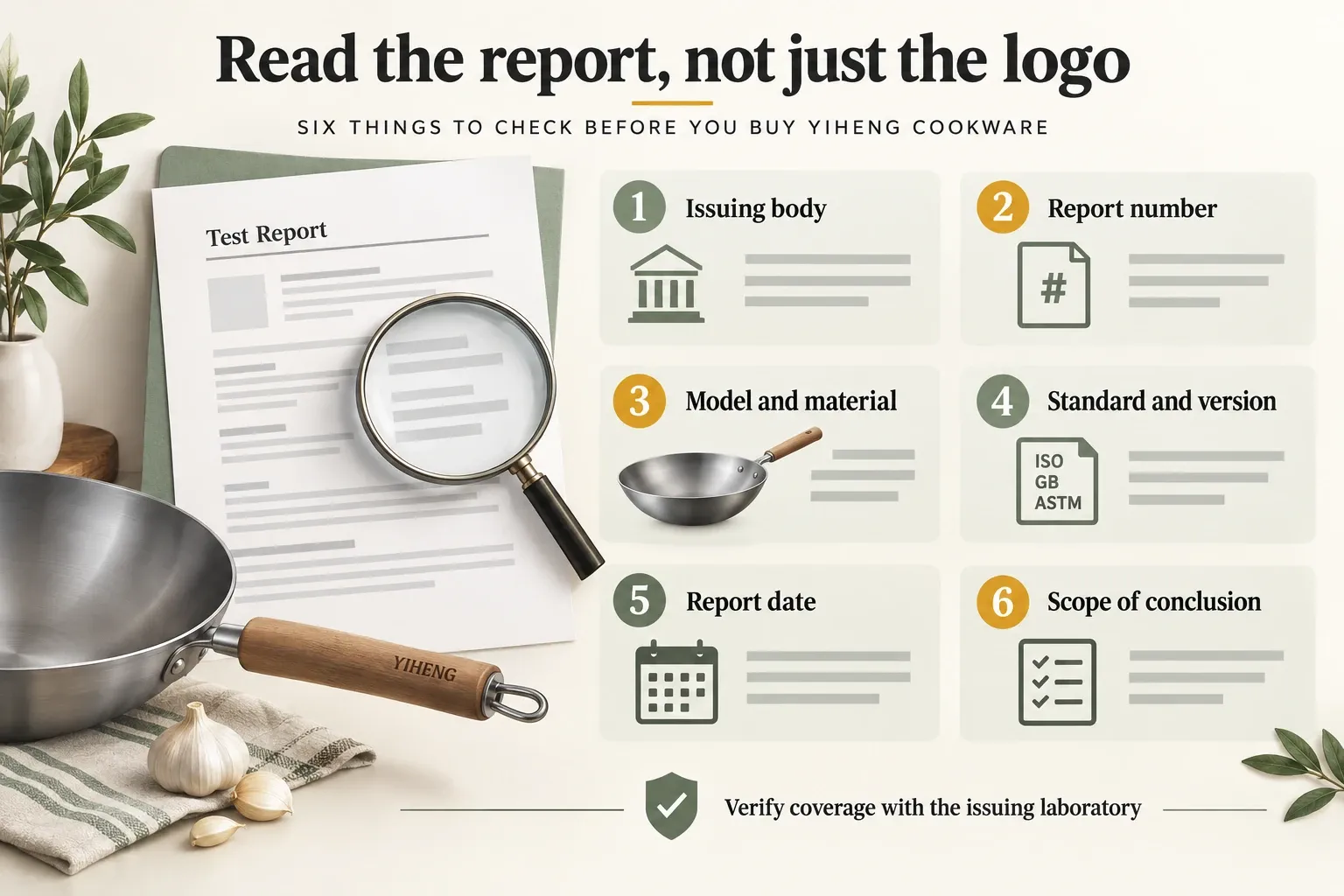
Report vs certificate: six fields to read before you trust a PDF
- Issuing body. The lab that actually issued the report — the name that signed it, not a letterhead logo.
- Report number. The ID you will use to verify the document with the lab.
- Model and material coverage. The exact model, material, and finish tested — the field buyers skip most often.
- Test standard and version. Which method was applied, and which edition, since methods get revised.
- Report date. When testing was done, compared against the current version of the material and finish.
- Scope of conclusion. The result states the tested sample passed the listed items — not a catalogue approval.
How to request and verify reports from a Chinese manufacturer
Step checklist: ask per model, per market; verify with the issuing lab
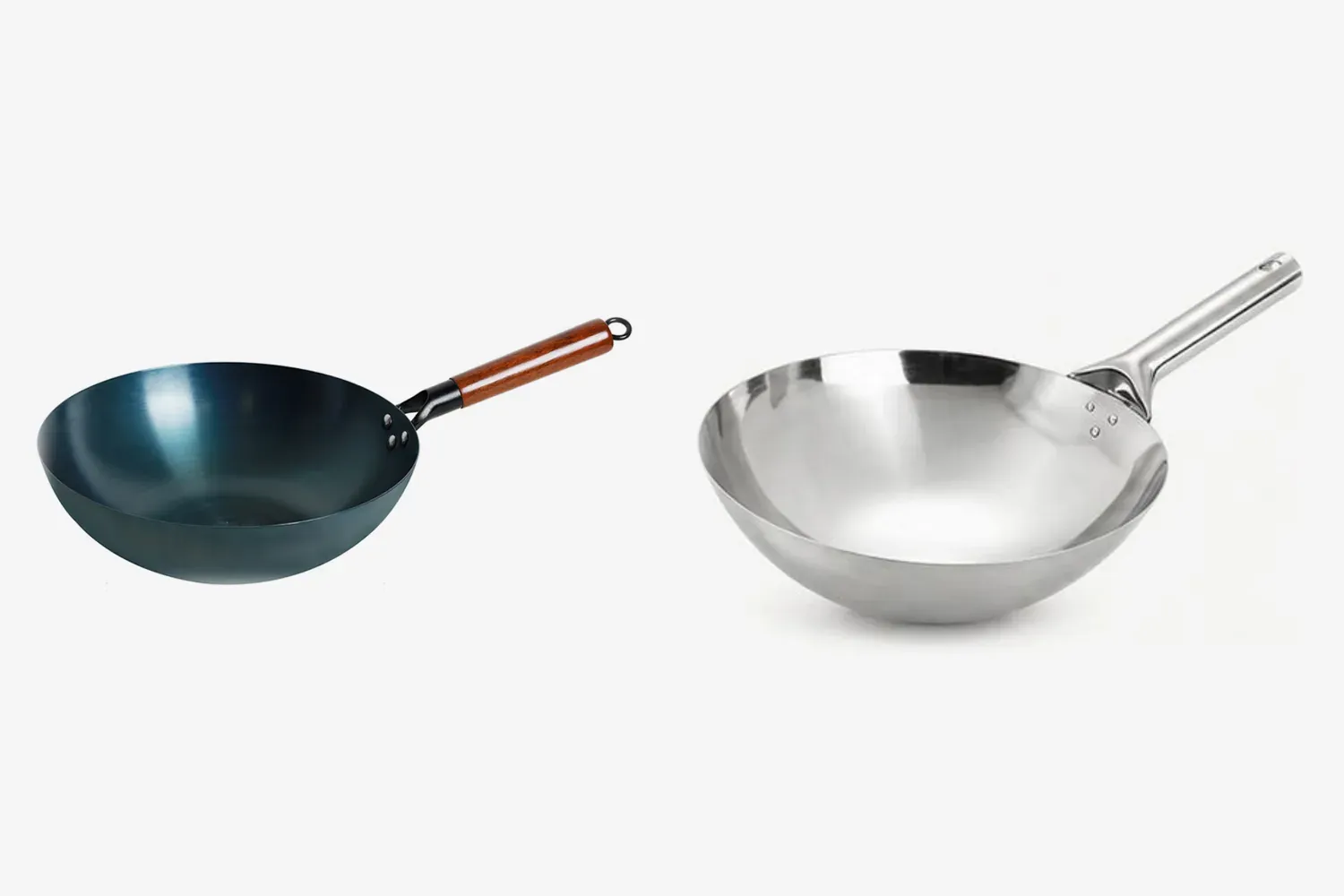
- Specify the model in writing. Model code, material, size, finish: the pre-seasoned surface of YH-CSW-302 and the stainless body of YH-CSW-601 need different reports — our carbon steel vs. stainless steel commercial cookware guide shows where lines split.
- State the destination market — the US, Germany, or an EU-facing program point to different requirements — and ask which standard applies.
- Read the six fields on every document you receive.
- Verify with the issuing lab. SGS, for example, runs an official document-verification channel where a report number can be checked.
- Keep report and order matched. The model and finish on the proforma invoice should match the report's coverage line.
Red flags: logo-only "certificates", wrong model coverage, outdated reports, "similar product" scope
- Logo-only "certificates". A lab's logo with no report number, model, or test items is branding, not evidence.
- Wrong model coverage. A genuine report for a different model or size than quoted.
- Outdated reports. A date predating the current material or finish version; standards get revised too.
- "Similar product" scope. A conclusion from a similar sample does not cover your model — ask what testing would be arranged for it.
What YIHENG provides as your manufacturing partner
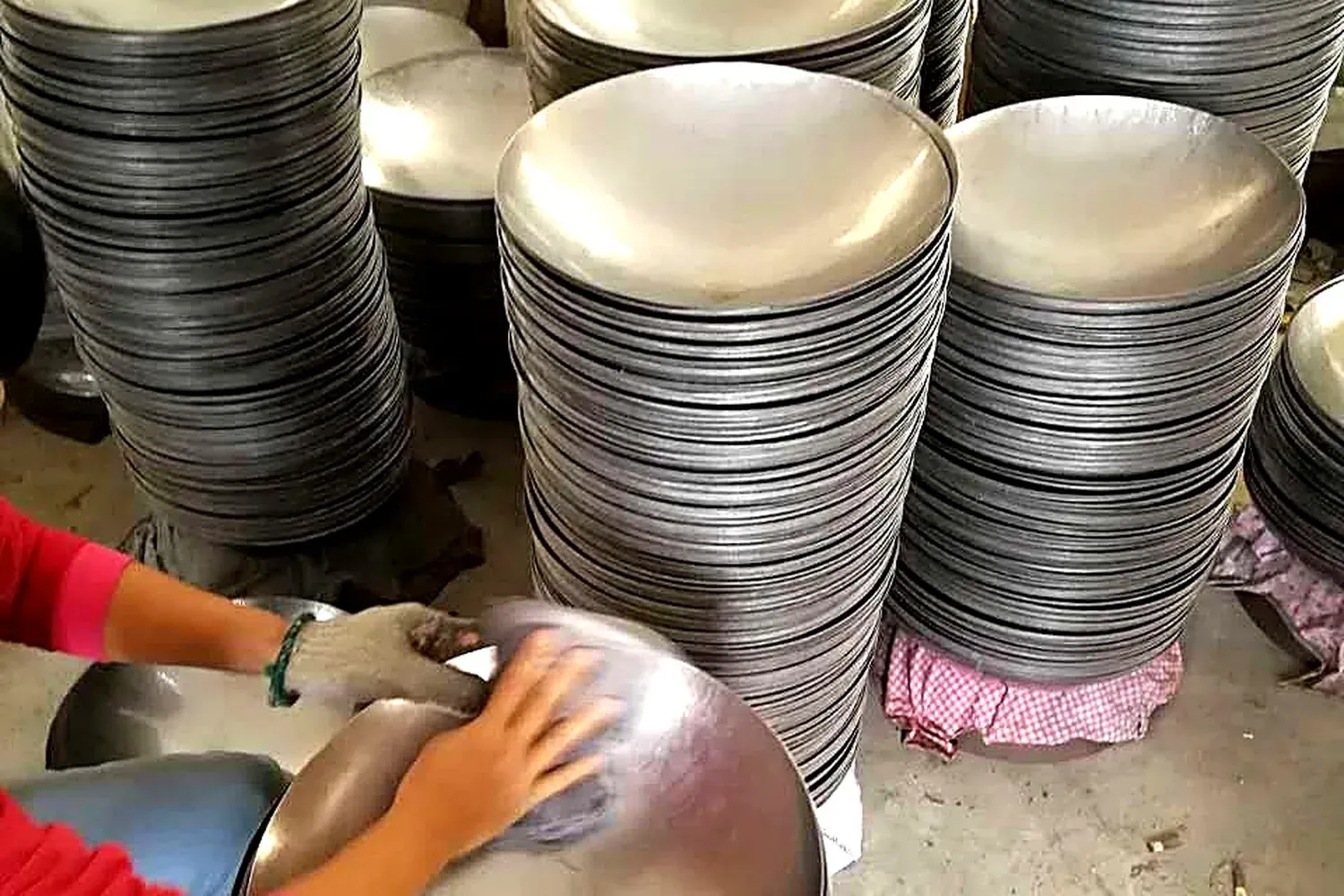
Our position is the one to demand from any supplier: certification support is provided per market and model, subject to test reports for the specific model. Send your destination market and shortlisted model codes, and we will reply with the document path for those models — what testing exists and what a new market or finish would need. Production-side, carbon steel is formed on spin-forming and stamping lines, with hand-polishing and inspection stations checking pieces before packing — process background, not a substitute for per-model reports.
Frequently asked questions
Is CE marking required for cookware sold in the EU?
For most cookware categories, no EU directive requires CE marking, and CE is not a food-contact certification; food-safety expectations are handled through food-contact requirements and reports. If a supplier quotes CE on a wok, ask which directive is claimed and weigh food safety on the report.
Is there such a thing as an "FDA certificate" for a cookware factory?
No. FDA is a US regulatory framework, not a mark a factory holds; the working evidence is a test report against the FDA food-contact requirements plus a declaration of compliance covering your specific model and its contact materials.
How current should a test report be?
There is no universal validity period to quote. What matters is that the report reflects what you are buying: same material and finish, current with production, tested to the edition of the standard your market expects. Standards get revised — which is why report date and standard version are two of the six fields.
Ask about certification support for your market and models
Email sales@yihengcookware.com with your destination market and shortlisted model codes, and we will reply with the document path for those specific models. Ask about certification support for your target market and models (subject to test reports)