Carbon Steel vs. Stainless Steel Commercial Cookware: A Buyer's Guide
Compare carbon steel and stainless steel cookware by cooking task, construction, finish and care. Plan a practical mixed-material order with YIHENG.
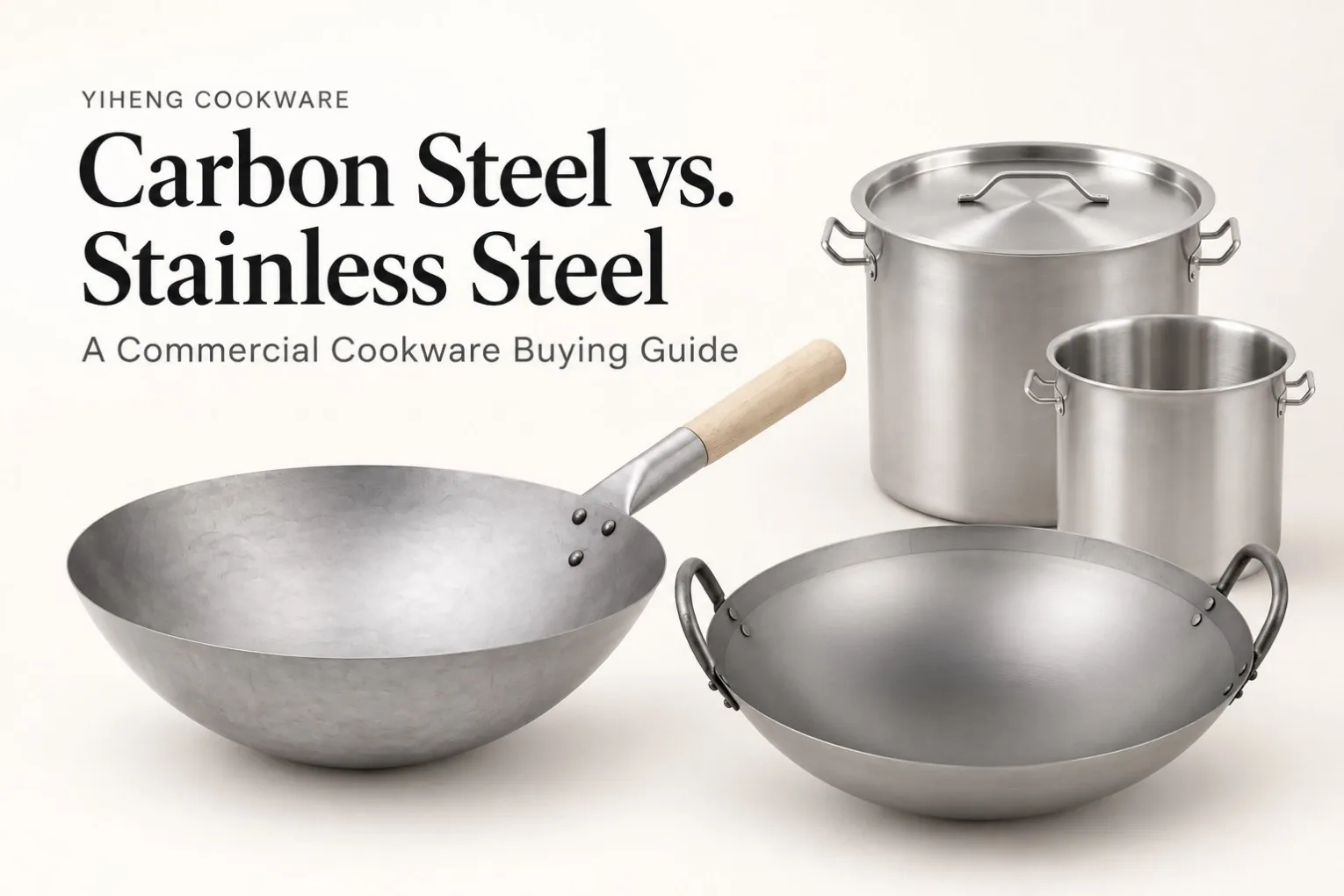
Choose cookware by the job it needs to do. For restaurant buyers and importers, the useful comparison is cooking performance, construction, care and the right mix of products for the market.
Editorial composition based on supplied product references. Natural-finish carbon steel and stainless steel can both appear silver; color alone does not identify the material.
The 60-second answer
Carbon steel is a practical choice for stir-frying, searing and frying when the kitchen can maintain a seasoned surface. Stainless steel is a useful choice for stocks, sauces and prolonged cooking with acidic ingredients.
Neither material wins every task. A thin carbon steel wok, a thick carbon steel frying pan and a stainless steel pot with a bonded base behave differently. Diameter, thickness, base construction, burner output and food load all affect the result.
Build the buying list around the menu or sales channel first. Then compare samples and quotations for the construction each task requires.
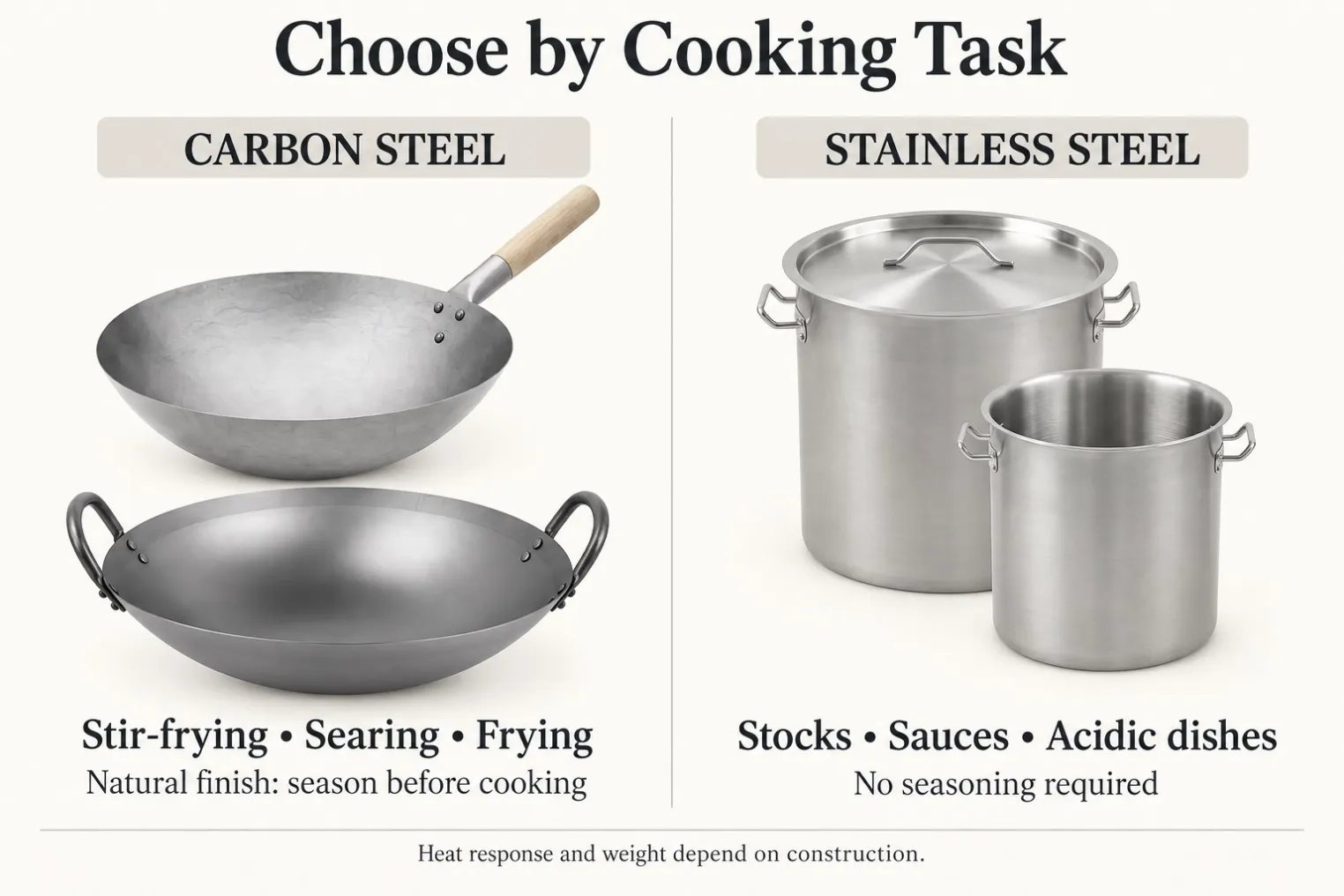
Editorial comparison: natural-finish carbon steel requires preparation and seasoning before cooking; stainless steel does not require seasoning.
The fundamental differences between the two materials
Heat conduction and temperature response
Carbon steel woks are commonly formed from sheet steel. A relatively thin wok can respond readily to changes in heat input, but “instant response” is not a useful purchasing specification. A larger food load, thicker sheet or poorly matched burner changes how quickly the cookware heats and recovers.
Stainless steel cookware may have a bonded heat-spreading base or a layered construction extending into the walls. A compound bottom can help spread heat across the base; its performance depends on the core material, thickness, coverage and bond quality. Do not assume every stainless pot has the same construction or that its sidewalls heat like its base.
For samples, assess both heat distribution and recovery using the intended burner and cooking task.
Weight and handling intensity
Carbon steel is not automatically lighter than stainless steel. Compare the actual empty weight and expected loaded weight of the selected vessels. A thin wok may be easy to toss, while a thick carbon steel pan can be substantial.
Handle length, grip, attachment and balance matter alongside weight. For a stockpot or large double-handle wok, assess lifting and carrying at a realistic fill level. Follow the model's instructions for hot handles and maximum loads.
Seasoning, finish and maintenance
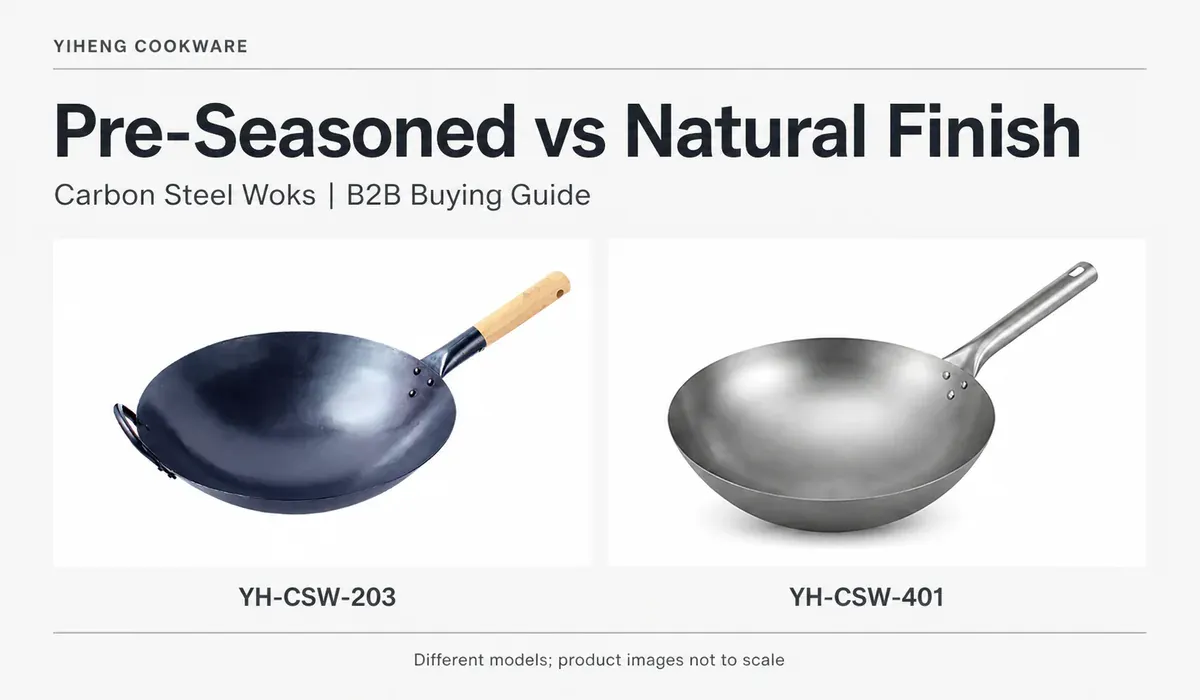
Carbon steel describes the material, not a single color or finish. YIHENG's range includes natural-finish handmade and machine-made woks, as well as models with other surface treatments.
- Natural-finish woks can retain the original silver-grey steel appearance. Remove transport protection and season according to the supplied care instructions.
- Pre-seasoned woks have a different starting surface, but still need the specified cleaning and maintenance.
- Enamel is a separate surface treatment. Do not apply bare-carbon-steel seasoning instructions automatically to enamel cookware.
- Hand-working and machine forming describe production methods. They do not, by themselves, determine whether a wok is natural-finish, pre-seasoned or coated.
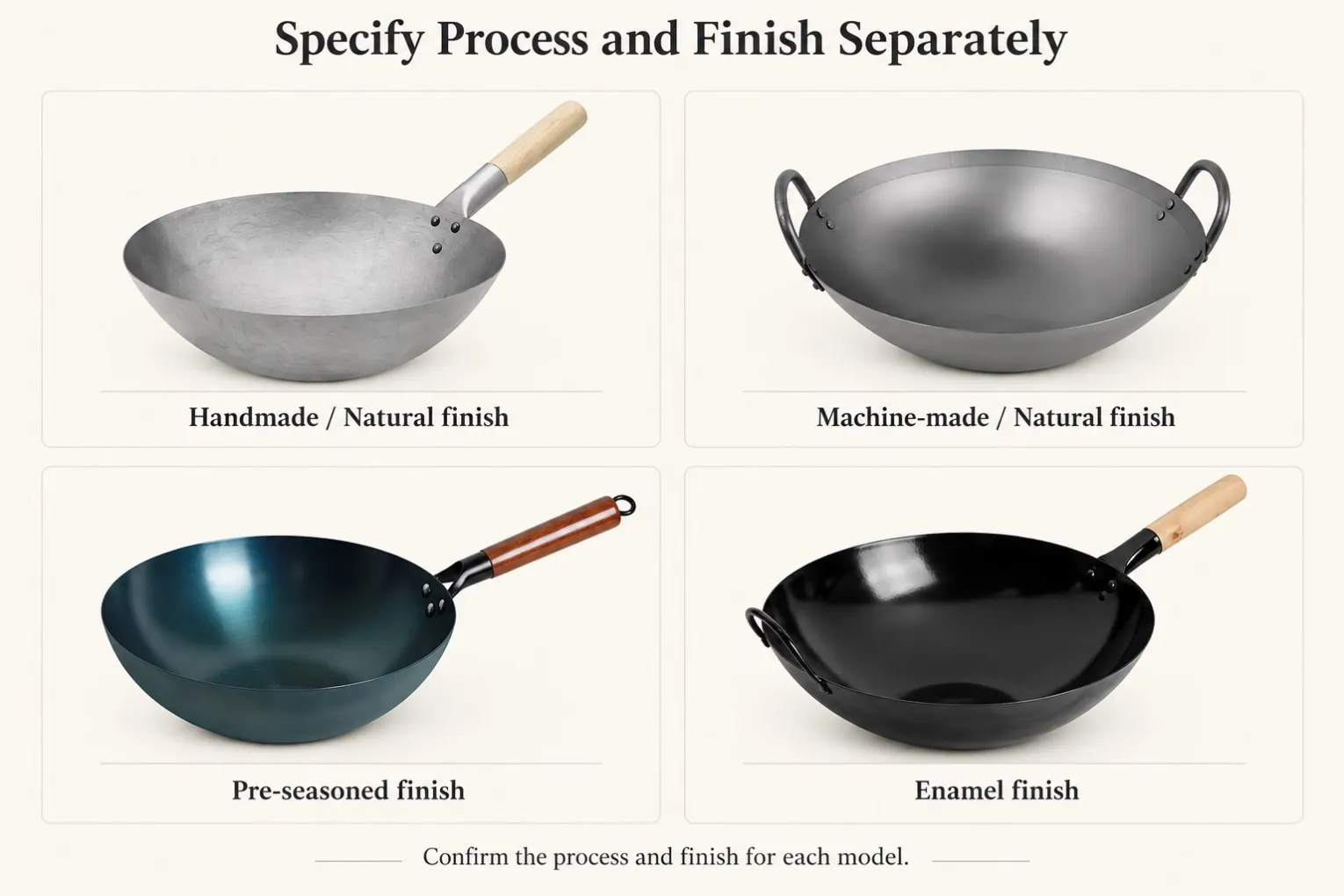
Reference-based editorial illustration. Specify forming method and surface treatment separately; confirm the exact combination for the model ordered.
For bare and seasoned carbon steel, prolonged acidic cooking can affect the seasoning. Stainless steel is generally the more practical choice for tomato, wine or vinegar-based sauces. Cleaning and dishwasher suitability still depend on the complete product, including its handles and base. See de Buyer's carbon steel care guidance and our pre-seasoned vs. natural-finish wok guide.
Service life and total cost of ownership
Compare total cost over the same operating period:
Purchase and delivery cost + care labor + replacement cost.
Include the time needed for cleaning, drying and surface maintenance. Avoid assigning every carbon steel wok a fixed weekly re-seasoning schedule; the required care depends on use and surface condition.
For a fair commercial comparison, specify the required capacity, cooking task, handle format, packaging and acceptance criteria. Equal sheet thickness across different constructions does not necessarily produce equivalent cookware.
Assigning cookware by menu line
Stir-frying, searing and frying
Carbon steel woks suit buyers looking for a formed steel vessel with a surface that can be seasoned and maintained. Two YIHENG models in the supplied range are:
- YH-CSW-302: pre-seasoned wok with wooden handle; 32, 34 and 36 cm, with listed 1.0 and 1.2 mm thickness options.
- YH-CSW-401: machine-made wok with steel handle and natural finish with rust-proof oil; listed at 12–17 inches and 1.0 or 1.2 mm.
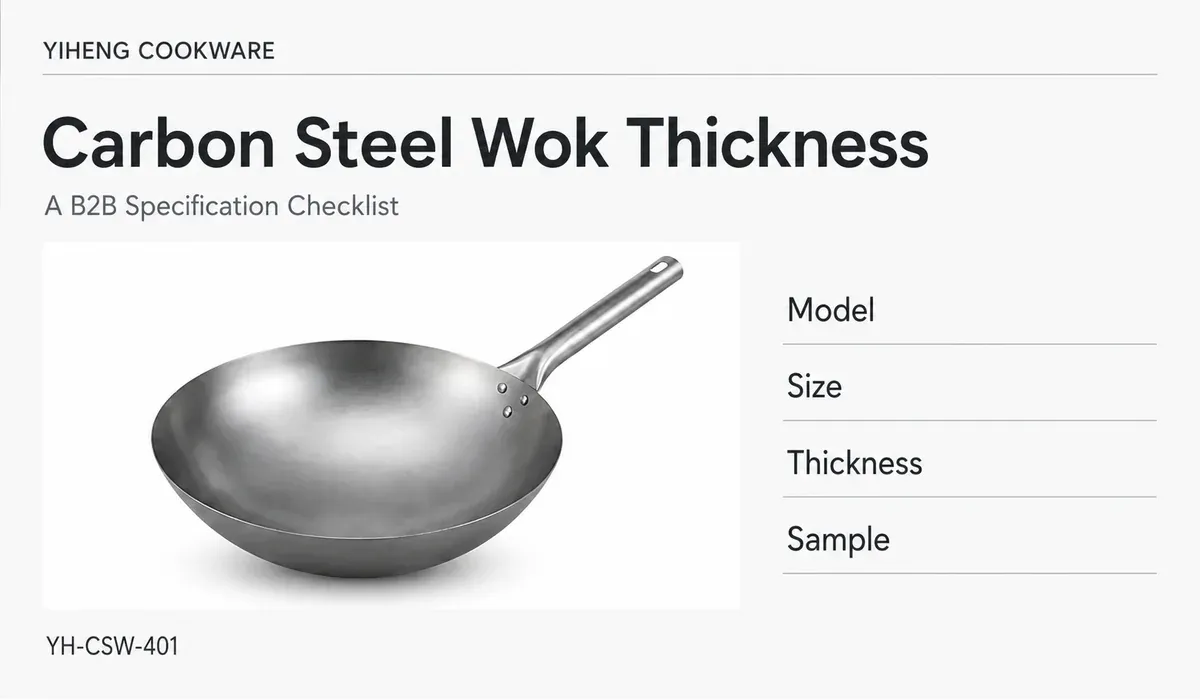
Confirm the available size–thickness combination before ordering. Our commercial wok thickness guide provides the next specification step.
Stocks, sauces, braising and acidic dishes
For these tasks, compare pot capacity, usable fill level, handle layout and base construction. The supplied stainless steel range includes:
| Model | Form | Listed range | Construction points to confirm |
|---|---|---|---|
| YH-SSA-101 | Tall sauce pot | 0.8–16 L; 120×H75 to 320×H200 mm | 0.6 mm body; compound bottom; long metal handle |
| YH-SSP-101 | Tall stockpot | 6–225 L; 200×H200 to 600×H800 mm | 0.6–1.2 mm body and 3.0–5.6 mm bottom series; exact size pairing requires confirmation |
| YH-SSC-101 | Casserole | 4.5, 7.5 or 13.0 L | Listed 0.8 mm body and 6.0 mm aluminum base; confirm selected configuration |
These are model-family ranges, not a promise that every size is available with every thickness. Confirm material grade, base details, lid inclusion and care instructions in the quotation.
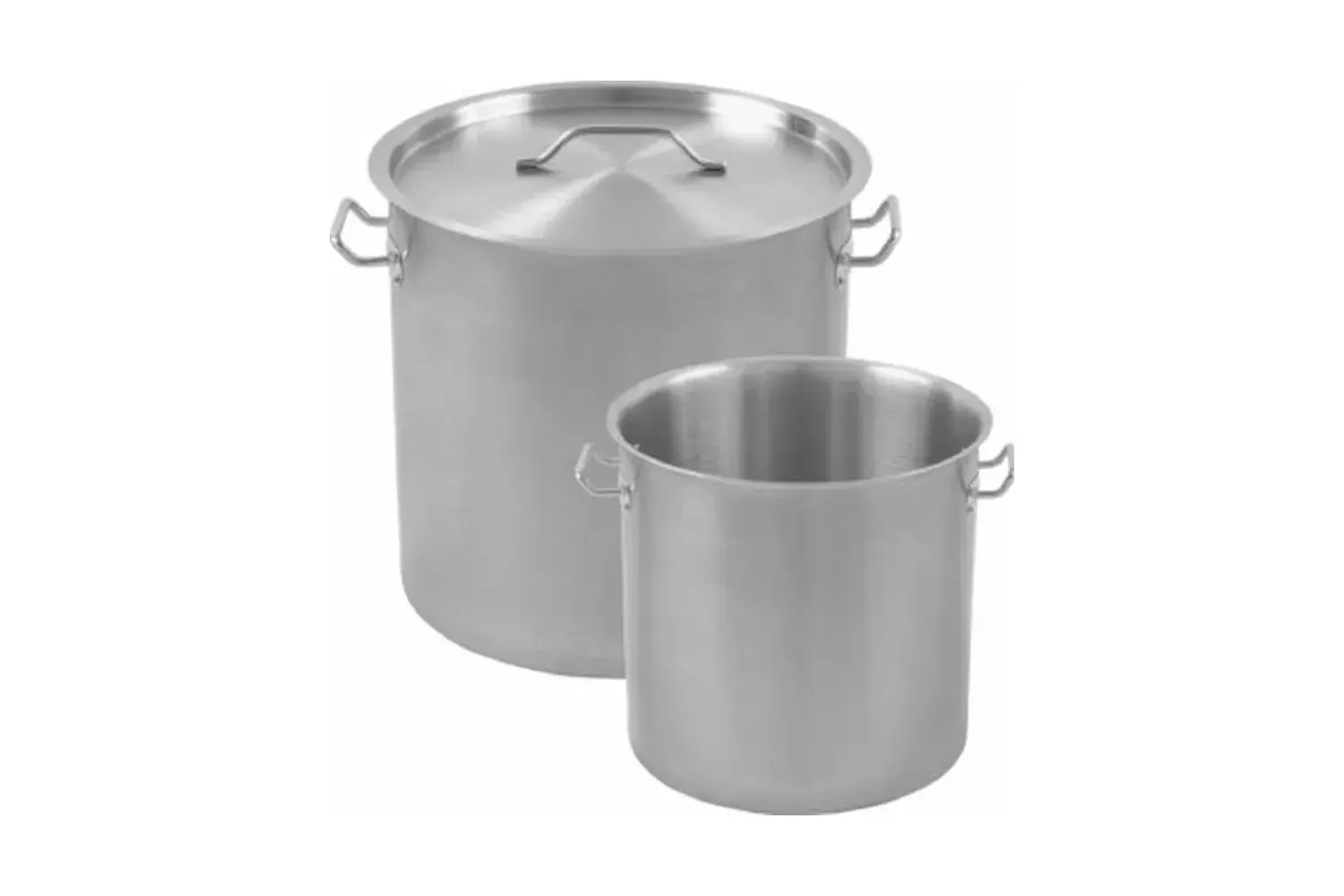
Supplied stockpot reference image. This image does not show every sauce pot and casserole in the table.
For importers and distributors: structure the assortment around demand
There is no universal carbon-steel-to-stainless-steel ratio. Use sales history, customer menus and channel requirements to select a starting mix.
For a foodservice program, list the cooking tasks the assortment must cover. For a retail range, compare shelf space, price points, finish options and replenishment needs. Treat handmade and machine-made products as distinct specifications rather than assuming either one will automatically sell at a higher margin.
Start with a manageable assortment, record sell-through by SKU and adjust the next order using that evidence.
Certification and compliance support
YIHENG can support testing against applicable FDA-related and LFGB-related food-contact requirements, with SGS testing and relevant certification services arranged for the selected program. Confirm the model, finish, destination market, testing scope and required documents before the order is approved.
FDA and LFGB references describe applicable regulatory requirements; SGS provides testing and certification services. A test report and a product certification are different documents. Check what the buyer needs and what the specific product has obtained. See the FDA's food-contact overview and SGS's food-contact product certification service.
CE marking is relevant only when legislation covering the particular product requires it; it is not a general food-contact approval for cookware. The European Commission's CE guidance explains this scope.
Planning a mixed-material order with YIHENG
Bring the carbon steel and stainless steel selections into one inquiry so the team can confirm specifications, quantities, production timing and mixed-loading arrangements together.
Each material and finish needs appropriate inspection criteria. A coordinated order does not mean applying an identical technical test to every item.
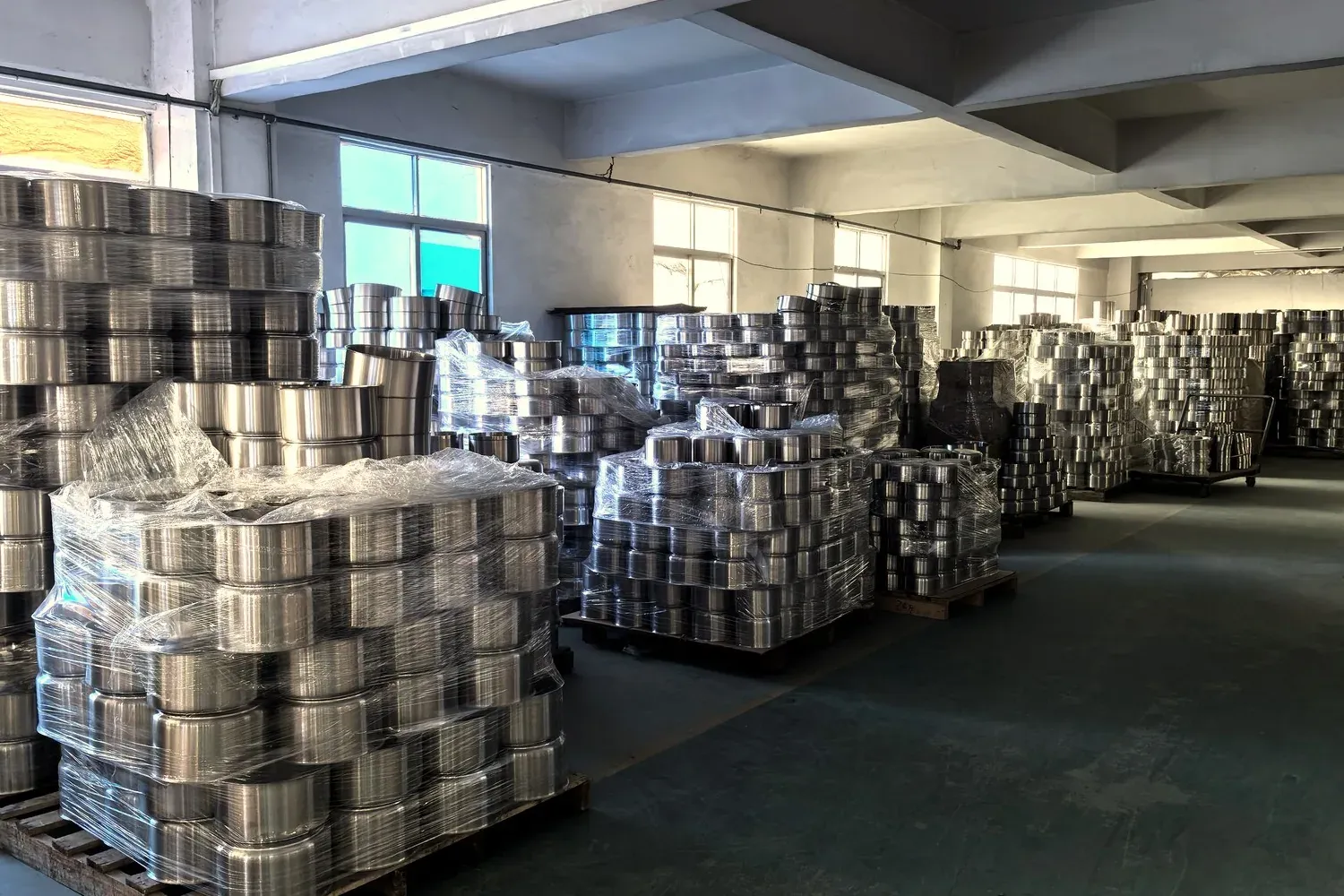
Supplied factory storage photograph showing palletized cookware bodies. It does not document a specific packed customer shipment.
Decision checklist before your next purchase order
- Assign each menu task or retail SKU to a suitable material and construction.
- Confirm diameter, depth, capacity, weight, handle format and burner compatibility.
- Specify natural finish, pre-seasoning or coating separately from the forming method.
- Compare care requirements over the same operating period.
- Confirm available size–thickness pairings and packaging.
- Request model- and market-relevant testing or certification documents.
- Agree mixed-loading quantities, inspection criteria and shipment timing.
Frequently asked questions
Can carbon steel and stainless steel cookware ship in the same container?
Ask YIHENG to quote the proposed mix together. Confirm minimum quantities, packaging, readiness dates and loading arrangements for the selected SKUs before treating it as one shipment.
Which material should a new restaurant buy first?
Start with the menu. A stir-fry station may prioritize carbon steel woks; a sauce and stock station may prioritize stainless steel pots. Add the other material when the cooking tasks require it.
Does a compound bottom make stainless steel behave like carbon steel?
A compound bottom changes heat distribution and thermal mass. It does not create the seasoned surface of bare carbon steel. Compare the specific products under working conditions rather than predicting performance from the material name alone.
Request a mixed-material quotation
Send your target models, sizes, finishes, quantities and destination market. Include the cooking tasks or sales channel so the quotation reflects the intended program.