Blackened, Pre-Seasoned or Enamel? Choosing Wok Finishes by Market
A buyer's guide to matching carbon steel wok finishes — blackened, pre-seasoned and enamel — to the markets and channels that actually sell them.
A buyer's guide to matching carbon steel wok finishes — blackened, pre-seasoned and enamel — to the markets and channels that actually sell them.
Ask three buyers what a "black carbon steel wok" is, and you will often get three different answers: the dark oxide surface of a blackened wok, the factory-treated surface of a pre-seasoned one, or a glossy enamel body in a retail color. For a category manager the difference is not cosmetic — the finish shapes how the wok looks on shelf, what the end user meets on day one, and which channel it belongs in.
Three Finishes, Three Jobs
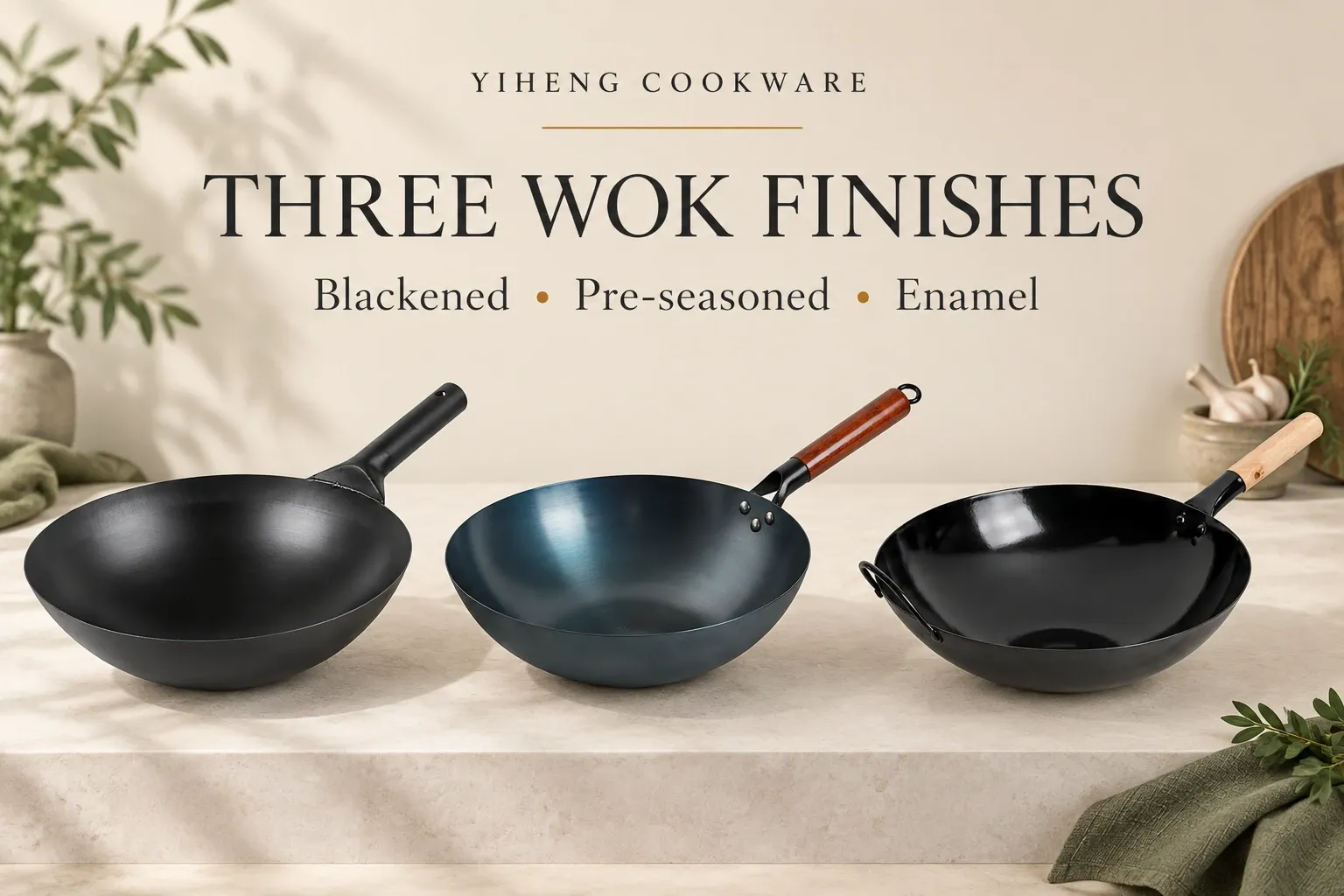
The three finishes covered here do different jobs, and the names are not interchangeable.
Blackened (the blackening treatment) is a controlled high-temperature oxidation process that forms a dark oxide layer on the steel itself — used in industry practice to improve corrosion behavior in storage and transit over bare steel, and to give the matte dark surface people associate with professional kitchens.
Pre-seasoned means the factory bakes layers of food-contact vegetable oil onto the prepared steel, polymerizing them into a starting seasoning layer — on our line paired with a protective oil, so the YH-CSW-302 product page lists the surface as "pre-seasoned with rust-proof oil".
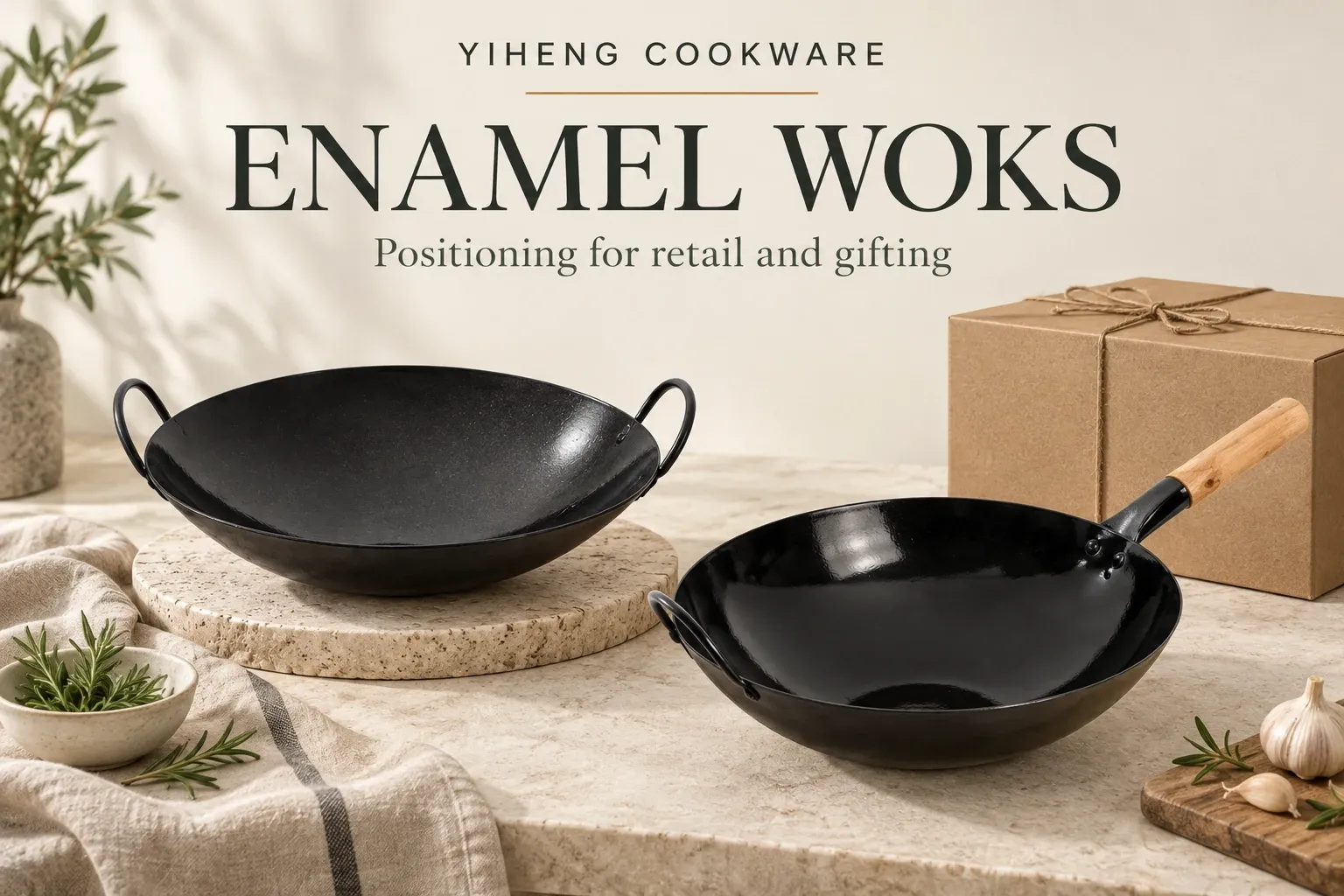
Enamel (vitreous enamel) is a glass coating fused onto the carbon steel body at high temperature. It produces a smooth, non-porous, colorable surface that needs no seasoning at all.
A fourth finish — natural finish with rust-proof oil — sits at the baseline of this range, but this article concentrates on the three above and on the question buyers actually ask us: which one fits which market.
The Finish-by-Market Matrix
No finish wins everywhere. The matrix below summarizes where each generally fits as an assortment lead, and why — a planning aid rather than a rule, since final fit depends on your price positioning, packaging and customer base.
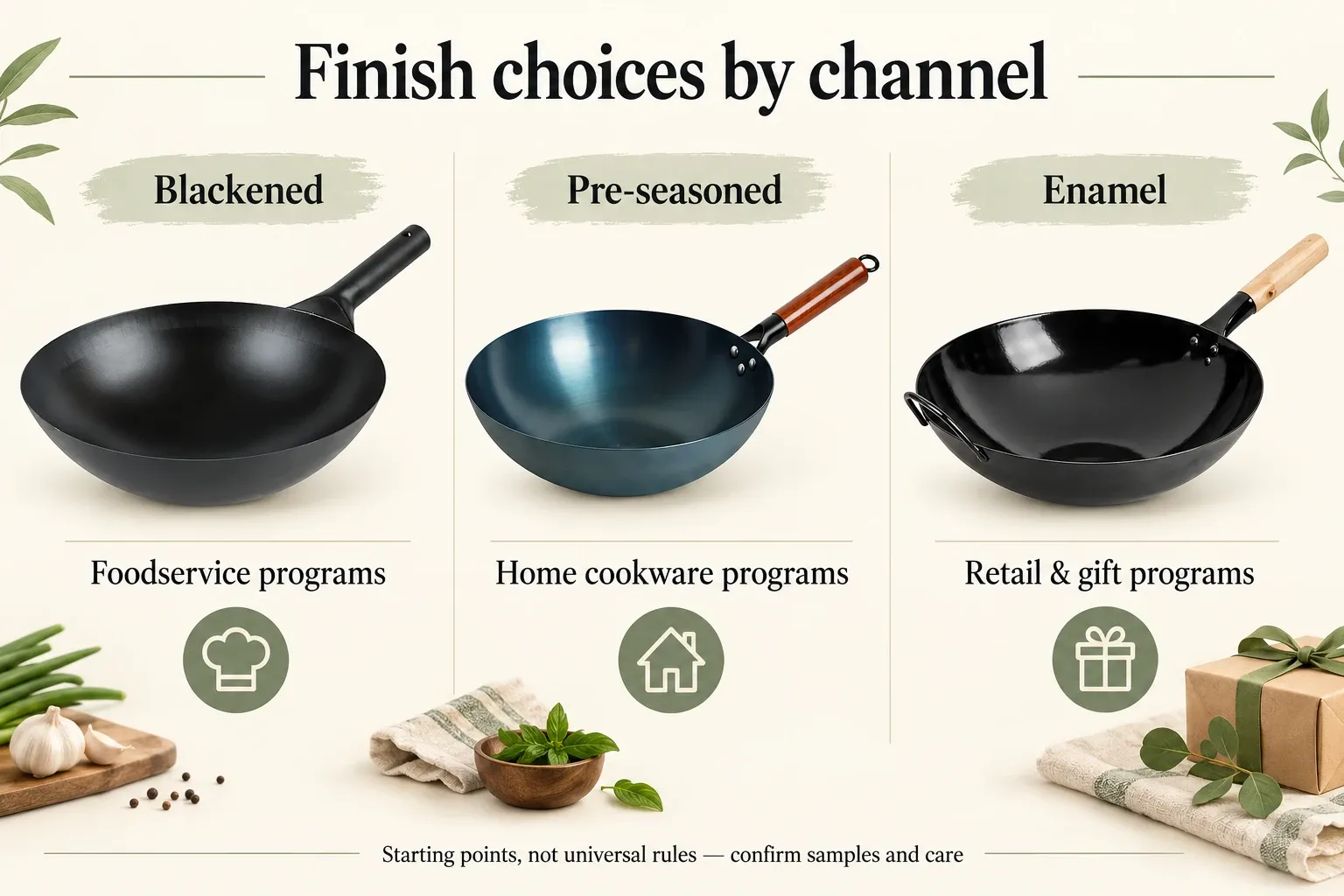
| Market / channel | Blackened | Pre-seasoned | Enamel |
|---|---|---|---|
| Western home retail (housewares, online) | Good fit — dark "pro-look" surface that ships corrosion-protected, but listings must still set seasoning expectations | Often the strongest fit — the out-of-box story lowers first-use friction for casual cooks | Good fit — color-driven SKUs that often anchor seasonal and gift programs |
| Asian grocery and food channels | Often the strongest fit — the familiar dark surface for shoppers who already season and use steel woks | Good fit — the convenience angle for household buyers newer to carbon steel | Limited fit — generally outside the visual expectation of the traditional wok aisle |
| Foodservice back-of-house | Often the strongest fit — takes high-heat stir-fry routines and re-seasoning in stride | Good fit — saves initial prep, though kitchens build their own patina with use | Limited fit — generally not chosen for metal-tool, high-heat service |
| Gift and cookware-set programs | Limited fit — a utilitarian surface rarely drives gift purchase on its own | Good fit — works inside sets, though the plain look leans on packaging support | Often the strongest fit — color, wooden handles and serving-friendly shapes carry the gift |
Blackened: The Rust-Resistant Workhorse
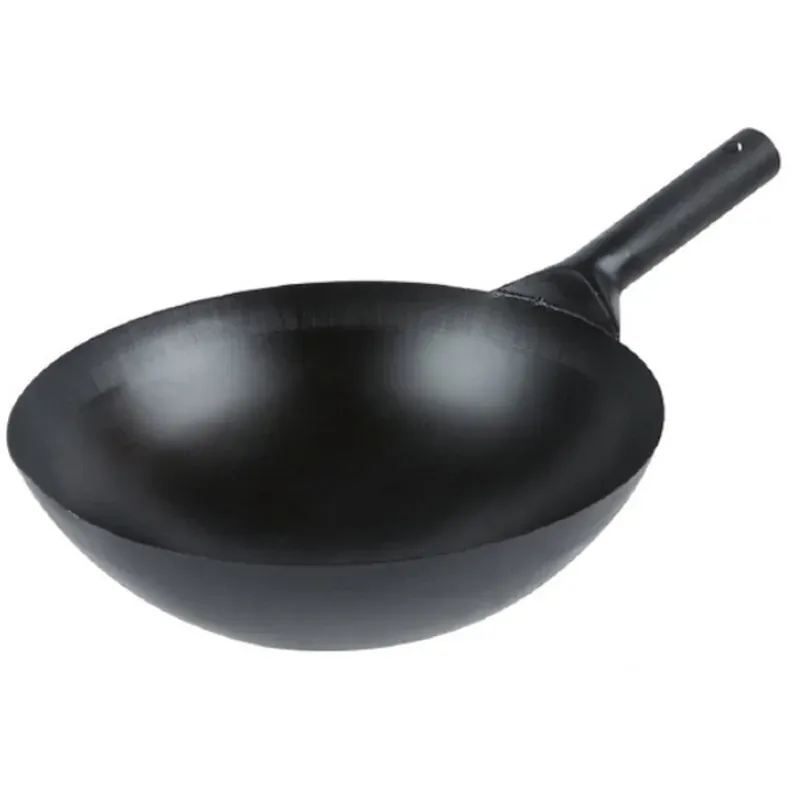
Blackened finishes earn their place in foodservice supply and Asian food retail because they look like what professional kitchens already use. The YH-CSW-301 pairs a blackened surface with a single long handle — the configuration line cooks reach for when tossing is part of the job. The practical selling points: a surface that generally tolerates high-heat cooking and metal tools, and better corrosion behavior in the carton than bare steel offers.
It is not automatically the best choice: buyers who expect non-stick behavior from the box will be disappointed, and gift-led programs rarely reward a utilitarian surface. Like any carbon steel finish it also prefers a thin film of oil before long storage in humid climates.
Pre-Seasoned: The Out-of-Box Story
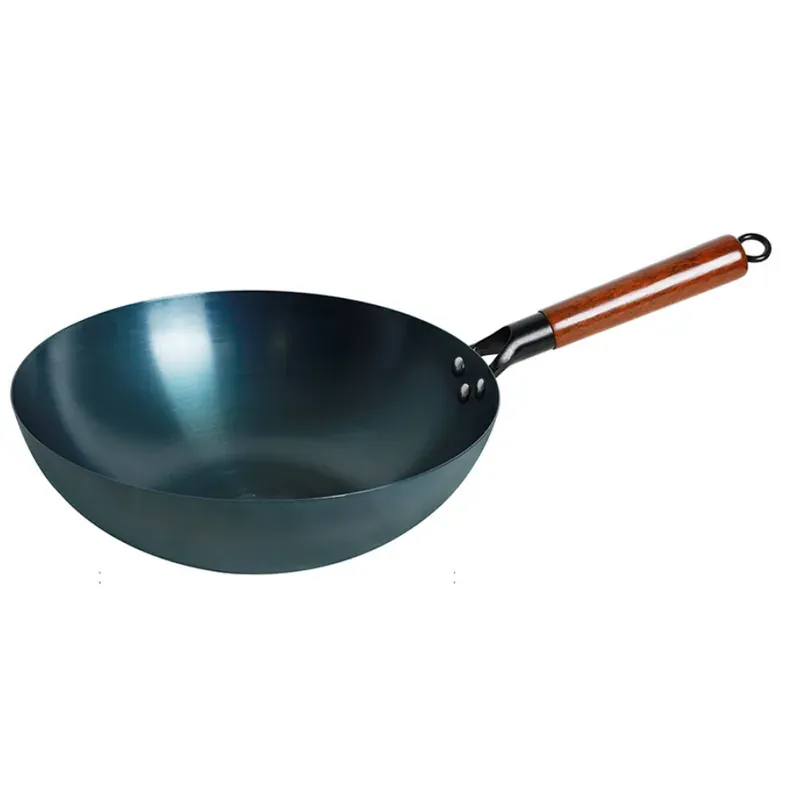
For Western home retail, the pre-seasoned finish is often the strongest converter because the pitch is simple: unpack, rinse, cook. The YH-CSW-302 combines a factory-applied pre-seasoned layer with a rust-proof oil coating that protects the surface during storage and transport — wording taken directly from the product page, and worth keeping intact in your own listings rather than upgrading it to "non-stick".
Commercially, that out-of-box experience means fewer first-use failures and fewer "it stuck" or "it rusted" returns. One sentence of seasoning truth, and no more, because the full primer lives in our pre-seasoned vs. natural-finish comparison: a pre-seasoned layer is a starting point, not a finished coating — it deepens into a working patina as the customer cooks, and the same article contrasts it with a natural finish with rust-proof oil.
Enamel: Color, Gifting and Low Maintenance
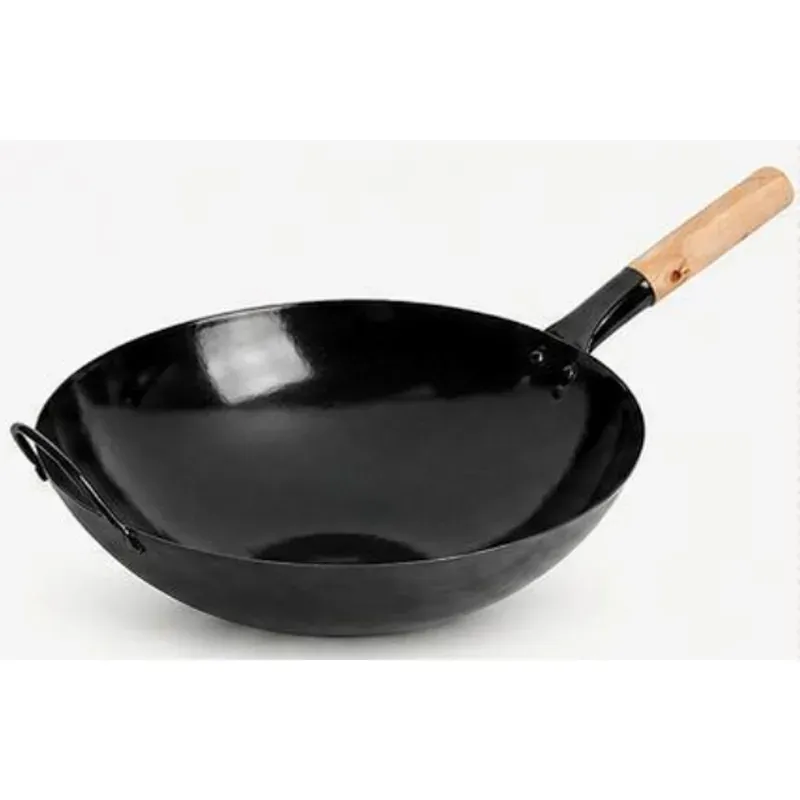
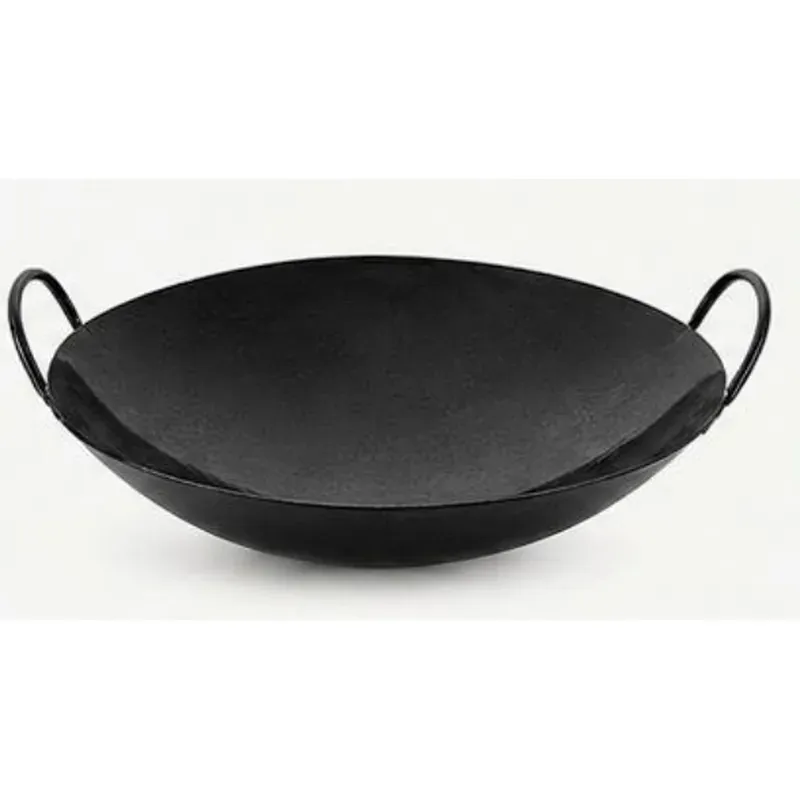
Enamel changes the reason to buy: customers choose it for color and for never having to season a pan. Two body styles carry that story — the YH-CSW-501 with a wooden single handle, and the YH-CSW-502 with double loop handles for a serve-at-the-table look. Both fit gift and seasonal programs. One caveat belongs in every enamel listing: the coating can chip under sharp impact or extreme temperature swings, which is why enamel woks generally suit home and gifting use rather than heavy-duty restaurant service. For full market-positioning depth, see our dedicated enamel carbon steel woks guide.
Pairing Handles and Accessories with Each Finish
Finish, handle and accessories should be planned together, because the combination signals who the wok is for:
- Blackened + single handle (YH-CSW-301): the professional signal. In foodservice assortments it is typically quoted as a bare pan; in retail, simple branding on the blade and a hang tag do the selling.
- Pre-seasoned + wooden handle (YH-CSW-302): the home-retail signal. A bamboo wok brush such as the YH-ACC-110 is a natural add-on in the same carton or an online bundle.
- Enamel + wooden or double loop handles (YH-CSW-501 / YH-CSW-502): the gifting signal. These pair naturally with serving boards, utensils or color-matched packaging in cookware sets.
How Finishes Are Applied Across Our Two Production Lines
At YIHENG, carbon steel bodies are formed on both spinning and stamping lines, and each surface — blackened, pre-seasoned or enamel — is specified per model rather than tied to one forming route. Before packing, woks pass our hand polishing and inspection station, where finish appearance is checked piece by piece. For coated and enamel surfaces we provide certification support per market and model, subject to test reports.

Choosing Your Finish Mix: 4 Questions
Most importers end up stocking a mix, not a single finish. Four questions sort it out quickly:
- Who cooks with it — a casual home cook, an experienced wok user, or a gift recipient?
- Which channel sells it first — shelf retail, online, Asian grocery, or foodservice distribution?
- How much first-use preparation will your market accept — none, a quick rinse, or a proper first seasoning?
- Do color and packaging carry the purchase — as they do in gift and set programs?
If your answers cluster around "home cook, retail shelf, no prep", pre-seasoned usually leads the mix, with enamel on the gift side. If they cluster around "trade buyer, high heat", blackened usually does.
Frequently asked questions
Is a blackened wok the same as a pre-seasoned wok?
No. Blackening is a heat-formed oxide layer on the steel itself; pre-seasoning is a factory-baked layer of polymerized vegetable oil on prepared steel. Our product pages specify them separately — YH-CSW-301 with a blackening treatment, YH-CSW-302 as pre-seasoned with rust-proof oil — so confirm the exact wording per model before writing your listings.
Do enamel carbon steel woks need seasoning?
No. The fired enamel encloses the steel, so there is no bare metal to season — the wok is wash-and-use out of the box. Ask that end users avoid sharp impacts and sudden temperature changes, which are the usual causes of chipping, and state that expectation in your care leaflet.
Which finish should a first import order start with?
It depends on your channel. As a general starting point: pre-seasoned for Western home retail, blackened for foodservice and Asian food channels, and enamel for gifting programs — then confirm with physical samples, because finish and handle options are finalized per model.
Request Finish Samples for Your Market
The fastest way to choose between blackened, pre-seasoned and enamel is to compare them side by side. Email sales@yihengcookware.com with the subject line "Finish samples – [your market/channel]", tell us your target market and sales channel, and we will reply with the finish options available for each model and how to arrange samples.